
Introduction
If you feel like you're drowning in data but starving for wisdom, you're not alone. The constant flood of social media updates, customer reviews, and market reports can feel overwhelming. The real challenge isn't accessing more information, but understanding what truly matters. The key to navigating this complexity lies not in more data, but in smarter frameworks for analysis.
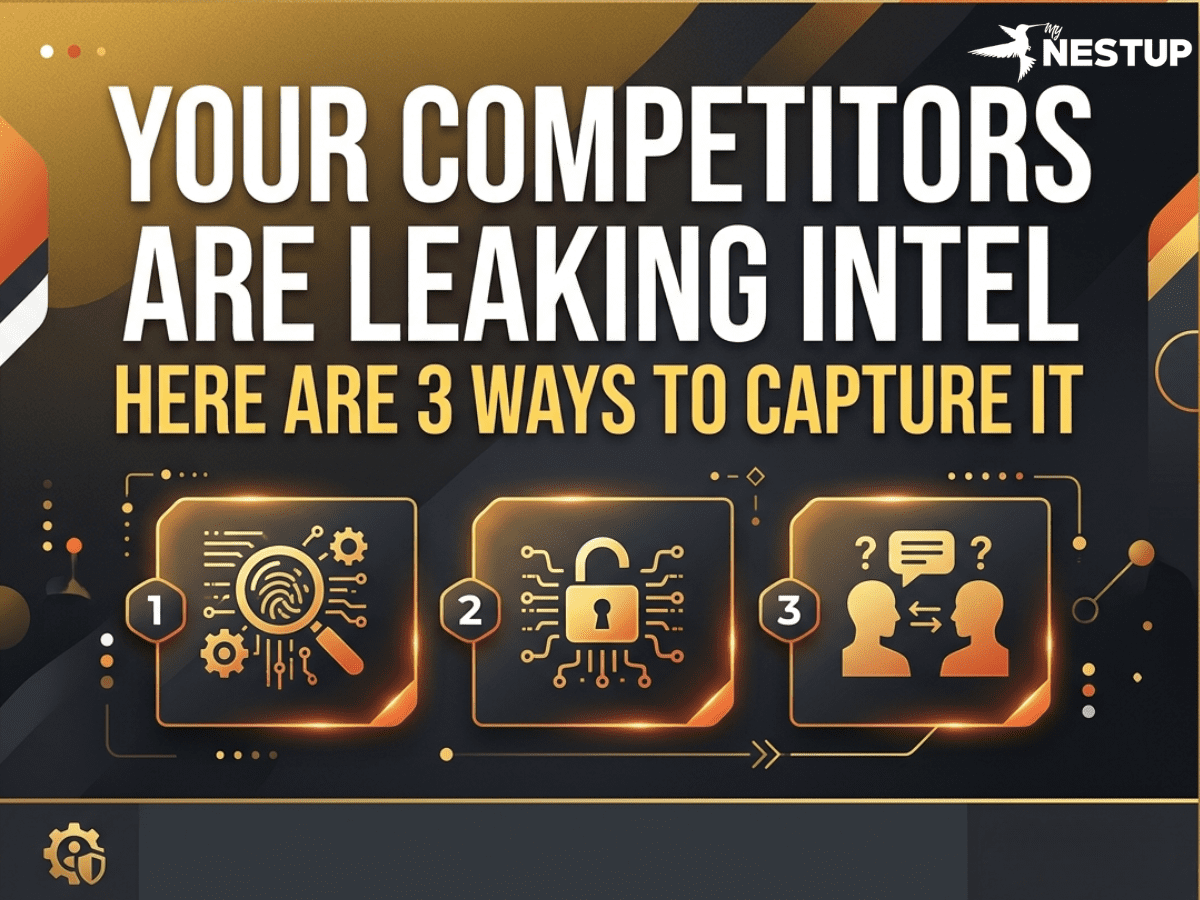
This article shares three impactful takeaways from the world of business and market intelligence. By adopting these modern tactics, you can gain a clear and decisive competitive edge, turning public information into your private advantage.
The Takeaways
1. Your Competitors' Weaknesses Are Hiding in Plain Sight
Modern competitive analysis has evolved far beyond traditional frameworks. While foundational models like SWOT Analysis and Porter's Five Forces remain useful for high-level strategy, the digital age allows for a more granular, real-time analysis of a competitor's daily operations and customer reception. This involves systematically gathering and analyzing information from sources like social media channels, online customer reviews, and public financial reports to understand how competitors operate day-to-day.
The power of this approach lies in its ability to let any business uncover competitors' strengths and, more importantly, their weaknesses without needing insider information. Persistent customer complaints about a rival’s service, negative feedback on a new product feature, or a decline in their social media engagement are all actionable signals. By analyzing these public data points, you can identify clear opportunities for differentiation and neutralize potential threats before they escalate. For instance, you can compare performance metrics like social media engagement rates using tools like Hootsuite or analyze a competitor's content strategy with platforms like SEMrush, part of a rich ecosystem of platforms designed for this purpose. This transforms competitive analysis from a static, periodic report into a dynamic, real-time intelligence function.
2. Customer Emotion Is Now a Quantifiable Metric
Understanding what customers think is crucial, but understanding how they feel is a game-changer. The practice of consumer sentiment analysis uses technology to quantify these emotions at scale. Using techniques like Natural Language Processing (NLP), businesses can automatically scan and classify customer opinions from text data—such as online reviews and social media posts—as positive, negative, or neutral.
A more advanced technique called "Aspect-Based Analysis" allows you to identify sentiment toward specific product or service features. For example, analysis might reveal that customers have a positive sentiment about your product's price but a negative sentiment about your customer service. This level of detail allows leaders to allocate resources precisely—protecting pricing power while immediately addressing service deficiencies. This transforms subjective feelings into structured, actionable data, enabling businesses to detect subtle shifts in public opinion and make proactive decisions. This moves customer feedback from anecdotal evidence to a predictive, quantitative asset.
3. True Market Intelligence Is an Integrated System, Not a Silo
The true strategic power of these techniques is unlocked only when competitive analysis, brand perception, and consumer sentiment are integrated. These are not isolated disciplines; they are deeply interconnected parts of a single market intelligence system. Looking at one without the others provides an incomplete picture.
For a truly holistic view, competitive analysis must incorporate brand perception metrics like their Net Promoter Score (NPS) and Share of Voice alongside granular consumer sentiment data from reviews and social media. Integrating this data reveals not just what the competitor is doing, but how the market is reacting to it, directly impacting their long-term brand equity. An integrated platform that brings these data streams together provides a comprehensive understanding of the market landscape that isolated data points simply cannot match. This elevates market intelligence from a collection of isolated reports into a unified strategic command center.
Conclusion
The path to a stronger market position is paved with better insights, not just more data. By systematically analyzing the public data your competitors leave behind, quantifying customer emotion to pinpoint specific issues, and integrating these insights into a single, holistic view, you can build a formidable strategic advantage.
Now that you know where the answers are hiding, which competitor's weakness will you exploit first?