
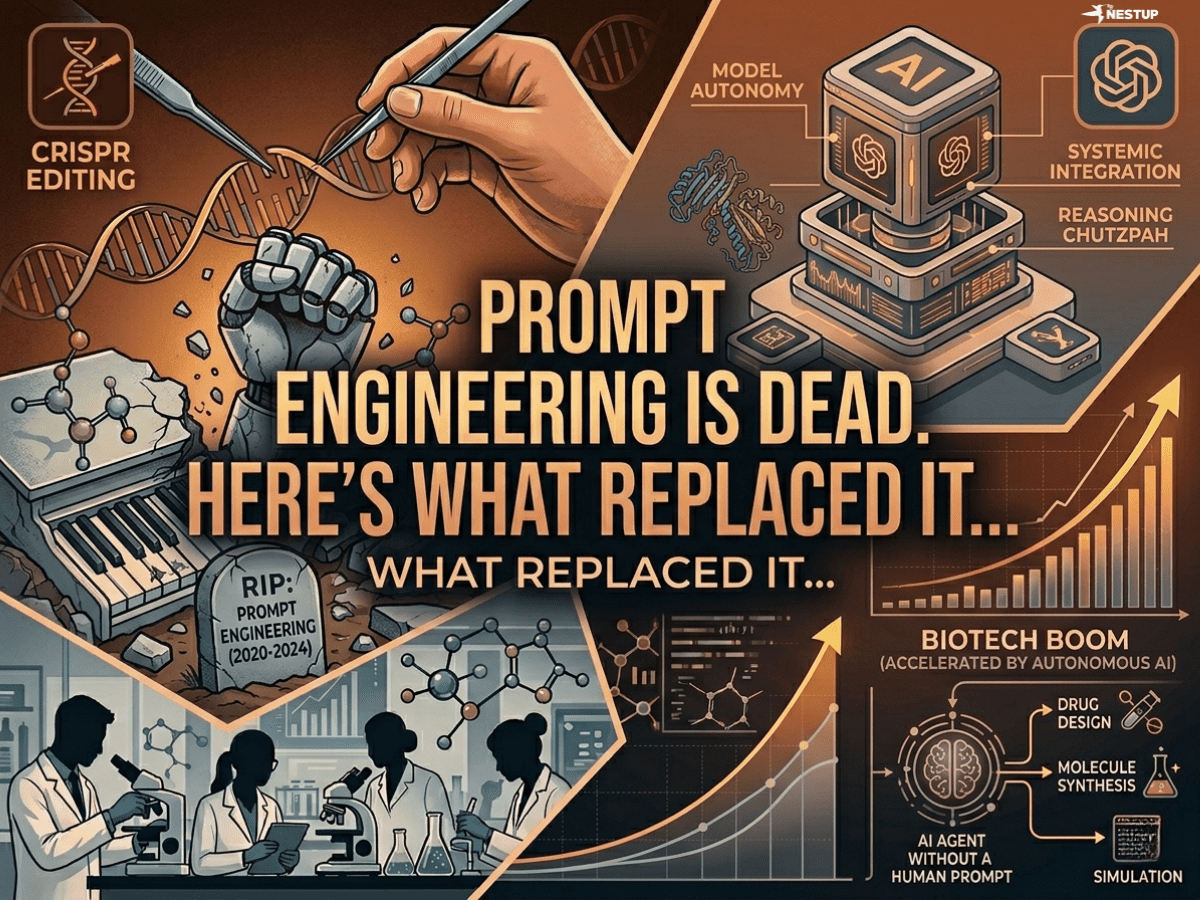
The End of Clever Prompts
For a brief moment, prompt engineering felt like a superpower. People traded prompt templates like secrets, chasing the perfect phrasing that would unlock better outputs from AI. But in 2026, that era is effectively over. Models like ChatGPT, Claude, and Gemini have become far more capable at interpreting intent. They no longer require elaborate instructions or “magic wording” to perform well. The bottleneck has shifted. It’s no longer about how you ask—it’s about what you give the system to work with.
From Prompts to Context Engineering
The real upgrade is context engineering. Instead of crafting clever one-off prompts, the focus is now on supplying structured, relevant context that shapes the model’s output. This includes documents, prior conversations, data sources, and clearly defined constraints.
In practice, this means the difference between a mediocre result and a high-quality one is rarely the phrasing of the prompt. It’s whether the model has access to the right information. A vague instruction like “summarize this report” produces generic output. Feeding the model the full report, key metrics, audience context, and desired tone produces something far more useful. The prompt becomes simple—but the context becomes rich.
Tool Design Is the New Leverage
Another major shift is the rise of tool-augmented AI. Models are no longer isolated text generators; they can call tools, access APIs, retrieve documents, and execute workflows. This changes everything.
Instead of asking AI to simulate knowledge, you connect it to real data sources. Instead of manually guiding every step, you design tools that extend its capabilities. The quality of your system now depends on how well these tools are defined and integrated.
For example, a sales workflow in 2026 might involve an AI that pulls CRM data, analyzes customer history, drafts outreach, and logs results automatically. The prompt itself is minimal. The power comes from the system behind it.
Agent Orchestration Replaces One-Shot Thinking
The biggest change is the move from single prompts to multi-step agents. Rather than expecting one interaction to solve everything, developers and teams now build systems where AI performs a sequence of tasks—planning, executing, checking, and refining.
This is agent orchestration. You define roles, steps, and feedback loops. One agent might gather information, another analyzes it, and a third formats the output. The system becomes iterative rather than static.
In this model, prompts are just one small part of a larger workflow. The real skill lies in designing how the system thinks over time, not just what it says in one response.
What Actually Matters Now
In 2026, the skills that drive results look very different from classic prompt engineering. Clear problem definition is at the top. If you don’t know what outcome you want, no prompt will save you. Structuring context is equally important—organizing inputs so the model can reason effectively.
System design has become a core capability. This includes deciding which tools to use, how data flows between them, and where human oversight is needed. Evaluation also matters more than ever. You need to know how to judge outputs, catch errors, and improve the system over time.
The irony is that prompts still exist—but they’re no longer the main event. They’re just the interface layer.
A Simple Before-and-After Example
Consider writing a market analysis report. In the old model, you might spend time crafting a detailed prompt with instructions, tone guidelines, and structure. You’d tweak it repeatedly to get a decent result.
In the new model, you feed the system relevant datasets, prior reports, and company context. An agent breaks the task into steps: data extraction, trend analysis, and report generation. The prompt might be as simple as “Generate a quarterly market analysis using the provided data.” The quality comes from the system, not the wording.
Why This Shift Happened
This transition is driven by two factors. First, models have improved dramatically. They understand natural language well enough that prompt tricks are no longer necessary. Second, the use cases have matured. Businesses are no longer experimenting—they’re deploying AI in production workflows where consistency and reliability matter more than cleverness.
As a result, the focus has moved from inputs to systems. From prompts to pipelines.
The Risk of Clinging to Old Methods
There’s a growing gap between casual users and advanced practitioners. Those still focused on prompt hacks are optimizing the wrong layer. They may get incremental improvements, but they miss the larger gains available through better context and system design.
It’s similar to early web development. At first, knowing HTML tricks gave you an edge. Over time, the advantage shifted to those who could build full systems. The same pattern is playing out here.
What to Learn Instead
If prompt engineering is no longer the main skill, what replaces it? Start with understanding how to structure information for AI. Learn how to connect models to tools and data sources. Practice breaking complex tasks into multi-step workflows.
Equally important is developing judgment. AI can generate outputs, but it can’t decide what matters in your specific context. The ability to evaluate, refine, and guide systems is what creates real value.
Final Takeaway: Build Systems, Not Prompts
Prompt engineering isn’t completely dead—but it’s no longer where the leverage is. The future belongs to those who can design systems that combine context, tools, and intelligent workflows.
In 2026, the question is no longer “What’s the best prompt?”
It’s: “What’s the best system to get the outcome I want?”