
 A
A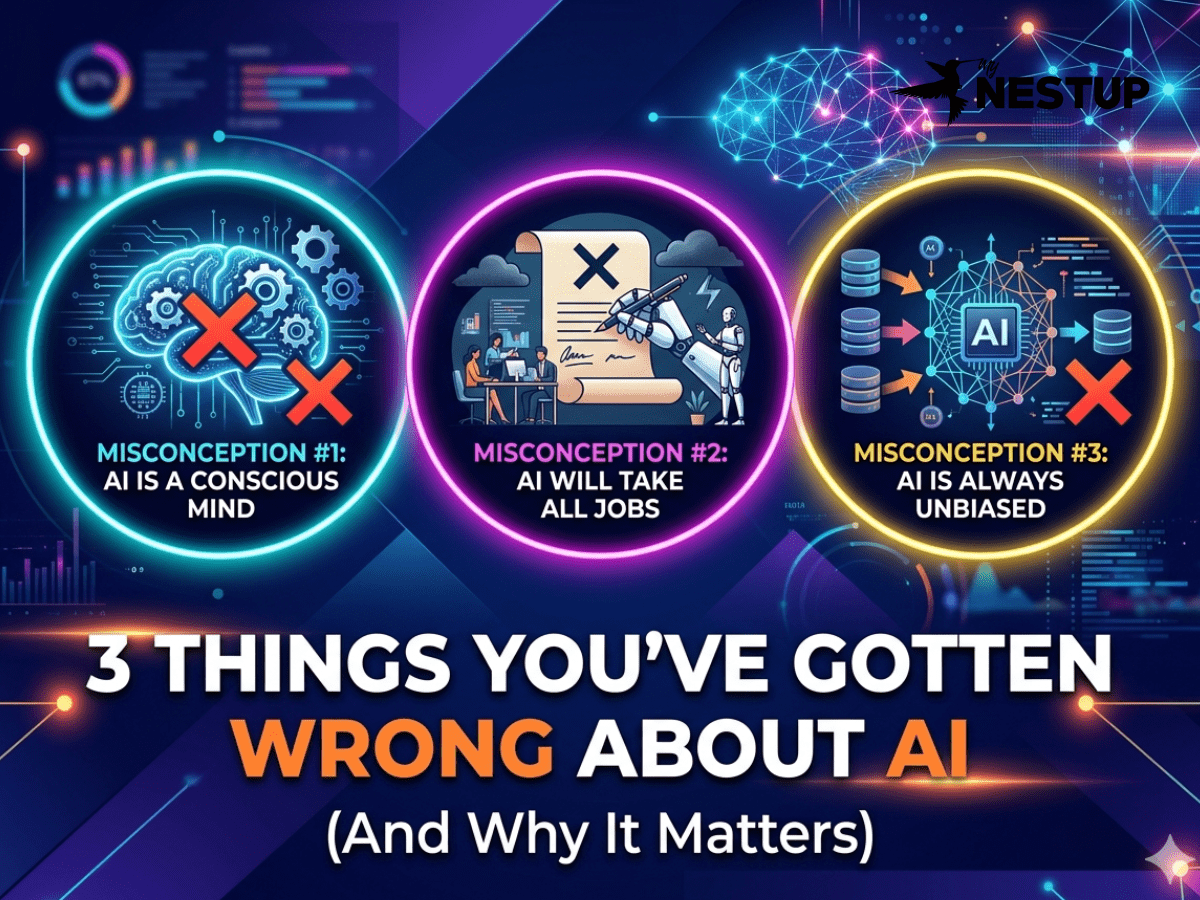
Introduction: The All-Knowing Machine?
We increasingly turn to Artificial Intelligence as a source of information, treating it like a vast, digital oracle capable of answering any question. Its outputs are delivered with such confidence that it's easy to accept them as objective truth. This perception of AI as an all-knowing, impartial machine is powerful, but it's also dangerously incomplete.
The reality is that AI systems, particularly large language models, are trained on enormous datasets of human-generated text and images from the internet. This means they are a reflection of us—our knowledge, our cultures, and, crucially, our hidden biases and conflicting perspectives. The authoritative voice of an AI is not one of singular wisdom, but a statistical echo of countless human voices.
This post will reveal three surprising truths about how AI really works. Understanding them will help you move from being a passive consumer of AI-generated content to a more critical, informed, and responsible user.
1. AI Doesn't Have Opinions, But It's Full of Them.
It’s a counter-intuitive idea: AI models do not possess personal beliefs, consciousness, or intentions, yet their responses can appear highly opinionated. This happens because the model is designed to recognize and reproduce patterns from the human data it was trained on, and that data is saturated with subjective viewpoints.
The appearance of opinion in AI outputs stems from several factors. The training data includes a wide range of human perspectives, but it is often skewed toward dominant cultural or social norms. AI models can also amplify common societal associations, leading to harmful stereotypes. For instance, some facial recognition systems have historically performed worse on darker skin tones due to underrepresented training data, while language models might reinforce gendered professions. Furthermore, political or ideological leanings present in the training data can surface in the AI’s responses on controversial topics.
Artificial Intelligence (AI) systems, especially large language models (LLMs), are trained on vast amounts of human-generated data from the internet and other sources. This data reflects societal patterns, including biases, opinions, and varying perspectives.
This matters because it fundamentally changes how we should interact with AI. We cannot treat it as a neutral arbiter of information, especially on sensitive or debated issues. Its answers are not objective conclusions but reflections of the complex, and often biased, data it learned from.
2. AI Is a Master of Confident-Sounding Falsehoods.
A critical skill for any AI user is learning to distinguish between a verifiable fact and a statement that simply sounds factual. A fact is "verifiable information that can be proven true or false through evidence," like a scientific constant or a historical date. AI, however, doesn't operate on a principle of truth; it operates on a principle of probability, predicting the next most likely word in a sequence.
This predictive process can lead to a phenomenon known as "hallucination," where the model generates confident but completely false information. Because the AI doesn't inherently distinguish between a well-sourced fact and a widely repeated opinion from its training data, it can present subjective viewpoints or outright falsehoods with the same authoritative tone it uses for established truths.
To separate fact from AI-generated fiction, use these actionable strategies:
- Verify claims: Always cross-check important information, such as statistics, dates, or technical descriptions, with reliable, external sources.
- Ask for evidence: Prompt the AI to cite its sources or to explain its reasoning step-by-step. Scrutinizing its process can reveal logical gaps or unsourced claims.
- Watch for qualifiers: Pay attention to phrases like "I think" or "many believe," as these are crucial signals that the AI is repeating a perspective prevalent in its data rather than stating a verifiable fact.
3. Ethical AI Isn't Just for Programmers—It's Your Job, Too.
It’s easy to think that the ethical responsibility for AI lies solely with the developers who build and train the models. While they play a crucial role, ethical AI is a shared responsibility that extends to every person who uses the technology. Using AI ethically requires active participation and critical thinking from the user.
By being aware of core ethical principles, you can guide your interactions with AI to ensure they are fair and beneficial. Key principles for users to consider include:
- Fairness: Being aware that AI can reflect and amplify societal biases, and actively working to mitigate those biases in your own use to avoid discriminatory outcomes.
- Transparency: Questioning how an AI arrives at its conclusions and not simply accepting its output at face value.
Conclusion: From Passive User to Critical Thinker
Artificial intelligence is one of the most transformative technologies of our time, but its greatest risk isn’t that it’s too powerful—it’s that we may trust it too easily.
AI systems don’t truly “know” things. They reflect patterns in the vast oceans of human data they were trained on. That means they can mirror our brilliance, but also our biases, misunderstandings, and misinformation.
The smartest way to use AI isn’t blind trust—it’s informed skepticism.
Treat AI outputs as starting points for thinking, not final answers. Verify important claims, question confident statements, and remember that the technology is a tool—not an oracle.
The future of AI won’t be defined only by the models we build.
It will also be defined by how wisely we use them.