
 N
N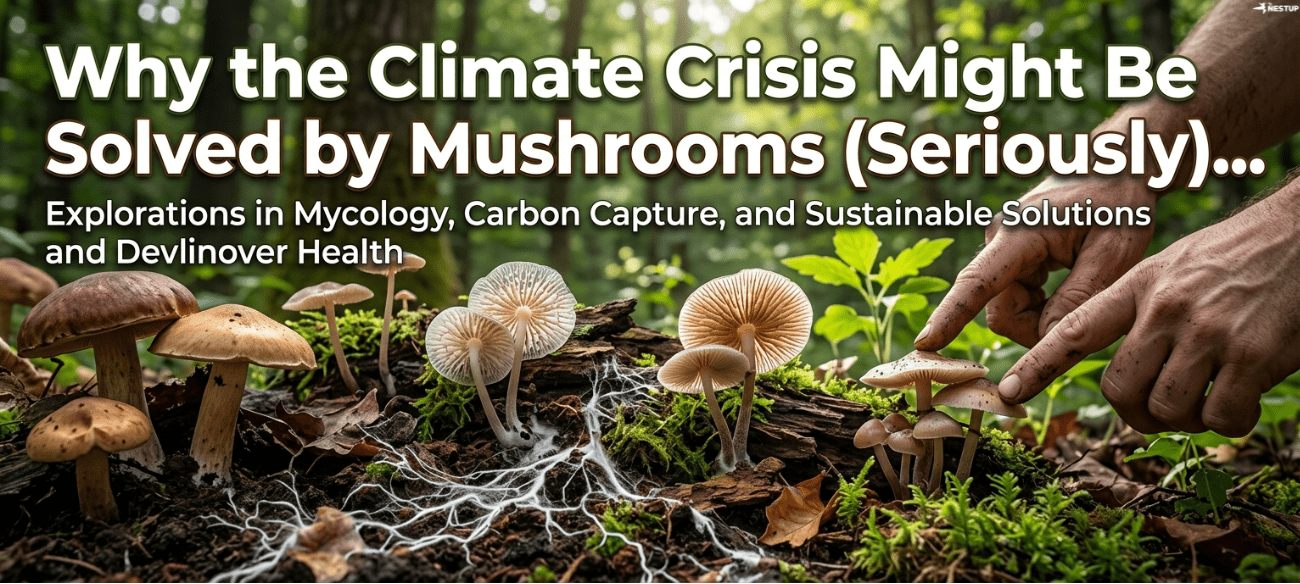
Introduction: The Unlikely Hero of the Climate Crisis
We’ve spent centuries looking at fungi as a side dish or a forest floor cleanup crew, missing the high-tech circuitry hidden in plain sight. When we think of "climate technology," we usually imagine gleaming carbon-capture fans or massive lithium-ion batteries. We rarely associate the future of the planet with the damp, dark world of mushrooms.
However, we are on the cusp of a biological manufacturing revolution. Mycelium—the underground structure of fungi—is emerging as "nature’s master recycler." As the global economy grapples with the fallout of carbon-intensive manufacturing, this fungal network is being rebranded as a dominant biological technology. The goal is no longer just to build better machines, but to transition away from petroleum-based extraction toward a model of biological growth.
Takeaway 1: Mycelium is a "Biological Internet," Not Just a Root System
To understand the industrial potential of fungi, you have to look past the mushroom cap. While the cap is the visible "fruit," the true engine is the mycelium: a vast, root-like network of fungal threads spreading through organic matter.
This structure is more than just a biological anchor; it functions as a highly efficient system for decomposition, structural binding, and rapid growth.
"It functions almost like a biological internet: transporting nutrients, breaking down material, and forming symbiotic relationships with ecosystems."
Reflection: Viewing a biological organism as a "structural binder" represents a fundamental shift in material engineering. We are moving away from using external heat or toxic chemicals to fuse materials together. Instead, we are deputizing a living system to build its own architecture, transforming biology into a functional tool for assembly.
Takeaway 2: We Can "Grow" Packaging Instead of Manufacturing It
The front line of this revolution is the replacement of Styrofoam. Companies like Ecovative are proving that we don’t need oil to create protective packaging; we just need agricultural waste and a mold. By introducing mycelium to organic leftovers, the fungi act as a natural resin, binding the waste into a sturdy, custom-shaped foam.
Traditional petroleum-based foams are environmental liabilities—they are fossil-fuel dependent, rarely recycled, and persist in landfills for centuries. Mycelium-based packaging, however, grows in days and is fully compostable.
Analysis: This shift fundamentally upends the "disposable" economy. When packaging is treated as a biological byproduct rather than a chemical burden, the economic cost of "waste" essentially drops to zero. We are moving from a material that lasts centuries after a single use to one that disappears in weeks once its purpose is served.
Takeaway 3: The Circular Economy’s "Secret Sauce" is Agricultural Waste
The true power of mycelium lies in its diet. Fungi don't require virgin resources; they thrive on the low-value agricultural waste that industrial systems typically discard. It is important to note that we aren't "growing food to make plastic"—we are using trash to make technology.
The primary Raw Manufacturing Inputs include:
- Corn husks
- Hemp waste
- Sawdust
- Crop leftovers
"What if industrial systems learned from ecosystems instead of fighting against them?"
Reflection: This transformation of low-value waste into high-value resources is the cornerstone of a true circular economy. By utilizing the energy already stored in agricultural byproducts, mycelium eliminates the need for extractive "virgin" materials and creates a production loop where every "end" is actually a beginning.
Takeaway 4: High-End Fashion is Trading Livestock for Fungi
The luxury textile market is currently trading cattle for cultivation. MycoWorks and other pioneers are now producing engineered mycelium leather that rivals animal hides in quality. Luxury brands are flocking to these materials because they can replicate the flexibility, durability, and texture of premium leather without the environmental toll of livestock emissions, massive water consumption, and toxic chemical tanning.
Analysis: In the high-end market, sustainability is a hollow promise without aesthetics. Because mycelium leather feels "premium" rather than "synthetic," it bridges the gap between environmental responsibility and luxury. This proves that for sustainable materials to scale, feeling "high-end" is not a luxury—it is a prerequisite for adoption.
Takeaway 5: A Radical Philosophical Shift: Growing vs. Extracting
The mycelium model is a departure from the traditional industrial paradigm of extraction, combustion, and refinement. Whether we are producing leather, packaging, or even construction materials like insulation, acoustic panels, and bricks, the process is one of cultivation rather than destruction.
This shift is incredibly energy-efficient. While traditional manufacturing requires high-heat furnaces, fungal growth mostly requires:
- Moisture and oxygen
- Low-temperature, controlled environments
- Agricultural feedstocks
Beyond the factory, this technology taps into the broader science of soil carbon dynamics. Healthy fungal ecosystems help plants store carbon more effectively underground, meaning that a mycelium-based economy supports regenerative agriculture and healthier soils.
Analysis: This is the most radical aspect of the technology: moving from a culture of extraction to one of cultivation. It replaces the "destructive" nature of manufacturing—where we burn and refine—with a biological process that mimics nature’s own efficiency and carbon-sequestering capabilities.
The Reality Check: The Road to 2030 and Beyond
We must avoid the "magic hack" trap. The "Zymergen Lesson" looms large over the bioeconomy: scientific feasibility is much easier than industrial economics. Proving a material works in a lab is one thing; competing with the deeply entrenched, economically optimized infrastructure of the petrochemical industry is another. To succeed, mycelium must prove it can match the performance, reliability, and cost of traditional materials.
The Road Ahead:
- 2026–2030: Continued expansion in niche sectors. Expect a surge in mycelium use for premium packaging, luxury fashion, and specialized construction applications like acoustic panels and high-efficiency insulation.
- Early 2030s: This is the era of the "quiet shift." As manufacturing costs drop and supply chains stabilize, consumers will begin using grown products in their homes and cars without even realizing they are fungal-based.
Conclusion: Learning to Manufacture Like Nature
Mushrooms are not a singular miracle cure for the climate crisis, but they represent a vital shift in our industrial toolkit. They teach us that the most sophisticated technology on the planet isn't necessarily something we built in a lab, but something that has been evolving under our feet for billions of years.
The future of sustainability isn't just about building better machines; it's about learning to manufacture more like nature itself. As these products move from the forest floor to the showroom floor, we have to ask ourselves: Will you feel comfortable wearing a jacket grown in a lab, or living in a house held together by fungi?