
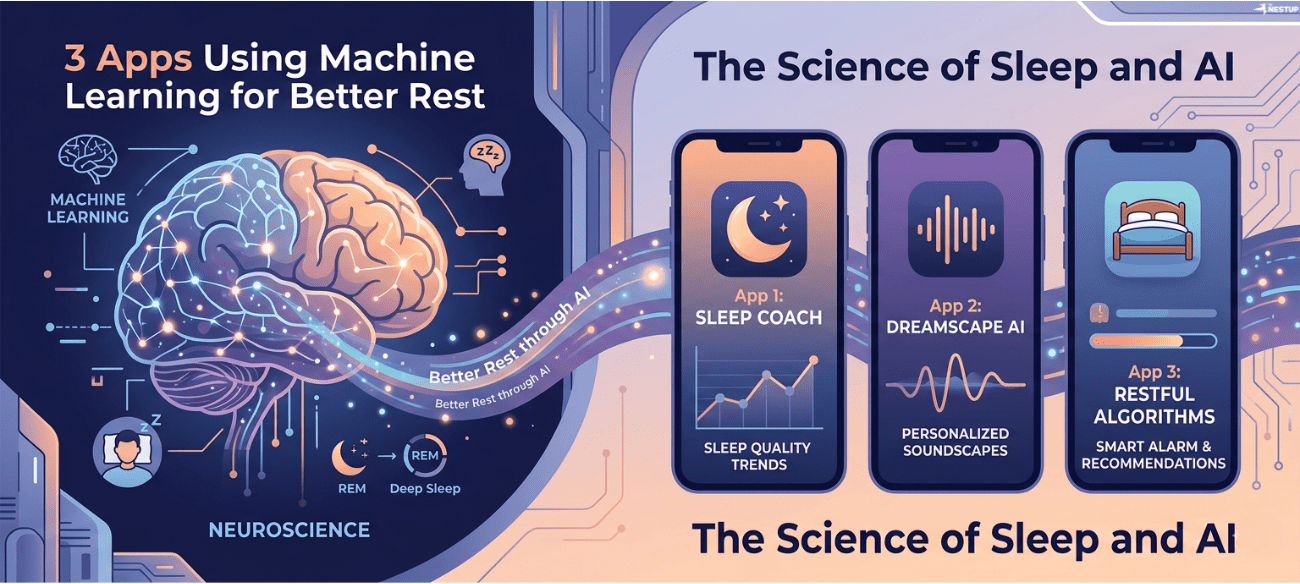
For decades, we treated sleep as the ultimate passive activity—a period of inconvenient but necessary downtime where the brain and body simply "switched off." However, as we move into 2026, a profound shift in clinical research and machine learning has reclassified rest. Sleep is no longer an absence of action; it is a critical performance variable and the essential infrastructure for cognitive performance, metabolic health, and long-term neurodegenerative risk.
The conversation has evolved. We are past the "can we track it?" phase of wearable tech. The frontier has moved toward optimization—using neural networks to bridge the gap between our high-stress modern lives and our ancient biological needs. But as we transition from passive monitoring to active intervention, we must navigate a landscape of noisy consumer data, subscription-heavy ecosystems, and the psychological cost of the "quantified self."
Here are the five key takeaways from the AI sleep revolution and what they mean for the future of human recovery.
1. From Observation to Intervention: The Rise of the "Active" Bed
The first generation of sleep technology was strictly post-mortem; it told you how poorly you slept after you woke up. The new paradigm, led by platforms like Eight Sleep, uses machine learning to create a "tight feedback loop." By monitoring biometrics in real-time, the bed itself becomes a participant in your recovery.
Temperature regulation is perhaps the most underrated driver of sleep quality. Research confirms that cooler environments facilitate sleep onset and deep sleep duration. Eight Sleep’s AI uses a combination of heart rate variability (HRV), movement, and room conditions to dynamically heat or cool the bed throughout the night.
"We are seeing a fundamental shift in the industry: moving away from merely tracking what happened toward actively shaping better recovery environments."
This is a structural shift in technology. The machine is no longer a passive witness to your rest; it is an active engineer of the optimal biological state.
2. The "Medical-Grade" Myth and the Power of Trends
There is a persistent misconception that a ring or wristband is a substitute for a clinical sleep laboratory. To be clear: consumer wearables are not medical-grade EEG monitors. They do not track brain activity directly. Instead, they leverage machine learning to estimate sleep stages based on a suite of indirect biometrics:
- Movement patterns (via accelerometers)
- Heart Rate and HRV (via optical sensors)
- Respiration and oxygen trends
- Peripheral skin temperature
Chasing perfect sleep-stage accuracy—obsessing over the exact minute you entered REM—is a futile exercise. The real journalistic value of AI in 2026 lies in habit identification and long-term trend analysis. These devices offer a "good enough" estimate that, when viewed through a longitudinal lens, provides a powerful map of your physiological recovery, even if they aren't scientific truths in the absolute sense.
3. Your Wearable is a Mirror for Your Behavioral Bottlenecks
The true genius of machine learning in this space is its ability to find correlations in large-scale behavioral datasets that the human mind is designed to ignore. Platforms like Oura and WHOOP have mastered the art of translating complex biology into "readiness" and "strain" scores.
Oura’s success, in particular, stems from its form factor; because rings are easy to wear continuously, they generate massive longitudinal datasets that allow AI to personalize its baseline for your unique biology. This turns the wearable into a mirror, reflecting the "physiological cost" of your lifestyle. It’s not just about a sleep score; it’s about discovering how:
- A single glass of wine ripples through your resting heart rate for hours.
- Late-night meals create a metabolic tax that suppresses your HRV.
- Your circadian timing is being shifted by evening blue light exposure.
However, this insight comes with a reality check. The "subscription frustration" is real. Between high upfront hardware costs (often reaching thousands for smart beds) and recurring monthly fees, the most advanced AI insights are currently gated behind an economic barrier that many casual users find difficult to justify.
4. The Rise of "Orthosomnia" and the Noise of Anxiety
There is a dark side to the quantified self: orthosomnia. This term describes a clinical phenomenon where an obsession with achieving "perfect" sleep metrics actually degrades sleep quality.
When users treat their morning dashboard as a high-stakes test, the act of resting becomes a stressful optimization contest. AI systems are excellent at gathering data, but they currently struggle to account for the nuance of emotional stress, major life events, or mental health variables. They see a dip in HRV but cannot distinguish between a hard workout and a difficult breakup. More data is not always more useful; if the tracker becomes a source of anxiety, the technology has defeated its own purpose.
5. The Most Effective AI Insights Lead to "Boring" Solutions
There is a profound irony at the heart of the sleep-tech industry. We are using Silicon Valley’s most complex neural networks to automate the common sense our ancestors had by default.
After processing billions of data points, the AI's "magic" solution is almost always a return to biological fundamentals:
- Consistent sleep and wake schedules.
- Aggressive light mitigation in the evening.
- Cool, dark, and quiet environments.
These apps aren't magic; they are tools for consistency reinforcement. We are using cutting-edge technology to bridge the gap between our artificial, high-intensity lifestyles and our basic evolutionary requirements. The value isn't in the fancy dashboard—it’s in the technology’s ability to prove to us, with data, that the "boring" habits are the ones that actually move the needle on human performance.
Conclusion: Sleep as Infrastructure
We are witnessing a total reclassification of rest. Sleep is no longer unproductive downtime; it is being redefined as "biological maintenance"—the essential infrastructure for our cognition, mood, and immunity.
As technology evolves, we will see a move toward environments that manage themselves, turning our bedrooms into responsive recovery pods. Sleep is becoming a measurable, optimizable pillar of human performance. Yet, as we embrace these tools, we must ask ourselves: How do we balance the benefits of high-tech optimization with the risk of over-quantifying a natural, human process?
The goal of AI should be to help us sleep better so we can live better—not to make us lose sleep over the data itself.