We’ve all lived the lie of the digital streak. For years, our home screens were littered with colorful checkboxes and “Atomic Habits” trackers that promised a life overhaul but delivered little more than a mounting sense of guilt. We tracked every glass of water and every gym session, yet the fundamental shift in our behavior stayed frustratingly out of reach. The problem wasn’t our lack of data—it was the lack of a system that actually cared about the outcome.
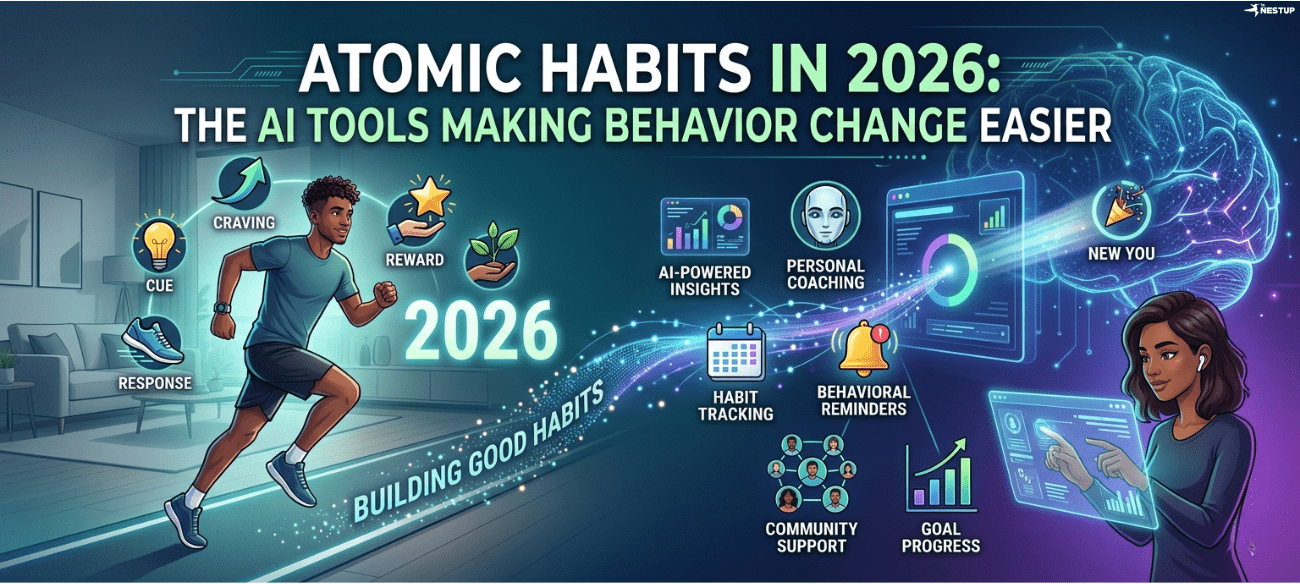
In 2026, the landscape of personal change has shifted. We have officially entered the era of AI-assisted behavior change. This is the birth of “Digital Discipline,” a movement that has moved the needle from manual logging to proactive coaching. Instead of you serving the app, the app finally serves your evolution.
From Checkboxes to Coaches: The Death of the Static Tracker
Traditional habit apps were essentially digital ledgers—passive, silent, and easily ignored. The 2026 AI systems have replaced these digital graveyards with a “lightweight behavioral coach in your pocket.” These aren’t just tools; they are active interventions.
Instead of a static interface, the new guard provides:
- Personalized Coaching: Advice that evolves based on your specific hurdles.
- Adaptive Reminders: Nudges that sense when you’re drifting and change their timing and content.
- Emotional Tone Adjustment: A system that knows when you need a firm push versus a supportive word.
- Behavioral Pattern Analysis: Identifying the subtle “miss” cycles and triggers humans usually overlook.
- Accountability Conversations: Interactive voice and text check-ins that simulate the presence of a real partner.
The Psychology of Resilience: Why “Gentle” is Winning
The most significant design pivot in recent years is the rejection of the “punishment-style” tracker. Developers have realized that shame is a poor long-term motivator. This has fueled the explosive success of Finch, an app that prioritizes emotional safety and self-care. Especially popular among younger users and those managing anxiety, Finch costs roughly ~$15/year and replaces the cold checkbox with a virtual pet that thrives when you do.
Progress feels nurturing rather than stressful because it builds a psychological buffer. This “low-pressure consistency” works because it acknowledges a hard truth about modern productivity:
“Many users burn out on aggressive productivity systems.”
The Carrot and the Stick: When AI Gets Aggressive
Not every brain responds to a digital bird. Human motivation is a bifurcation; while some require a dopamine hit of kindness, others need a cortisol spike to move. This is where the “hard” accountability systems like FineStreak come in.
FineStreak simulates real-world consequences through:
- AI Accountability Calls: Voice-based check-ins that demand an explanation for a miss.
- Financial Penalties: Self-imposed monetary stakes that disappear from your bank account if you fail.
- Photo Verification: Requirement of visual proof to verify completion, closing the “lazy log” loophole.
The End of the “Perfect Streak” Era
In 2026, the chain is meant to be broken—as long as you pick up the links. Behavioral science has finally moved away from the tyranny of the “perfect streak,” recognizing that perfectionism is often the greatest enemy of progress. Modern apps like Habify focus on “recovery systems” rather than unbroken lines.
The focus has shifted toward:
- Momentum: Measuring the overall weight of your effort.
- Resilience: Explicitly rewarding the act of bouncing back.
- Restarting Quickly: Lowering the psychological barrier to entry after a “reset.”
The Democratization of Mastery: AI vs. Human Coaches
Elite human coaching was once a luxury reserved for the C-suite. AI has democratized this mastery, making personalized accountability accessible at a fraction of the cost. While a human coach may check in weekly, your AI coach is available hourly.
| Coaching Type | Typical Cost | Strengths | Weaknesses |
| One-Time Purchase (e.g., Streaks) | ~5–6 | Cheap, frictionless, simple | No active accountability |
| Basic Habit App | Free – $5/mo | Simple, easy entry | Limited behavioral depth |
| AI Coaching App | $5 – $20/mo | Personalized, 24/7, scalable | Limited deep emotional nuance |
| Hybrid AI + Human | $50 – $200/mo | Balance of data and empathy | More expensive than pure AI |
| Human Coach | $100 – $500+/mo | Deep support for major life shifts | High cost, less scalability |
The Hybrid Sweet Spot
The gold standard for behavior change in 2026 is the hybrid model. In this ecosystem, AI handles the high-frequency “accountability calls” and daily check-ins—tasks humans are too expensive to perform—while human coaches handle high-level strategy and major life transitions.
This model targets the primary reason most systems fail:
“It’s: 👉 emotional consistency during difficult periods.”
While AI is a master of pattern recognition, humans still win at providing empathy during a crisis. The hybrid model ensures you have a machine to keep you on track on Tuesday, and a human to help you pivot when your life turns upside down on Friday.
AI as Behavioral Infrastructure
We are no longer just looking at apps; we are looking at the construction of “behavioral infrastructure.” These tools are evolving into an external nervous system that manages our most vital human loops—sleep, exercise, and focus.
The algorithm has shifted from a source of distraction to a source of discipline. This is arguably the most impactful application of AI yet: bridging the gap between who we are and who we intend to be. The technology is finally ready to hold the line for us.
The only question left is: if an algorithm can make you a better version of yourself, do you care if the discipline isn’t yours?