
 N
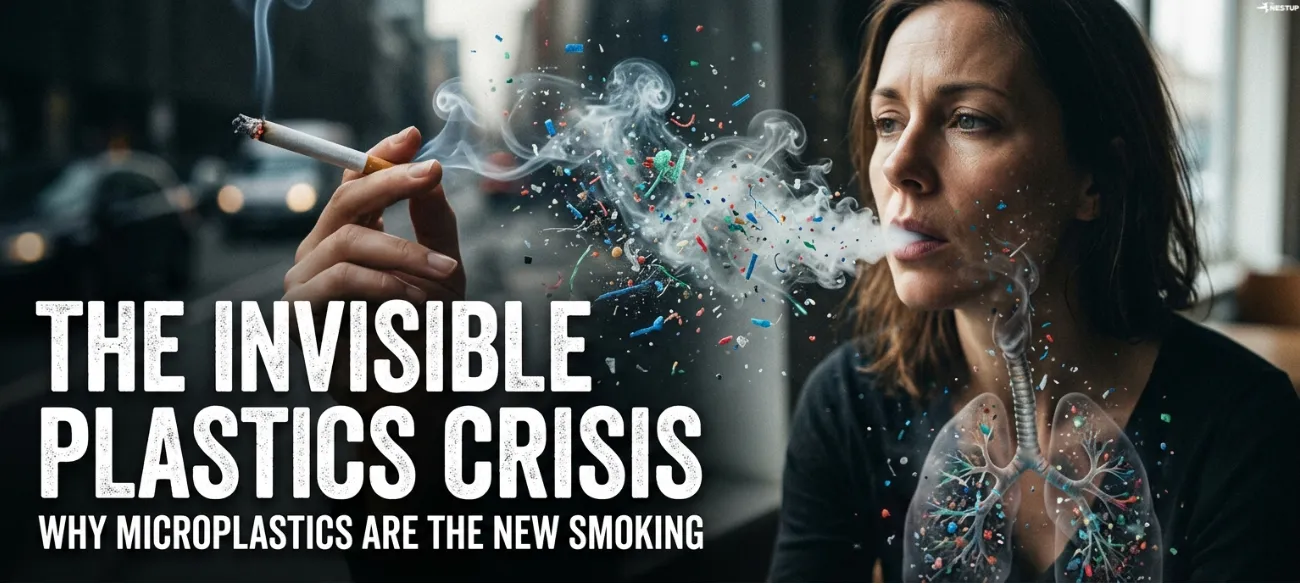
Introduction: The Invisible Breach
For decades, the standard-bearer for public health warnings was the cigarette. We watched as society transitioned from glamorizing smoke to recognizing it as a delivery system for toxic particulate matter that bypassed our lungs to poison our systems. But as of 2026, the clinical evidence is now undeniable: a new, invisible threat has surpassed tobacco as our most urgent systemic crisis.
Micro- and nanoplastics (MNPs)—synthetic fragments ranging from 5 millimeters down to microscopic, invisible shards—have officially breached our primary biological defenses. What was once dismissed as an "environmental issue" involving distant oceans and marine life has become an internal health reality. These polymers have successfully infiltrated the human bloodstream and are now accumulating in our most vital organs, effectively turning our own biology into a repository for the synthetic world.
The "4.5x" Cardiovascular Warning Label
The turning point for this investigation lies in the pathology lab. Recent studies analyzing human arterial tissue have radically altered the traditional understanding of heart disease. In a landmark clinical trial, researchers cleared plaque from the carotid arteries of patients and found that nearly 60% of them had microplastics embedded directly within the fatty deposits.
The implications for cardiovascular survival are staggering:
Patients with plastic-laden plaque experienced a 4.5-times higher risk of suffering a stroke, heart attack, or sudden death compared to those whose plaque was plastic-free.
Data presented at the American College of Cardiology (ACC.25) sessions further confirms that microplastic concentration is a powerful predictor of chronic conditions like high blood pressure and diabetes. These are not passive hitchhikers; they are hostile invaders. When these nanoparticles enter the bloodstream, they trigger chronic vascular inflammation as immune cells mount a futile, ongoing attack against the shards. This inflammatory cycle destabilizes arterial walls, making existing plaque brittle and significantly more likely to rupture, leading to the immediate formation of life-threatening blood clots.
The Brain’s Broken Shield
Perhaps the most chilling discovery of 2026 is the infiltration of our central nervous system. It was long assumed that the blood-brain barrier—the highly selective cellular "shield" protecting our brain from toxins—was impenetrable to plastics. That assumption has been shattered. Autopsy data published in Nature Medicine reveals that human brain tissue now carries microplastic concentrations 7 to 30 times higher than those found in the liver or kidneys.
This accumulation is accelerating with terrifying speed, showing a 50% increase in brain plastic density over just the last eight years. To breach the brain, nanoplastics employ a "stealth" mechanism: they coat themselves in biological proteins as they travel through the body. This protein corona acts as a selective "passport," allowing the shards to slip past biological defenses and systematically weaken the barrier from the inside out.
The Structural Link to Dementia
The presence of these fragments is more than a biological curiosity; it is a structural precursor to cognitive decline. Brain samples from individuals diagnosed with dementia carry a staggering six times more microplastics than those from cognitively healthy individuals.
A comprehensive medical review from the University of Technology Sydney has identified the five specific pathways through which these fragments degrade neurological health:
- Barrier Leakiness: Nanoplastics weaken the blood-brain barrier’s integrity, allowing further toxins to flood the brain.
- Protein Aggregation: The physical fragments act as structural anchors, accelerating the formation of the toxic amyloid-beta and tau protein plaques that define Alzheimer’s disease.
- Microglia Hyper-Activation: The brain’s specialized immune cells cause chronic, irreversible neuroinflammation as they attempt to "eat" the indestructible plastic particles.
- Mitochondrial Injury: Polymers disrupt the mitochondria inside neurons, effectively choking off the supply of cellular energy (ATP).
- Oxidative Stress: The particles flood brain tissue with reactive oxygen species while weakening the brain’s natural antioxidant defenses.
The Danger of the "Hot" Dishwasher and Microwave
While we encounter plastic everywhere, our highest daily dose often comes from a self-inflicted process: "thermal degradation." When plastic containers or films are subjected to heat, the polymer bonds weaken, releasing a massive surge of particles directly into our food.
The investigative takeaway is clear and non-negotiable: Never microwave in plastic or use plastic wrap under heat. Furthermore, running plastic items through a hot dishwasher if they are intended for food service only accelerates their breakdown. To protect your internal biology, you must transfer all food to glass, ceramic, or stainless steel alternatives before applying any heat.
The Bottled Water Paradox
For years, the public has reached for bottled water as a "pure" alternative to tap water, but the reality is a scientific paradox. A single liter of bottled water can contain hundreds of thousands of nanoplastic particles. These shards are generated by the mechanical friction of opening the plastic cap and the industrial bottling process itself.
While achieving zero exposure is impossible in our modern infrastructure, you can significantly lower your "bio-burden" by ditching single-use plastics. The only scientifically backed defense for drinking water is high-quality filtration—specifically Reverse Osmosis (RO) or solid carbon block filters, which are designed to capture synthetic particles down to the sub-micron level.
The "Plastic Wardrobe" and Industrial Food
If we aren't drinking the plastic, we are wearing it and eating it. Our modern lifestyle is built on two often-overlooked vectors of contamination: synthetic textiles and ultra-processed foods (UPFs).
- Synthetic Textiles: Approximately 60% of modern clothing—including polyester, nylon, and acrylic—sheds millions of microplastic fibers through friction and washing. Transitioning to natural fibers like cotton, wool, or hemp is a critical investment in your long-term health. Pro-Tip: Install a specialized microfiber filter on your washing machine discharge line to capture these fibers at the source.
- Industrial Food: Ultra-processed foods are high-velocity vectors for plastic due to the aggressive mechanical wear of industrial processing equipment. Long-term storage in synthetic films allows for further migration of particles into the food matrix. Moving toward a whole-food diet is no longer just about nutrition; it is about reducing your baseline plastic intake.
A New Era of Biological Longevity
We have moved past the era where plastic was merely a "litter" problem. In 2026, it is a biological reality that dictates cardiovascular and neurological survival. Aggressively "de-plasticizing" your daily habits—by refusing to heat plastic, upgrading your water filtration, and choosing natural materials—is the most significant health strategy of our time.
As you move through your day, look at your routine through a new lens. Every synthetic touchpoint is a potential entry point for a permanent invader. Ask yourself: Are we truly willing to trade our neurological legacy and cardiovascular health for the fleeting convenience of a disposable lid?