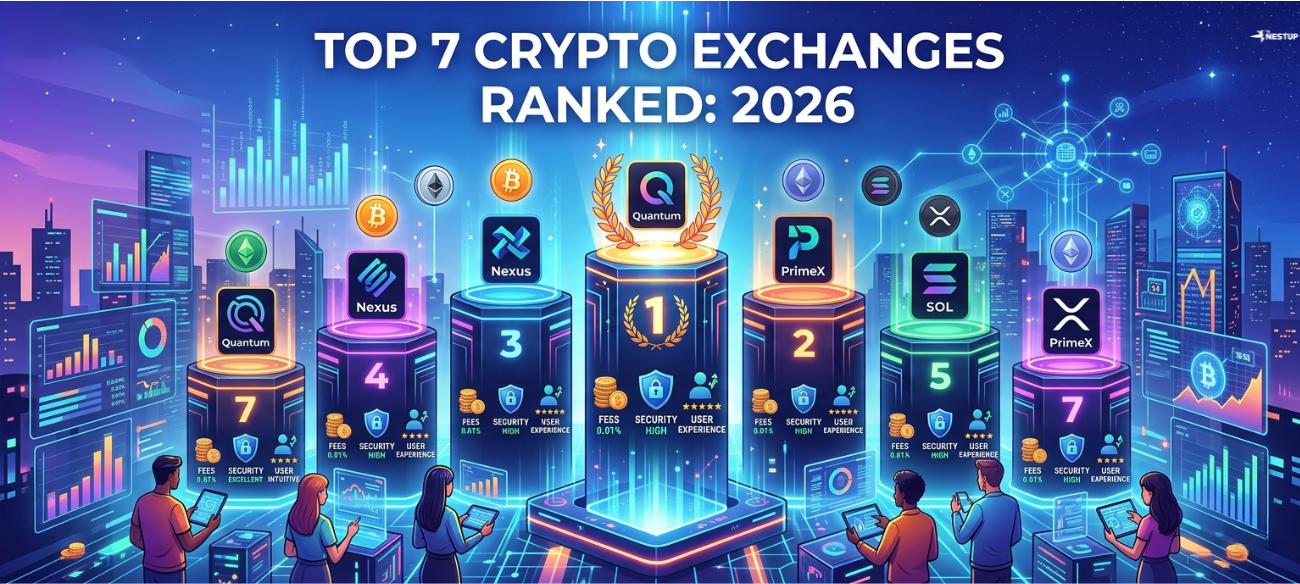
The 2026 crypto exchange landscape is a study in contradictions—a market that has finally grown up but remains fundamentally fractured. We have moved past the Wild West era where basic functionality was a luxury; today’s investors demand a sophisticated triad of safety, cost-efficiency, and institutional-grade custody. However, as the industry matures, the divide between different platforms has only deepened, creating a fragmented ecosystem where "access" means very different things depending on where you log in.
This evolution has birthed a staggering financial anomaly: a massive fee disparity where some investors are paying 500% more than others to execute the exact same trade. This isn't an accident; it is the result of a "mature yet divided" market where the "easy button" of a simplified user interface often masks a significant financial drain. For the modern strategist, the question is no longer just "does it work?" but "at what cost is this convenience coming?"
To navigate this terrain, we must distill the raw data from the industry’s top seven global players: Binance, Coinbase, Kraken, OKX, Bybit, Gemini, and Bitstamp. This analysis moves beyond the marketing gloss to reveal the trade-offs inherent in each platform’s architecture, helping you decide where to anchor your capital in an increasingly complex digital economy.
The "Trust Tax": Why Safety Comes with a Premium Price Tag
In the current market, a clear "trust tax" has emerged, separating the regulated stalwarts from the high-efficiency engines. If you are using Coinbase or Gemini, you are likely paying fees that exceed 0.5% per trade—a steep price when compared to the aggressive 0.10% (or lower) standard set by Binance, OKX, and Bybit. Even mid-tier options like Kraken (0.16% maker/0.26% taker) and the veteran Bitstamp (0.30%–0.40%) highlight just how wide this chasm has become.
This price gap is effectively a premium for regulatory peace of mind. As the industry data suggests:
"Coinbase has positioned itself as the safest entry point into crypto, particularly in regulated markets like the US and Europe... the tradeoff is cost."
For a casual investor, this "trust tax" is often a justifiable insurance policy; the transparency of a publicly listed company or a New York-licensed entity provides a layer of protection against the "black swan" events of yesteryear. However, for an active trader, this tax is a structural weakness. When the cost of execution is five times higher on one platform than another, the fees don't just eat your profits—they can turn a winning strategy into a losing one.
The UX Paradox: When More Features Become a Liability
In the race to innovate, many exchanges have stumbled into a UX paradox where feature bloat has become a primary risk factor. While Coinbase and Gemini have doubled down on "clean and intuitive" designs to attract the masses, platforms like Binance and OKX have built "overwhelming" cockpits filled with advanced trading tools, DeFi integrations, and derivatives.
The risk here is operational: choosing an interface that exceeds your technical proficiency can lead to devastating mistakes during periods of high market volatility. A cluttered dashboard is a liability when you need to exit a position in seconds. This reality explains why Bitstamp’s refusal to chase every new trend has become a competitive advantage. By focusing on core trading and longevity, Bitstamp offers a stable environment for conservative users who realize that in a crisis, simplicity is a feature, not a bug.
Security 2.0: From "Anti-Hack" to "Trust Architecture"
By 2026, the definition of security has shifted from simple "anti-hack" firewalls to a broader "trust architecture." It is no longer enough to keep the hackers out; an exchange must prove its operational integrity through transparent custody practices, real-time proof-of-reserves, and rigorous regulatory alignment. For the long-term investor, the sustainability of the exchange's business model is now the ultimate benchmark.
We can now categorize the major players into three distinct tiers of trust architecture:
- Top-Tier Trust and Compliance: Coinbase, Kraken, and Gemini. These are the gold standards for custody and regulatory transparency.
- Technical Strength with Regulatory Challenges: Binance and OKX. These platforms possess elite technical defenses but navigate a complex web of varying legal frameworks.
- Moderate/Less Regulated: Bybit and Bitstamp. While operationally stable, these platforms often operate under less stringent oversight compared to their US-based peers.
The industry now views security as:
"Trust architecture."
This means that "Security 2.0" is less about the strength of the code and more about the transparency of the balance sheet. For those prioritizing the safety of their principal, operational integrity is the only metric that matters.
The Rise of the "Niche Specialist" Exchange
The dream of the "all-in-one" platform is dying. In its place, we see the rise of the niche specialist, where exchanges optimize for specific user personas rather than the general public. This fragmentation has led to a market where every platform has a specific "Best for" designation:
- Binance: Best overall for low fees and liquidity.
- Coinbase: Best for beginners and trust.
- Kraken: Best balance of security and cost.
- OKX: Best for advanced features and Web3 integration.
- Bybit: Best for derivatives and speed.
- Gemini: Best for compliance and transparency.
- Bitstamp: Best for simplicity and longevity.
These aren't just labels; they represent a fundamental shift in how power users interact with the market. They no longer look for the "best" exchange—they look for the platform that is "best for" the specific task at hand, whether that is a fiat on-ramp or a high-speed derivatives trade.
The Death of the "All-in-One" Strategy
The most counter-intuitive takeaway for 2026 is that the most successful investors have abandoned the single-exchange model entirely. They have adopted a "split activity" strategy to mitigate the inherent trade-offs between cost and safety. By diversifying their platform usage, they capture the low fees of the "efficient" exchanges while maintaining the regulatory safety of the "trusted" gateways.
This strategy is built on three core pillars:
- Fiat On-Ramps: Use highly regulated platforms (Coinbase, Gemini) as the bridge for moving traditional currency into the ecosystem.
- Active Trading: Move assets to low-fee, high-liquidity hubs (Binance, OKX, Bybit) for execution.
- Storage: Transfer long-term holdings off-exchange into dedicated private wallets to eliminate platform risk.
Conclusion: Your Portfolio is Only as Strong as Its Foundation
The rankings of 2026 confirm that there is no universal "best" exchange, only a "best fit" for your specific risk profile and trading frequency. Whether you choose the high-compliance fortress of Gemini or the high-octane liquidity of Binance, you are making a strategic choice about where you are willing to compromise.
As you audit your current setup, remember that your choice of exchange is the foundation upon which your entire portfolio sits. Ask yourself: Is the peace of mind you’re buying today worth the 500% premium you’re bleeding in fees, or are you one regulatory hurdle away from a liquidity lockup?