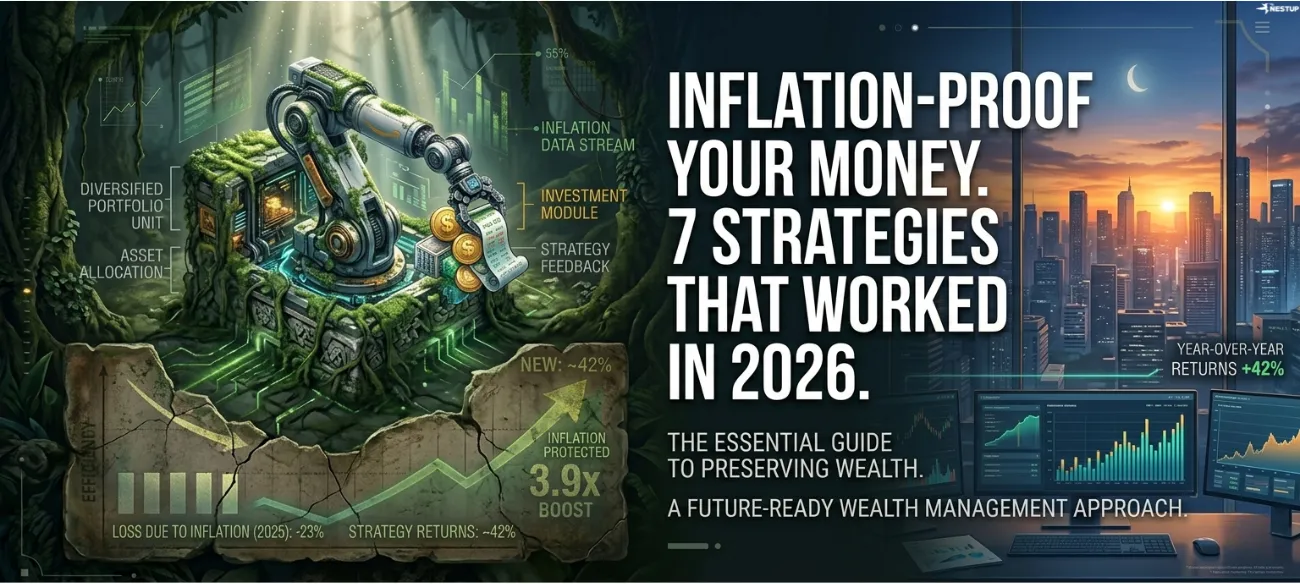
The Silent Erosion of Wealth
In 2026, the global economy has entered a structural shift that few were prepared for. The traditional savings account, once a bastion of financial prudence, has effectively become a graveyard for purchasing power. This isn’t a temporary fluctuation; it is a "perfect storm" fueled by the flaring up of supply chain reconfigurations, chronic energy bottlenecks, and escalating geopolitical friction.
As a Senior Financial Columnist, I have watched the most disciplined savers fall victim to the "silent erosion" of their wealth—the agonizing experience of watching the real value of their hard-earned capital slip away while sitting dormant in bank accounts. To survive this era, one must move beyond passive saving and embrace an active, strategic defense. The following lessons, derived from the hard performance data of the 2026 crisis, provide a roadmap for the modern investor to transition from a victim of inflation to a beneficiary of its mechanics.
The Commodity Surge: Profiting from the Source of the Pain
The most jarring realization for the modern investor is that the very forces driving your cost of living higher are also your most potent tools for wealth preservation. The primary engine of the 2026 crisis is the soaring cost of the physical raw materials that power and provision our world.
The data is undeniable: in the first quarter of 2026, commodity producer equities surged 20% even as broad global markets declined by 3%. Holding energy ETFs or industrial metals like copper and silver provides a liquid way to capture gains from the exact price surges that are crushing the average consumer. When energy prices feed into every facet of the economy—from manufacturing to food processing—you must own the source of that heat. By positioning yourself in the materials that run the world, you turn the source of your financial pain into your portfolio’s greatest strength.
The Bitcoin Myth vs. The Precious Metal Reality
For years, the financial media marketed Bitcoin as "digital gold," the ultimate hedge against a weakening currency. However, 2026 has provided a cold dose of reality, revealing a massive divergence between speculative digital assets and physical safe havens.
"Physical gold surged to record highs past $5,500 an ounce, and silver climbed above $110... meanwhile, Bitcoin struggled, trading roughly 30% below its late-2025 peak."
This performance gap exists because, under true inflationary pressure, institutional capital treated Bitcoin as a high-risk tech asset rather than a stable store of value. While gold and silver served as a core professional shield for wealth preservation, Bitcoin remained a volatile, speculative slice of the market. The lesson is clear: when the world burns, the market returns to the tangibility of precious metals.
4. The Debt Paradox: Why Your Mortgage is a Secret Weapon
Inflation is a hidden tax on the passive saver, but it behaves as a silent benefactor to the strategic debtor. In a high-inflation environment, fixed-rate debt undergoes a fascinating transformation: its "real financial burden" begins to vanish.
Never rush to pay off low-interest, fixed debt early during high-inflation periods.
If you are holding a 3% or 4% mortgage, you are effectively being subsidized by the bank. As nominal wages and consumer prices rise, the value of the currency you use to pay back that loan is worth significantly less than when you first borrowed it. You are paying back the bank in "cheaper" dollars, allowing the inflating currency to slowly erode the real value of what you owe. In 2026, your low-interest debt is not a liability; it is a secret weapon.
Pricing Power: The Only Stocks That Survive the Squeeze
The 2026 squeeze has created a ruthless divide in the equity markets. Companies with tight profit margins and massive overhead costs are being crushed. The only survivors—and the only stocks worth your capital—are stable Blue Chip companies with intense "pricing power."
The victors are found within consumer staples and healthcare. Because groceries and medicine are non-negotiable necessities, these established giants possess the unique ability to pass their rising production costs directly onto the consumer without losing market share. This stability allows them to protect their profit margins, preserve stock value, and continue distributing healthy dividends while the rest of the market struggles to stay afloat. In a volatile world, you don't bet on growth; you bet on the companies that the world cannot live without.
The Inflation-Proof Asset You Can’t Buy on an Exchange
The final strategy is perhaps the most critical: the realization that the ultimate hedge is one that cannot be devalued by central banks or seized by tax authorities. Your personal skill set is the only asset that is entirely immune to currency devaluation.
In the 2026 economy, specialized skills serve as an immediate professional shield. Investing in "Personal Assets" means mastering the high-value domains currently in demand:
- Data analytics to navigate complex market shifts.
- Leveraging AI platforms to multiply your productivity.
- Advanced content creation strategies to control your own narrative and brand.
Because your ability to generate income is your ultimate financial engine, these skills allow you to negotiate higher contract rates and salaries that outpace the rising cost of living. You are the only asset you have that inflation cannot touch.
The New Financial Mindset
The 2026 crisis has definitively ended the era of passive wealth management. Protecting your future now requires a fundamental mindset shift—a move away from the safety of cash and toward the strategic defense of hard assets, pricing-power equities, and personal development.
The successful individuals of this decade are no longer just savers; they are active defenders of their purchasing power who recognize that currency is merely a tool, not a store of value. As you audit your own balance sheet today, ask yourself: Are you holding onto a dying currency, or have you built a wall of assets capable of surviving the storm?