1. The Hook: Beyond the "Green Wave" Myth
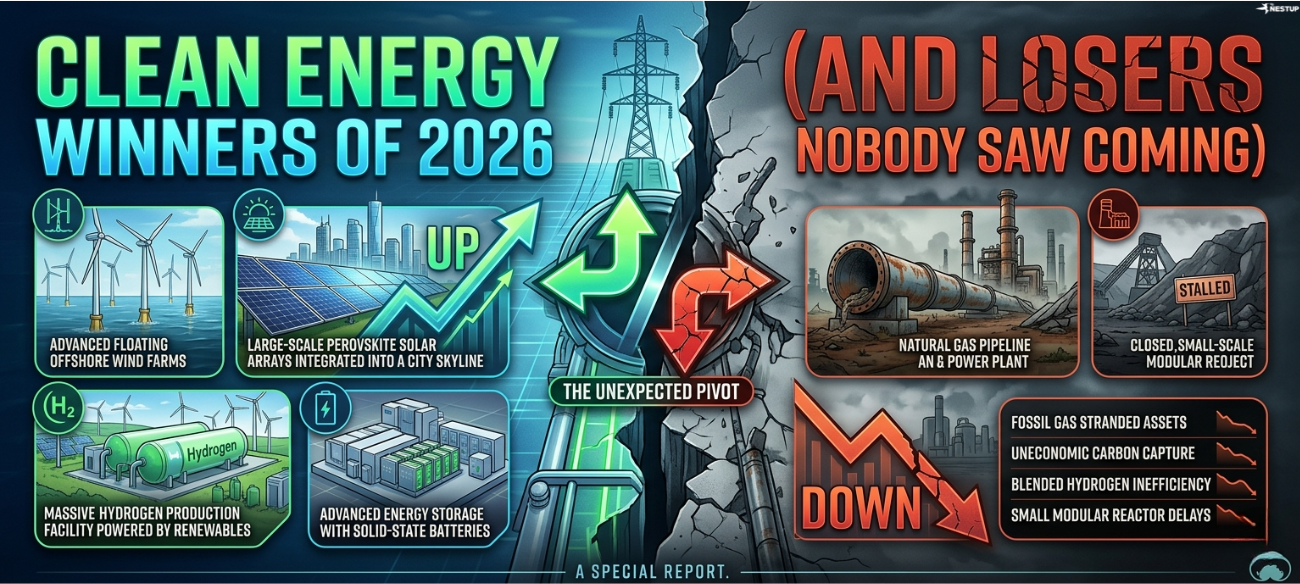
Back in 2020, the investment world was viewing the world through green-tinted glasses. The prevailing wisdom suggested that a "green wave" would lift every vessel in the harbor, from experimental hydrogen startups to established solar manufacturers. But as we navigate 2026, that myth has been thoroughly dismantled by the cold reality of capital allocation. We’ve shifted from a period of speculative hype to a Darwinian era of market maturity. This year hasn’t been a failure of the energy transition; rather, it has been a necessary "sorting" where project economics and business fundamentals have finally overtaken blind optimism. The winners aren’t just those with the best mission statements, but those who have successfully de-risked their technology for a skeptical, more sophisticated market.
2. Solar is No Longer an "Alternative."
The most glaring realization of 2026 is that solar energy has officially shed its "alternative" label. It is no longer the quirky side-project of the energy grid; it is the dominant primary power source. This transition was driven by a brutal efficiency in deployment and a relentless decline in costs that traditional thermal plants simply cannot match. While conventional projects get bogged down in decades-long permitting and construction cycles, solar’s speed of deployment has allowed it to scale at a pace that satisfies immediate decarbonization mandates.
Industry leaders like First Solar, Enphase Energy, and SolarEdge Technologies have thrived by pivoting from selling "green tech" to selling "low-cost electrons." In this mature market, solar is chosen not just because it’s clean, but because it’s the most logical financial decision for any grid operator.
"In many regions, it is now one of the cheapest ways to generate electricity."
3. The Battery Boom as the Missing Link
If solar was the engine of this transition, battery storage has become the transmission that makes the whole system viable. For years, the "intermittency problem" was the stick used to beat renewables. In 2026, however, energy storage has transformed from a technical hurdle into a massive "intermittency arbitrage" opportunity.
Utilities are no longer just building solar farms; they are building integrated power plants. By capturing excess energy during the day and selling it back during peak evening loads, companies like Tesla and Fluence Energy have turned storage into a high-margin necessity. This wasn't just a technical win; it was the missing link that allowed renewable energy to achieve the "firmness" required to compete with fossil fuels on reliability.
4. The Great Nuclear Comeback
Perhaps the most significant narrative shift of the year is the revitalization of nuclear energy. The market has finally moved past the "Solar vs. Nuclear" binary, realizing that a 100% weather-dependent grid is a fantasy. Governments and investors have re-embraced nuclear for its 24/7, carbon-free reliability, leading to a surge in support for both the existing fleet and the promise of Small Modular Reactors (SMRs).
Supply chain stalwarts like Cameco and Constellation Energy have seen a resurgence as nuclear is re-integrated into the long-term energy mix. This "Nuclear Comeback" is less about nostalgia and more about the cold, hard need for baseload power that doesn't disappear when the sun goes down.
"The energy transition may not be solar versus nuclear. Increasingly, it looks like solar, batteries, wind, and nuclear are working together."
5. The AI Wildcard
But the demand for this 24/7 reliability isn't just coming from general grid needs; it’s being accelerated by a new technological behemoth. The "AI Effect" has become the ultimate wildcard of 2026, with data center power demands skyrocketing beyond even the most aggressive forecasts. These tech giants are not looking for "intermittent" power; they are willing to pay a premium for the absolute reliability that nuclear and massive battery arrays provide.
- Skyrocketing Demand: Data centers are consuming electricity at a scale that is forcing utilities to fast-track new projects.
- The Reliability Premium: AI developers are prioritizing 24/7 "firm" power, fundamentally increasing the valuation of nuclear and geothermal assets.
- Infrastructure Acceleration: The urgency of the AI boom is acting as a catalyst, forcing a more rapid overhaul of grid infrastructure than policy alone ever could.
6. The Hydrogen and Wind Reality Check
While solar and nuclear found their footing, 2026 served as a sobering reality check to the hydrogen and offshore wind sectors. Hydrogen, once the darling of Wall Street, has hit a wall of high costs and infrastructure bottlenecks. The transition for heavy industry has been far more sluggish than the early-2020s hype suggested, leaving companies like Plug Power and Bloom Energy to face difficult questions about their path to profitability.
Offshore wind has hit equally rough waters. The sector has been battered by rising interest rates and supply chain disruptions that have completely upended project economics. This has forced developers into difficult contract renegotiations and project delays, proving that even a vital technology can be derailed by poor financial timing and high capital costs.
"The days of funding every green-energy startup based solely on future promises appear to be fading."
7. A New Era of Market Maturity
As we look toward 2027, the focus of the energy market has fundamentally shifted from "what is possible" to "what is profitable." The era of speculative green spending is over, replaced by a disciplined focus on revenue growth, cash flow, and grid infrastructure. The coming year will be defined by the race to upgrade our aging electrical grids to handle the dual pressure of AI load growth and renewable integration.
The 2026 pivot wasn't a retreat from the energy transition; it was the moment the transition grew up. Investors have stopped betting on slogans and started betting on systems that actually work—and more importantly, systems that actually pay.
Final Thought: The future of clean energy is arriving—but not all at once, and not in the way many people expected.