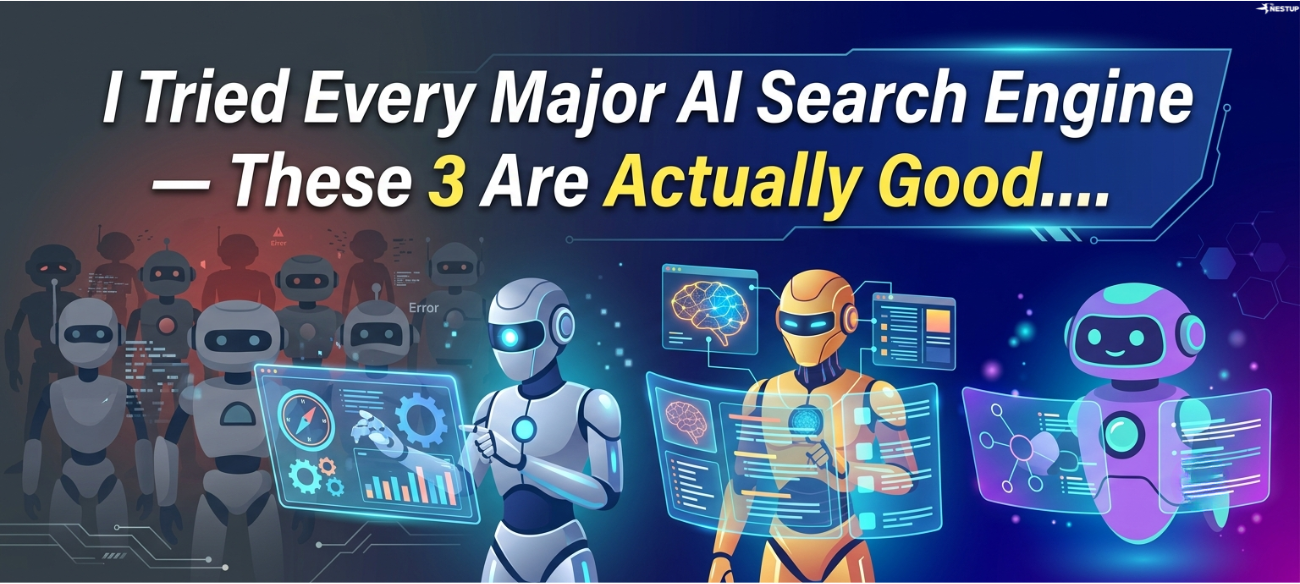
If you are still searching the internet by typing a few keywords into a blank box, hitting enter, and then manually clicking through ten different links filled with pop-up ads, you are working way too hard. I’ve spent weeks testing every major player in this space, and I can tell you the era of the traditional "keyword box" is effectively dead.
We have officially moved into the age of the "answer engine." Instead of forcing you to navigate a digital graveyard of SEO-optimized fluff, these platforms do the heavy lifting for you. They read the web, synthesize the data, and deliver a clean, structured report in seconds. It’s a fundamental shift from manual discovery to automated intelligence, and it’s changing how I—and how you should—interact with information.
The Deep Researcher’s Gold Standard: Perplexity AI
When my work requires me to dive into a complex topic, map out a new industry, or build a comprehensive outline, Perplexity AI is the absolute gold standard. I found it unmatched for long-form synthesis because it doesn't just grab the first result; it executes multiple searches and maps out sub-topics into a highly organized framework.
The standout feature here is the transparency. Perplexity uses explicit, inline numerical footnotes for every single sentence. Hover over any footnote to instantly verify the source text and kill hallucinations at the root. This level of accountability is exactly why it is my first choice for professional-grade work.
"This is where Perplexity blows everyone else out of the water."
Some users complain that Perplexity is "slower" than a traditional search engine, but as a productivity specialist, I view this as a feature, not a bug. It might take five seconds to generate a full report, but that wait saves you 50 minutes of manual clicking and fact-checking. For the professional researcher, that is a trade-off I will make every single time.
The King of Daily Frictionless Speed: ChatGPT Search
For the quick-fire questions that make up 80% of my day, OpenAI’s search integration is the clear winner. Because it lives directly inside the standard chat interface, it is built for speed and conversational flow. I use it for everything from checking breaking news and sports scores to hunting down a quick recipe.
ChatGPT Search uses clean, text-based hyperlinks rather than Perplexity’s granular footnotes. You’ll find these links embedded in the prose or tucked into a sidebar, which makes the response incredibly scannable. While it might not be my first choice for a deep academic audit, it is perfect for high-speed information consumption.
The real game-changer here is the workflow. Being able to pivot from a brainstorming session into a live web search without switching tabs is a massive productivity win. It turns your chat window into a live command center for daily inquiries and coding lookups.
The Power User’s Private Vault: Kagi (with AI Assistant)
If you are a professional who views information gathering as a high-leverage career skill, you need to look at Kagi. Unlike the "free" models that monetize your attention, Kagi is a premium, subscription-based engine that prioritizes privacy and total user control.
What sets Kagi apart for me is its foundation of clean web indexing. It allows you to build a "custom search universe." You can explicitly tell the algorithm to prioritize technical documentation or personal blogs while entirely down-ranking content farms and SEO clickbait. It also features a "Summarize" AI tool that can ingest massive, multi-page PDFs and long-form articles instantly.
At $5 to $10 per month, it is an investment. However, for power users who want a zero-ad experience and unmanipulated primary sources, Kagi is an absolute powerhouse that puts you back in the driver's seat of your data feed.
Why the Giants are Falling Behind: The "Also-Rans"
Despite their resources, the legacy giants and early pioneers are struggling to keep pace with the streamlined workflows of the top three.
Google AI Overviews
Google’s index is massive, but its AI Overviews feel compromised by commercial interests. The interface is cluttered with sponsored shopping links and ads, and the actual summaries often feel too generic or overly cautious. It’s hard to trust a synthesis when it’s fighting for space with a "Buy Now" button.
You.com
You.com deserves credit as a pioneer with its customizable "agents," but it has been outpaced. In terms of raw speed and interface polish, it doesn't offer the same frictionless experience as ChatGPT or the structural depth of Perplexity.
This market shift proves that synthesis is winning over generic summaries. A summary merely tells you what happened; synthesis connects the dots, organizes the sub-topics, and tells you what to do next. That is the value modern users are demanding.
Building Your Personal AI Search Stack
The secret to mastering the modern web is matching the tool to the task. Don't try to make one engine do everything.
| Search Engine | Best For | Standout Feature | Pricing |
| Perplexity AI | Deep Research & Outlining | Granular, inline source mapping | Free tier / $20 month |
| ChatGPT Search | Fast Fact-Checking & Daily Use | Seamless conversational integration | Free / Included in Plus |
| Kagi (AI Mode) | Power Users & Absolute Privacy | Custom domain filtering (No Ads) | Paid plans start at 5-10/mo |
Use ChatGPT for your quick daily inquiries, lock into Perplexity when you need to build a heavy research framework, and leverage Kagi to sanitize the web and take total control over your information environment.
Which AI search engine has quietly replaced your traditional browser homepage this year?