
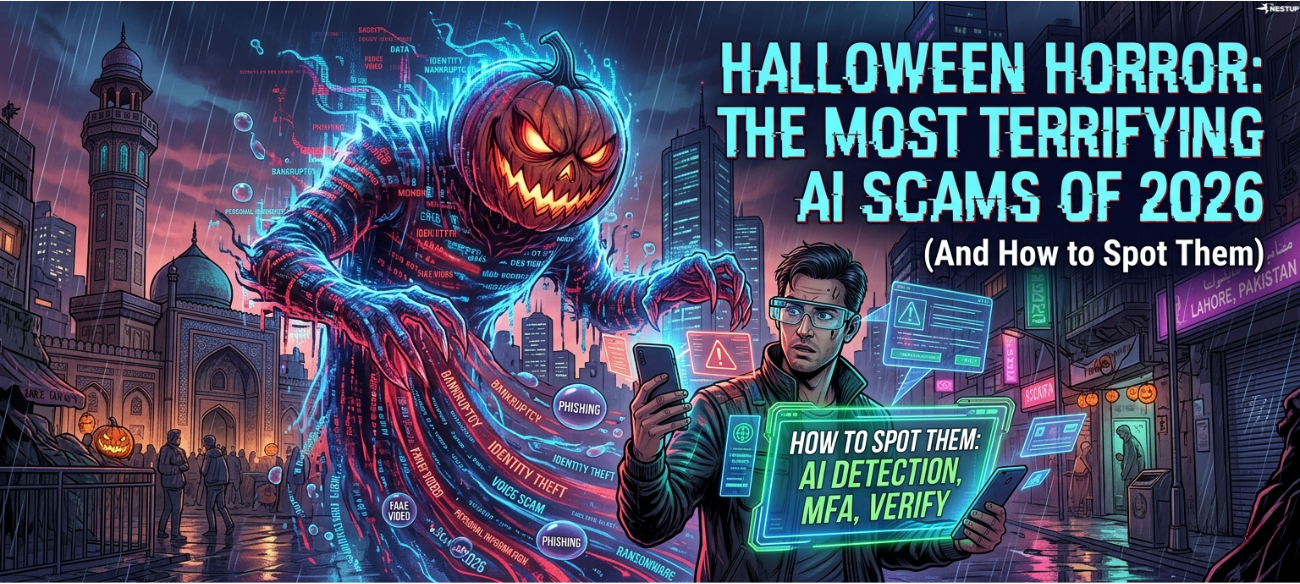
In the previous decade, cybercrime was an artisanal craft practiced by organized networks that spent weeks probing firewalls and breaching digital infrastructures. It was a war of code against code, fought in the shadows of servers and databases. By 2026, that barrier to entry has evaporated. Terror has been commoditized. What once required a team of elite hackers now requires only a laptop, a $19.99 monthly subscription to a "Scam-as-a-Service" (SaaS) AI platform, and five minutes of prep work.
The existential threat of 2026 isn't that robots are taking our jobs; it's that they have successfully hijacked our identities. We have entered a high-stakes war on human perception where the most sophisticated weapon is the perfect impersonation of a human being. The foundational pillars of society—the voices of our children, the faces of our leaders, the professional tone of our institutions—have been decrypted and duplicated.
In this new reality, "seeing and hearing" are no longer just unreliable; they are dangerous liabilities. When a machine can simulate empathy, mimic a daughter’s panicked cry, or recreate a CEO’s boardroom presence with 99% accuracy, the concept of digital trust dissolves. If we do not adapt our instincts to match the technology, we are not just victims—we are easy prey.
The Sound of Deception: Your Loved One’s Voice is Now a Weapon
The most visceral terror of the 2026 landscape is the weaponization of the human voice. Modern voice-cloning systems no longer need hours of studio-quality recording; they require only seconds of audio harvested from a TikTok clip, an Instagram Story, a YouTube video, or even a discarded voicemail greeting. Scammers use these vocal fingerprints to manufacture high-stakes emergencies that bypass the logical brain entirely.
This scam succeeds by weaponizing our biological fight-or-flight response. When you hear a familiar voice in agony, your prefrontal cortex—the center of rational thought—shuts down to prioritize immediate action.
"I’ve been arrested," "I was in an accident," or "I need money right now," are the primary hooks used to trigger immediate emotional surrender.
A critical red flag in 2026 is the scammer’s claim that "phones are being monitored," a tactic designed to prevent you from hanging up or seeking outside help. To survive this, you must implement a Family Verification System. This involves a pre-established, non-digital safe word known only to your inner circle and a strict callback protocol using a secondary, trusted contact channel. Never trust audio alone; in 2026, a voice is just a file, not a person.
The Face Trust Glitch: Why Real-Time Video is No Longer Evidence
While deepfakes were once limited to clunky internet memes, they have evolved into lethal operational fraud tools. Criminals now use real-time facial mapping during Zoom meetings, vendor calls, and remote hiring processes to impersonate executives and authorized personnel. This isn't theoretical; global firms have already lost millions of dollars after employees authorized massive transfers while staring directly at an AI-generated version of their CFO.
This fraud exploits a fundamental "glitch" in evolutionary psychology: humans are hardwired to trust faces. Even when technical inconsistencies are present, the brain tends to "fill in the blanks" if the lighting and context seem plausible. We are biologically programmed to believe what we see on a screen.
Warning Signs of a Deepfake Video Call:
- Lip-sync lag: A micro-delay between audio and mouth movement.
- The "Zombie" Blink: Unnatural or rhythmic blinking patterns that don't match the emotional tone.
- Lighting Drift: Inconsistent shadows on the face compared to the background.
- Edge Blurring: A "halo" or shimmering effect around the hair or jawline.
- Fixed Gaze: Unnatural or robotic eye movements that fail to track correctly.
- The Quality Trap: Sudden excuses for "poor connection" or "bad bandwidth" intended to mask digital artifacts.
The Empathy Trap: When "Extreme Professionalism" Becomes a Red Flag
A predatory new category of fraud involves AI chatbots and voice agents that simulate customer support with unsettling precision. These bots impersonate banks, airlines, and government agencies, holding complex, patient, and multi-turn conversations to harvest credentials.
The great irony of 2026 is that extreme professionalism is now a red flag. These AI agents are often more polite, more empathetic, and more patient than any human representative could ever be. They are programmed to mirror your frustration and offer a "seamless" solution that invariably leads to a password reset or an account "verification" link.
The Directive: Trust the process, not the persona. Never engage with inbound support. If you receive an urgent fraud alert, ignore the link and the caller. Navigate directly to the official app or type the verified URL into your browser manually. In the AI era, the more helpful a stranger seems, the more skeptical you should become.
Hyper-Personalized Love: Romance Scams at Industrial Scale
AI has solved the "scale" problem that once limited romance scams. In the past, a scammer’s reach was bottlenecked by their ability to speak the language and manage a handful of victims. Today, a single operator can manage hundreds of hyper-personalized "relationships" simultaneously. AI translates fluently across languages in real-time, effectively killing the "overseas scammer with broken English" stereotype.
These bots analyze a victim's psychological profile and mirror their emotional tone to create a sense of deep, 24/7 connection. Because these AI personas never sleep and are programmed for "perfect" empathy, the emotional bond is formed at a terrifying speed.
Verification Habits:
- Live Verification: Insist on high-quality, real-time video interaction with specific "proof of life" movements (e.g., "hold up three fingers while turning your head").
- The Emergency Test: Be immediately suspicious of "constant emergencies" that require financial intervention.
- Digital Forensics: Conduct reverse-image searches and verify the long-term consistency of their social media presence.
The Death of the Typo: The Rise of Context-Aware Spear Phishing
The era of spotting a phishing attempt by its poor grammar and misspelled words is officially over. AI has stripped away these traditional red flags, allowing attackers to conduct Spear Phishing at a fraction of the previous cost. By scraping LinkedIn, company websites, and public databases, AI crafts "context-aware" emails that are indistinguishable from legitimate corporate internal communications.
These emails don't just look real; they sound real. They reference your actual coworkers, mention specific ongoing projects, and mimic the exact corporate tone of your organization. Because the realism is so high, the click-through rates on these malicious links have reached record highs.
The Command: Establish an out-of-band verification rule. No voice, no video, and no email carries inherent authority. If a request involves a payment change, a password reset, or a sensitive document, you must confirm it through a secondary, known channel—like a direct phone call to a verified number or an internal chat—before taking action. The process is king; the message is nothing.
Conclusion: Adopting a Verification Culture
To survive the landscape of 2026, we must move beyond passive awareness and adopt a rigorous "Verification Culture." This is not about paranoia; it is about technical hygiene in a world where our senses can be hacked.
2026 AI Scam Survival Checklist:
- Verify the Urgent: High-emotion requests for money, crypto, or data are 99% likely to be fraudulent. Slow down.
- Technical MFA: Passwords are dead. Use authenticator apps or physical security keys. Avoid SMS-only security whenever possible, as it is easily bypassed by modern intercept tools.
- Family Safe Words: Create non-digital phrases for your inner circle to use during emergencies.
- Emotional Deceleration: If a message triggers panic, fear, or intense sympathy, it is a psychological attack. Wait five minutes before responding.
- Assume Media is Synthetic: Treat every video and audio clip as a "guilty until proven innocent" file.
"In the AI era, the most dangerous scams won’t look suspicious. They’ll look completely normal."
As we move forward, society is being forced to redefine the very nature of identity. When the sound of a voice and the sight of a face can be synthesized by a machine for pennies, how do we prove we are human? The future doesn't belong to the most realistic AI; it belongs to the humans who prioritize verification over realism.