


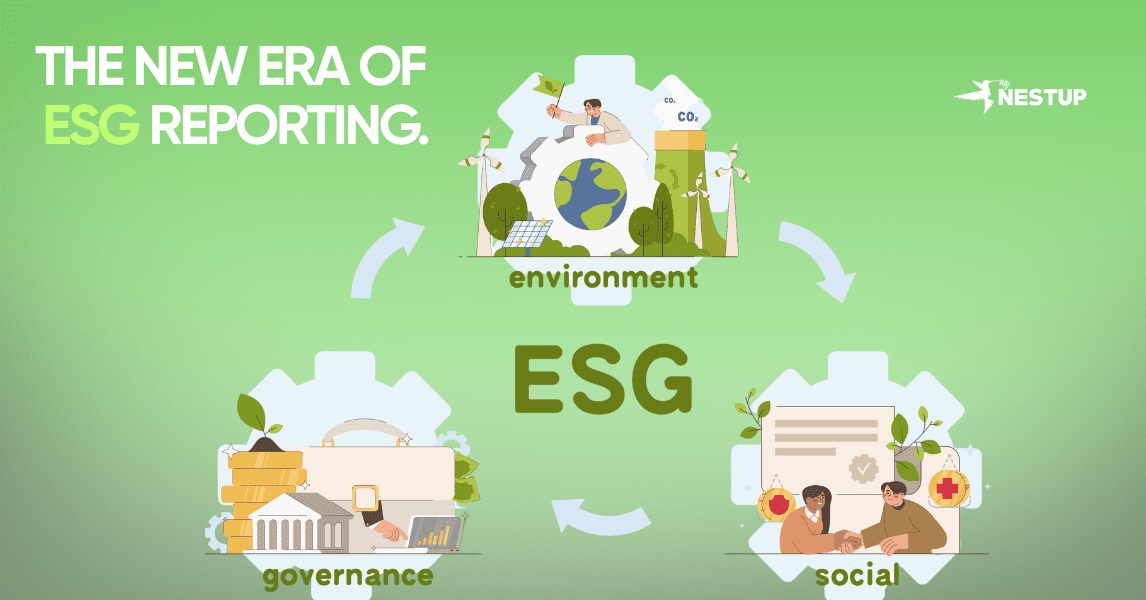

What is ESG Compliance?
ESG compliance refers to how companies align with laws and industry standards that address environmental impact, social responsibility and corporate governance. In practice, it means businesses must monitor and report on areas such as carbon emissions, labor rights, anti-bribery measures and board oversight. These responsibilities are typically divided into three main categories:
• Environmental compliance:
Companies are expected to meet emission reduction goals. They need to follow waste management rules and improve energy efficiency. Many organizations are required to disclose their scope 1, 2, and 3 greenhouse gas emissions under frameworks like the SEC Climate Disclosure Rule or the EU’s Corporate Sustainability Reporting Directive (CSRD).
• Social compliance:
This covers labor protections, supply chain accountability and human rights. For example, Germany’s Supply Chain Act (LkSG) and Canada’s Modern Slavery Act (Bill S-211) obligate businesses to identify and prevent forced labor within their supply chains.
• Governance compliance:
Focuses on transparency and anti-corruption practices along with board diversity. Companies must adhere to regulations such as the UK Bribery Act and the US Foreign Corrupt Practices Act (FCPA) to guard against fraud and unethical conduct.
Beyond meeting legal requirements, many organizations also choose to adopt voluntary ESG standards to strengthen trust with stakeholders and demonstrate their commitment to sustainable, responsible business practices.
What is ESG Compliance Tech?
ESG compliance Tech is the application of modern technology and data analysis to evaluate how businesses perform on environmental, social and governance (ESG) issues. Companies use tools such as artificial intelligence, machine learning and the Internet of Things to track and report on ESG related areas. These can include sustainability, diversity and human rights. By adopting these technologies organizations can better identify risks. They can create positive social and environmental outcomes and strengthen long-term value for their stakeholders. Additionally, ESG Tech gives investors and partners clearer insights. This helps them decide which companies align with their values and are worth supporting.
Advantages:
• Attracting investors:
Companies that adopt ESG technologies signal a strong commitment to sustainability and responsible practices. This makes them more appealing to investors who value long-term growth and positive social impact.
• Strengthening customer loyalty:
Today’s customers prefer brands that reflect their values. By using ESG Tech to embed ethical and sustainable practices, businesses can set themselves apart and build deeper, lasting relationships with their customers.
• Boosting financial performance:
ESG-driven solutions help organizations cut risks and uncover new opportunities. These improvements often translate into stronger financial results and greater resilience over time.
• Driving sustainable operations:
With ESG Tech, businesses can weave sustainability into their day-to-day activities. They can do this by conserving resources, minimizing waste or shifting to renewable energy. This reduces their environmental footprint while supporting a greener future.
• Securing a competitive edge:
ESG factors increasingly shape purchasing choices and supplier partnerships. Companies that proactively embrace ESG Tech can stand out in the marketplace and establish themselves as leaders in responsible business.
Challenges
Organizations adopting ESG compliance technology often encounter hurdles that extend well beyond simple data collection. Effective use of these tools typically requires strong collaboration across legal, compliance, sustainability and operations teams. Progress can stall if ownership of ESG metrics is unclear or if data standards are inconsistent. It can also delay if the company lacks maturity in areas like materiality assessments and disclosure practices.
While some platforms advertise comprehensive ESG visibility, they may fall short when it comes to integration or producing stakeholder-ready reports. Since ESG regulations and frameworks evolve rapidly, certain tools struggle to keep disclosure templates and rules up to date. This leaves legal and compliance teams to fill the gaps manually. Ultimately, success depends not only on choosing the right technology but also on achieving internal alignment and maintaining realistic expectations about how much of the process can be automated today.
SEC/CSRD Rules Create New Markets:
The introduction of SEC (Securities and Exchange Commission) and CSRD (Corporate Sustainability and Reporting Directive) have tightened sustainability disclosure requirements. They have created entirely new markets around ESG data and technology. These regulations require companies to share in-depth information on climate risks, carbon emissions, workforce and corporate governance. As a result, the need for ESG reporting tools and sustainability experts has grown quickly. This is giving rise to a fast-expanding ecosystem of tech vendors and compliance professionals. These requirements are also pushing innovation across industries tied to sustainability. Both startups and major enterprises are building modern carbon-tracking platforms and AI-driven ESG data tools to meet global reporting standards. Financial institutions are getting more involved too, offering sustainable investment products and developing ESG rating models to evaluate corporate performance. Collectively, the SEC and CSRD are changing how businesses operate worldwide. This is driving new investment, accelerating job growth and strengthening the sustainability and compliance landscape.
As expectations around ESG continue to grow from regulators, investors and the public, compliance technology is set to become more standardized and auditable. Future platforms will emphasize real-time data collection and the ability to align with multiple frameworks at once. So that this can result in helping companies navigate overlapping disclosure requirements across different jurisdictions.
We can also anticipate stronger demands for interoperability with ERP and risk management systems, along with verification features that ensure audit readiness. The market is likely to consolidate, with specialized point solutions merging into broader ESG or enterprise risk management suites.
References: