



Wearable Technology in Enterprise
Wearable tech has come a long way from basic step counters and heart-rate monitors. Today, devices like smartwatches, AR glasses and health-tracking wearables are being used across enterprises. These devices are used to boost efficiency, improve worker safety and improve day-to-day operations. What were once consumer gadgets have quickly become practical tools in many industries.
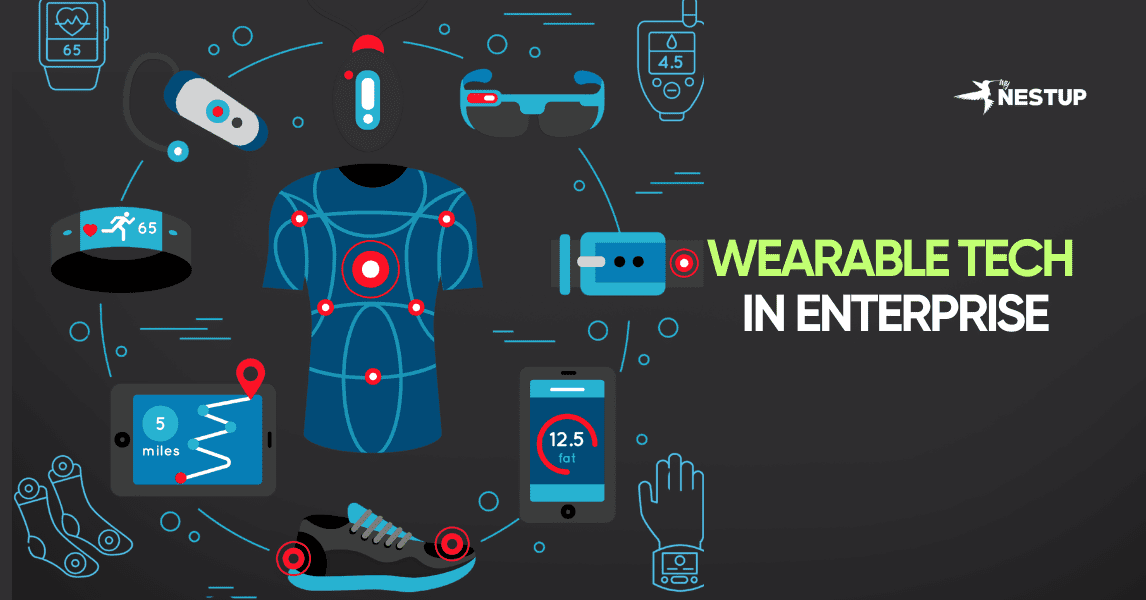
Wearable technology includes smart electronic devices that are worn on the body and are capable of collecting and processing data instantly. These tools do much more than simple activity tracking, they provide hands-free access to information. This helps employees work more efficiently and enable quicker, insight-driven decisions. Examples range from smartwatches and fitness trackers to smart helmets, AR/VR glasses and medical-grade health sensors.
Within enterprise environments, wearables are increasingly used to improve productivity, enhance safety and reduce errors. In sectors like manufacturing and logistics, they help employees track tasks and receive real-time notifications. This helps improve daily operations. In healthcare, wearables enable continuous patient monitoring and remote health assessments. They lead to better coordination among medical staff. Retail and field service teams rely on them for inventory management and on-the-spot employee support.
When connected with enterprise software and cloud systems, wearable devices deliver real-time data and support automation. This integration makes wearable technology a powerful tool for businesses adapting to modern, data-driven workflows.
Understanding Enterprise Wearable Technology
Enterprise wearable technology refers to smart, connected devices worn on the body that collect, process, and transmit data to support business operations. Unlike consumer wearables, these devices are purpose-built for durability and security. They can be integrated with enterprise software platforms such as ERP systems, workforce management tools and IoT networks. Common enterprise wearables include smartwatches, AR/VR headsets, smart helmets, biometric sensors, smart badges and location-tracking devices.
Advantages of Wearable Tech
- Operational Efficiency and Productivity
Wearables enable employees to access critical information in real time without interrupting their tasks. Field technicians can receive step-by-step instructions through AR glasses. Warehouse workers can scan items hands-free and frontline staff can receive instant alerts or task updates via smartwatches. This reduces task completion times, minimizes errors, and improves workflows across departments. - Workforce Safety and Risk Mitigation
In industries with hazardous working conditions, enterprise wearables act as proactive safety tools. Smart helmets and vests can monitor temperature, air quality, noise levels and worker fatigue. Location-based wearables can track worker movement and send alerts if someone enters restricted or dangerous areas. Health-monitoring sensors also enable early detection of physical strain. This helps reduce workplace injuries and improve compliance with safety regulations. - Real-Time Visibility and Decision-Making
Wearable devices continuously generate data on employee activity, equipment usage and environmental conditions. When combined with analytics and AI, this data provides real-time visibility into operations. Managers can identify inefficiencies and predict equipment failures. They can optimize staffing levels and respond to issues as they arise rather than after the fact. - Training, Support, and Knowledge Transfer
Wearables (particularly AR and VR devices) are changing enterprise training and onboarding. Immersive simulations allow employees to practice complex or high-risk tasks in a controlled environment. On the job, AR-enabled wearables can provide remote expert assistance and instant guidance. This reduces training time and improves task accuracy.
Challenges
- Data Privacy and Employee Trust Concerns
One of the biggest challenges with wearable technology is data privacy. Devices often collect sensitive information such as location data and biometric metrics. Without clear policies and transparency, employees may perceive wearables as surveillance tools. This can lead to resistance and trust issues. Organizations must establish strict data governance frameworks and clearly communicate how data is collected and protected. - Security and Compliance Risks
Wearable devices expand the enterprise attack surface. If not properly secured, they can become entry points for cyberattacks or data breaches. Ensuring compliance with industry regulations (especially in healthcare, finance, and critical infrastructure) requires robust encryption, access controls and ongoing device management. - Integration and Infrastructure Complexity
Deploying wearables at scale is rarely plug-and-play. Enterprises often struggle to integrate wearable data with existing IT systems and traditional software. Additional investments in cloud infrastructure, APIs and device management solutions may be required, increasing implementation time and cost. - Cost and Return on Investment (ROI) Challenges
While wearable technology offers long-term benefits, the upfront costs can be significant. Hardware procurement, software licenses, maintenance, training and ongoing support add up quickly. Measuring ROI can also be difficult, especially for use cases focused on safety improvements or productivity gains that are harder to quantify. - User Comfort and Adoption Barriers
Wearables must be comfortable, durable and easy to use. Bulky devices, limited battery life or frequent technical issues can disrupt workflows and reduce adoption. Without proper training and change management, employees may resist using wearables or fail to use them consistently.
Enterprise Use Cases Across Industries
Manufacturing and Industrial Operations
In manufacturing environments, wearable technology supports both operational efficiency and worker well-being. AR smart glasses provide real-time visual instructions for assembly, inspections and repairs. This helps in reducing reliance on paper manuals and minimizing errors. Wearable sensors track repetitive movements and posture, helping organizations identify ergonomic risks and reduce workplace injuries. Connected wearables also enable predictive maintenance by alerting technicians to equipment anomalies before breakdowns occur, minimizing downtime and production losses.
Healthcare and Life Sciences
Wearables play a critical role in improving patient care and clinical efficiency. Biometric sensors continuously monitor patient vitals such as heart rate, oxygen levels, and mobility, enabling early detection of health issues and reducing hospital readmissions. For healthcare professionals, smartwatches and badges deliver instant alerts, improve team coordination, and reduce response times. AR and VR wearables are also used for medical training, surgical planning, and remote consultations, enhancing accuracy and knowledge transfer.
Logistics, Warehousing and Supply Chain
In logistics and warehouse operations, wearables streamline high-volume, time-sensitive workflows. Smart gloves and wrist-mounted devices enable hands-free barcode scanning and order picking, reducing errors and improving picking speed. Location-tracking wearables provide real-time visibility into worker movement and asset utilization, helping managers optimize warehouse layouts and staffing levels. Wearables also support safety by detecting fatigue, monitoring lifting techniques, and issuing alerts in hazardous areas.
Retail and Customer-Facing Operations
Retail enterprises use wearable technology to enhance both employee productivity and customer experience. Store associates equipped with smartwatches or smart badges can receive real-time inventory updates, customer requests, and task assignments. Wearables enable faster price checks, stock replenishment, and personalized assistance on the shop floor. In larger retail environments, location-aware wearables help improve staff coordination and reduce response times during peak hours.
Construction, Oil, Gas and Energy
In high-risk environments, wearable technology is primarily focused on safety and compliance. Smart helmets and connected vests monitor environmental conditions such as temperature, toxic gases and noise levels. They send alerts when thresholds are exceeded. GPS-enabled wearables track worker locations on large or remote sites. This enables faster emergency response and improved accountability. Fatigue-monitoring wearables also help prevent accidents by identifying signs of overexertion or dehydration.
Field Services and Utilities
For field service technicians and utility workers, wearables enable real-time guidance and remote support. AR glasses provide step-by-step repair instructions and allow experts to assist technicians remotely. This results in reduced repeat visits and service times. Wearables also help capture job data, photos and compliance checks automatically. Resulting in improved documentation accuracy and operational visibility.
Transportation and Mobility Services
In transportation and fleet operations, wearable technology is used to monitor driver alertness and compliance with safety regulations. Wearable sensors can detect fatigue or irregular behavior and trigger alerts to prevent accidents. Smart devices also support communication between drivers and control centers. This improves coordination and response times.
As technologies like AI, 5G and edge computing mature, wearable devices will become smarter and more deeply integrated into enterprise ecosystems. Predictive analytics, automation and real-time collaboration will further expand their role in business operations. In the coming years, wearable technology is expected to be a core component of digital transformation strategies across industries.
Enterprise wearable technology is no longer just an experimental tool. It is changing how businesses operate, train employees and ensure safety. Organizations that strategically adopt wearables can gain a competitive edge through improved efficiency and better insights. As adoption grows, wearables will play a central role in the future of work.