


Spatial Computing with AR/VR:
Spatial computing is a fast-growing technology that basically brings the digital and physical worlds together. Instead of using a screen or keyboard, it lets people interact with computers in a more natural, immersive way. It includes things like VR, AR, mixed reality, and other extended reality tools. With spatial computing, you can create rich gaming and entertainment experiences, but its use goes far beyond that. It’s becoming helpful in healthcare, education, manufacturing, retail, and many other areas. By blending virtual elements with the real world, spatial computing opens the door to new ways of learning, working, and even communicating. It can make everyday tasks easier, more interactive, and a lot more engaging.
What are AR/VR?
Augmented reality (AR) is something almost anyone can try out because all you really need is a smartphone. That’s why it’s often more practical than VR for things like marketing and gaming. AR adds digital elements like images and animations on top of the real world using your phone’s camera. Instead of taking you out of your environment, it enhances what you’re already seeing. Simply, AR doesn’t replace reality but just adds an extra layer to make everyday life a bit more fun and interactive.
Virtual reality (VR) takes things a step further by placing you inside a completely computer-generated world. Instead of adding digital elements to your surroundings, VR creates an entirely new environment for you to explore. With the help of devices like headsets, sensors, and sometimes gloves, you can step into almost any scene or setting imaginable. It’s an immersive experience that makes you feel like you’ve actually entered another place
Top uses of AR/VR:
Mentioned below are some of the uses of AR:
- Retail: Focuses on the sale of goods or services from a business directly to a consumer, typically in small quantities for personal use.
- Entertainment and gaming: Involves the creation and provision of amusement, diversion, or pleasure. This ranges from films, music, and sports to interactive video games.
- Navigation: The process of planning and controlling the movement of a craft or vehicle from one place to another, involving determining position and direction.
- Tools and measurement: Encompasses the design, manufacture, and application of devices (tools) and the process of quantifying physical attributes (measurement) to aid in work or analysis.
- Art and architecture: Art is the expression of human skill and imagination, while Architecture is the art and science of designing and constructing buildings.
- Military: Pertains to the armed forces of a nation, structured and trained to conduct warfare and defend national interests.
- Archaeology: he scientific study of human activity through the recovery and analysis of material culture, such as artifacts, architecture, and biofacts, often from historical sites.
Mentioned below are some of the uses of VR:
- Healthcare: VR is used for surgical training and medical education by providing risk-free and immersive simulations. Also for pain management and physical therapy through engaging, distracting environments.
- Automotive: Utilized in vehicle design and prototyping to visualize and test virtual models quickly. It is used for employee training and virtual showrooms to enhance the customer experience.
- Retail: It creates virtual showrooms and online stores for customers to view. It also helps to customize products and enables virtual try-ons of clothing or makeup before purchasing.
- Real estate: VR allows potential buyers to take immersive virtual property tours of existing or unbuilt homes from anywhere. It facilitates virtual staging and design visualization.
Benefits of Spatial Computing (AR/VR):
The reason everyone is getting excited about Augmented Reality (AR), Virtual Reality (VR), and spatial computing is simple that is because they make our digital world feel real and much more useful. This technology is a huge step up, moving us past flat screens into immersive simulations that dramatically enhance training and skill acquisition. When it comes to the workplace, it’s revolutionizing how remote teams function. It is enabling improved productivity and collaboration by making it feel like we’re all physically together, even when we’re thousands of miles apart. Spatial Computing just makes tech easier to use by offering more intuitive user experiences where we interact with digital content naturally, without complex menus. It also enables advanced data visualization by letting us walk through information to make better and faster decisions. Whether you’re performing a delicate task that requires greater precision and safety or you’re a business looking for new ways to boost customer, spatial computing provides genuinely new possibilities.
Apple Vision Pro:
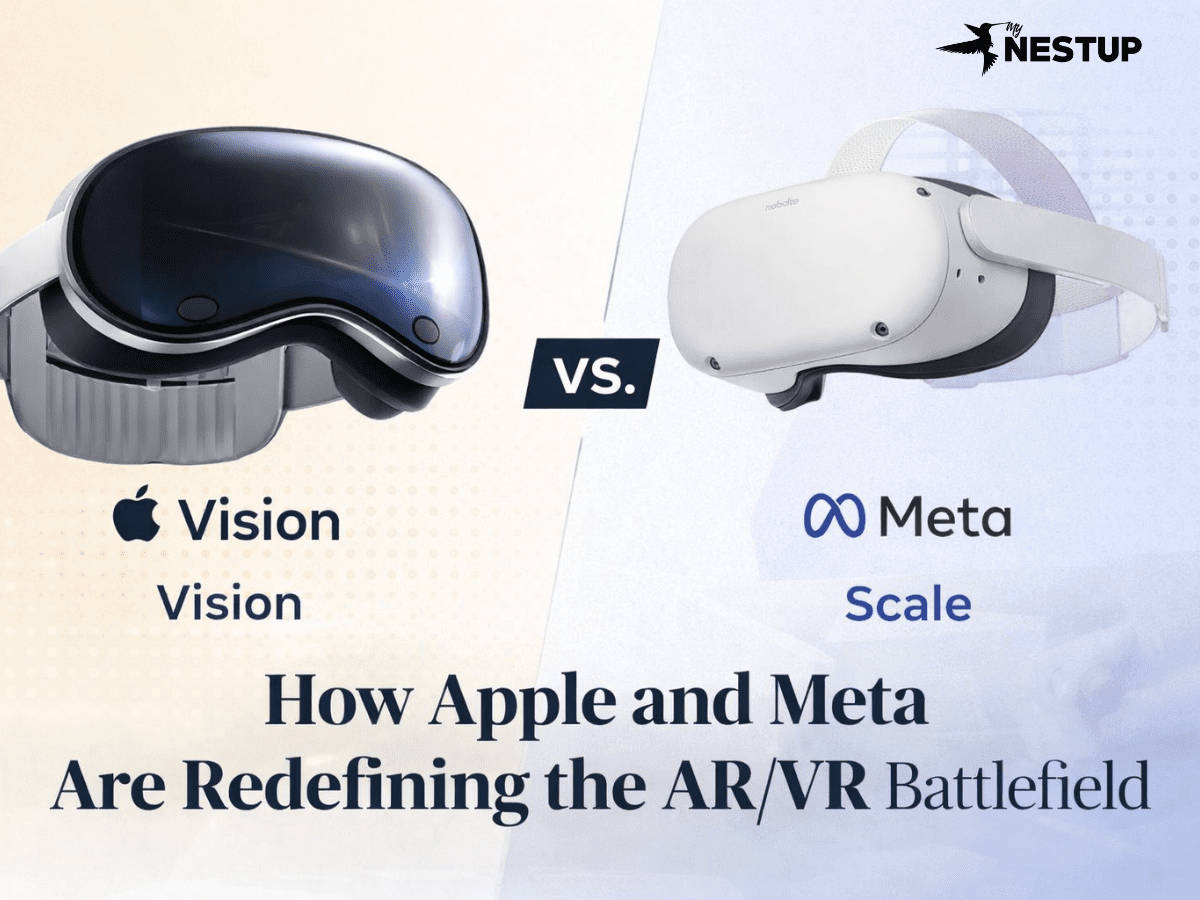
When Apple showcased the Vision Pro, they weren’t just dropping another gadget; they were essentially saying, “The way we use computers is about to change.” This thing is a serious piece of kit. It’s a sleek headset packed with incredible technology. It has super crisp and high-res screens. Also, it watches exactly where your eyes are looking and recognizes your hand movements. The result is an experience that feels genuinely immersive. What really sets the Vision Pro apart is how it works, as listed below:
- It blends worlds: Digital apps don’t just take over your view; they are integrated seamlessly into your actual environment. You can literally see your real room while interacting with your digital windows.
- Smart placement: The device has “spatial awareness,” meaning you can drag and drop digital windows or objects and position them exactly where you want them to stay in your room.
- No controllers needed: You use the most natural interfaces possible, your eyes and your hands to control everything.
Ultimately, the Vision Pro is much more than a fun distraction. Apple built this to be a comprehensive tool: it’s a killer productivity booster, an entertainment hub, and a clever communication device, all rolled into one futuristic package.
Meta Quest:
If Apple is going for the high-end, premium experience, Meta is definitely focused on bringing spatial computing into everyone’s hands. Their strategy with devices like the Meta Quest 3 focuses on accessibility. It’s way more affordable and easier to find, which is why it’s the headset that’s actually introducing the masses to this new kind of technology. Features of Meta are listed below:
- Mixed Reality is key: It’s not just a sealed-off VR world anymore. The Quest 3 has great Mixed Reality (MR) features that cleverly combine the virtual with views of your actual room.
- It started with games: It is a gaming powerhouse! It’s fantastic for immersive titles like Beat Saber or Asgard’s Wrath, which is how a lot of people initially experience VR.
- But it does work, too: They’re also pushing hard on work and collaboration tools, like virtual whiteboards and meeting rooms, showing their utility beyond entertainment.
Essentially, Meta’s whole goal is to make spatial computing social and scalable, turning it into a mainstream platform instead of a niche gadget.
Future scope for Spatial Computing:
It’s exciting to think about the future of spatial computing, especially since we’re truly only in the very early days of this technology. The clunky headsets we see today are quickly going to evolve into much slimmer, glasses-like frames. Eventually, the ultimate goal is revolutionary AR contact lenses that blend the digital world seamlessly with our own. This shift will enable fully immersive virtual environments, not just for gaming, but also for serious work. Collaboration is completely changing how we interact with information and each other. Crucially, we’ll be guided by AI-powered spatial assistants that are smart enough to know our preferences and help us navigate both the physical and augmented worlds around us. This entire ecosystem is so comprehensive and powerful that many experts predict spatial computing will eventually replace the smartphone as our primary device altogether.
Conclusion:
Spatial computing is fundamentally changing how we interact with technology by merging the digital and physical worlds. It is offering a much more natural, immersive experience than flat screens or keyboards. This umbrella term includes Augmented Reality (AR), which enhances your existing view by adding digital layers. Virtual Reality (VR) completely immerses you in a computer-generated environment using headsets for high-impact applications like surgical training and advanced gaming. The benefits are enormous, ranging from greatly improved training and skill acquisition to revolutionizing remote work through better collaboration, all while providing more intuitive user experiences. The current landscape is defined by devices like the Meta Quest, which focuses on mainstream accessibility and gaming. Then there is the premium Apple Vision Pro, which seamlessly blends digital windows into your real environment, controlled solely by your eyes and hands. This technology is expected to evolve rapidly from today’s headsets into sleek glasses and eventually AR contact lenses. Guided by AI assistants, it is predicted that spatial computing will ultimately replace the smartphone as our primary computing device.
References:
https://www.ibm.com/think/topics/augmented-reality
https://research.aimultiple.com/virtual-reality
https://www.techtarget.com/whatis/definition/augmented-reality-AR
https://sopa.tulane.edu/blog/whats-difference-between-ar-and-vr