


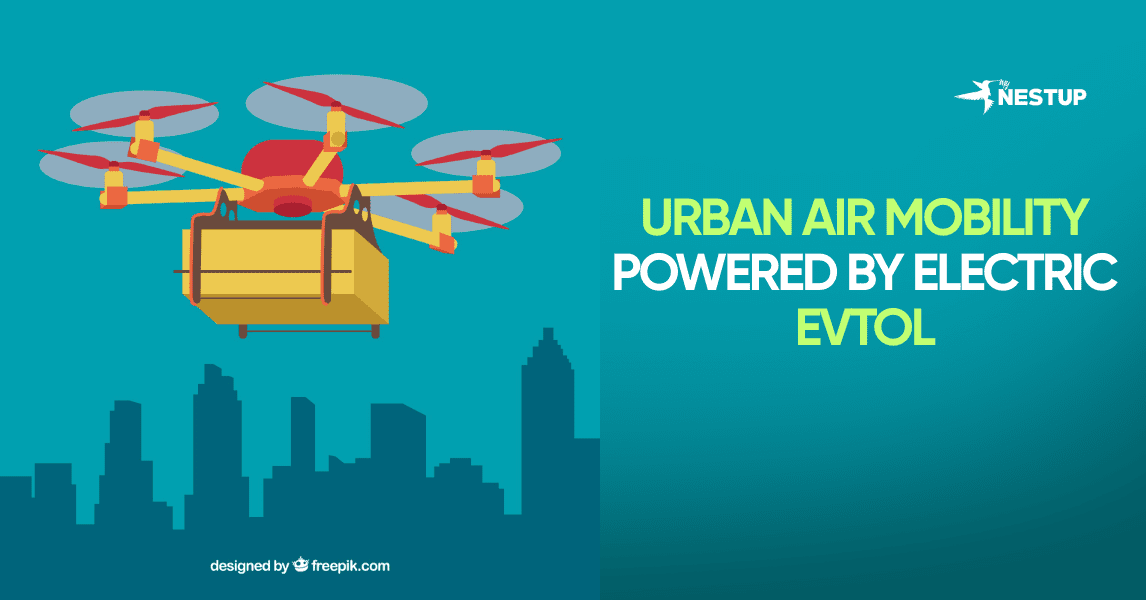

What is Urban Air Mobility (UAM)?
Urban Air Mobility (UAM) is an emerging way to travel in cities. It uses specialized electric aircraft that take off and land vertically (eVTOL). These vehicles will move both people and cargo across congested urban areas. Major startups like Joby Aviation and Archer Aviation are receiving large, continuous investments. They are now working hard to start commercial flights soon. Cities like Dubai and Los Angeles are expected to be the initial launch sites for these services. The market is driven by the need to ease severe urban traffic congestion. This system also offers a sustainable and cleaner transport option compared to traditional ground travel. Key challenges remain, including the need for new vertiport infrastructure and further advancements in battery technology. The market is growing very fast. It was valued at about $4.6 billion in 2024. Projections show this value could skyrocket to $41.5 billion by 2035, indicating a massive shift in urban transport.
How does it work?
Urban Air Mobility (UAM) is a new idea for city transportation. It uses the sky over cities as a third dimension for travel. This offers a faster way to travel than driving on congested roads. It is also a more environmentally friendly choice due to electric power. The main technology is an eVTOL aircraft. This stands for electric vertical takeoff and landing. It acts like a mix of a helicopter and a large drone. It uses electric motors to power its many rotors or propellers, which is called distributed electric propulsion. It does not need a standard runway, as it can launch and land from small vertiports. Importantly, the electric propulsion means it also creates no direct pollution and is significantly quieter than traditional helicopters.
Scope for UMA:
The main goal of UAM is short, direct trips inside a city. It is a point-to-point service designed for efficiency. It is meant to work with current public transit, acting as a premium, high-speed option, not fully replacing it.
UAM focuses on a few specific uses:
- Air Taxis for People: These will be on-demand, shared rides in the air. They offer quick city commutes, especially for high-value or time-sensitive travel, like trips to and from the airport. This service can drastically cut travel time across congested urban centers.
- Delivery of Goods: Drones will handle efficient final-stage logistics (last-mile delivery). They can also transport important, rush shipments quickly, such as medical supplies, blood, or organ transfers. This bypasses ground traffic entirely.
- Help in Emergencies: UAM can significantly speed up medical and disaster relief efforts. This includes rapidly delivering essential supplies or providing aerial reconnaissance in crowded areas or places that are hard to reach following a disaster.
Examples of eVTOL Startups:
Here are some of the main companies building the eVTOL aircraft:
- Joby Aviation: This company is based in California. They are moving quickly with FAA approvals and have teamed up with Delta and Toyota. They recently flew their first crewed air taxi between two separate spots in Dubai. This is part of their effort to start commercial service.
- Archer Aviation: Archer is working with United Airlines and Stellantis. They are also planning to launch commercial flights soon. They have detailed plans to build a network of vertiports (landing spots) in the Miami area.
- Volocopter: This German company specializes in eVTOLs with multiple rotors but no wings. They have done many test flights and aim to start services in cities like Paris.
- Wisk Aero: This is a partnership between Boeing and Kitty Hawk. Wisk is focusing on autonomous, self-flying air taxis. Boeing provides strong financial backing for this effort.
Urban Air Mobility (UAM) advantages:
Urban air mobility (UAM) has clear advantages that could reshape city life. The biggest pro is time saving. Air taxis can bypass heavy ground traffic easily, drastically reducing commute times by as much as 30 to 60 minutes for typical urban journeys. They also offer big environmental benefits. The electric motors produce zero direct emissions in the air. This could help clean up city air quality over time and reduce reliance on fossil fuels in transportation. UAM improves accessibility too, reaching areas hard to get to by road or during emergencies, such as delivering medical supplies during disaster relief efforts.
Drawbacks of Urban Air Mobility:
There are notable drawbacks that need addressing. The cost is a major issue right now. Early services will be very expensive, perhaps hundreds of dollars per ride, limiting access to a few wealthy people. There are also infrastructure problems to solve. Cities need a lot of new takeoff and landing hubs, called “vertiports,” complete with charging stations and air traffic management systems. Finding space for these hubs in dense city centers is challenging. Safety is another big concern for the public and regulators. Aircraft must undergo rigorous certification processes, and public trust in automated or pilot-operated eVTOLs is crucial for success. While electric motors are quieter than helicopters, the unique acoustic profile during vertical movements could still be an annoyance in urban neighborhoods, leading to new forms of noise pollution.
The Boom in eVTOL Investment:
Businesses developing Electric Vertical Take-Off and Landing (eVTOL) aircraft are having great success securing major funding. They’re attracting money from all kinds of places, including big airlines, established companies in the aerospace and automotive sectors, and plenty of private investors. This massive cash injection is the main force behind the industry’s rapid expansion, and forecasts suggest the global eVTOL market is set to get much, much bigger soon.
Why People Are Investing So Heavily:
- Beating City Traffic: eVTOLs are seen as the perfect answer to gridlock in major urban areas. They offer a quicker, direct way to get from one place to another, which is a huge benefit in today’s sprawling megacities.
- Better Technology: Investors feel more confident because the technology is constantly improving. Advances in battery capacity and electric motor systems are making these aircraft safer, more reliable, and capable of flying longer distances.
- Smart Collaborations: Startups aren’t going it alone. Strategic deals give the smaller companies crucial funding, access to manufacturing know-how, and help navigate complex regulations. This seriously speeds up the timeline for development and getting to market.
- Clearer Rules Ahead: As government agencies create more defined and predictable certification rules for these air taxis, investor risk goes down. This anticipation of future commercial flights is making investment much more attractive.
Conclusion:
Urban Air Mobility (UAM) is poised to revolutionize city travel. It utilizes electric Vertical Takeoff and Landing (eVTOL) aircraft as a fast, eco-friendly solution to ground traffic. Massive investment is accelerating development by companies like Joby and Archer. The market is projected for huge growth. However, high initial costs, the need for new landing sites (vertiports), and safety regulations remain key hurdles. UAM aims to complement existing public transit for premium, high-speed movement of people and critical cargo across congested urban centers.
References: