

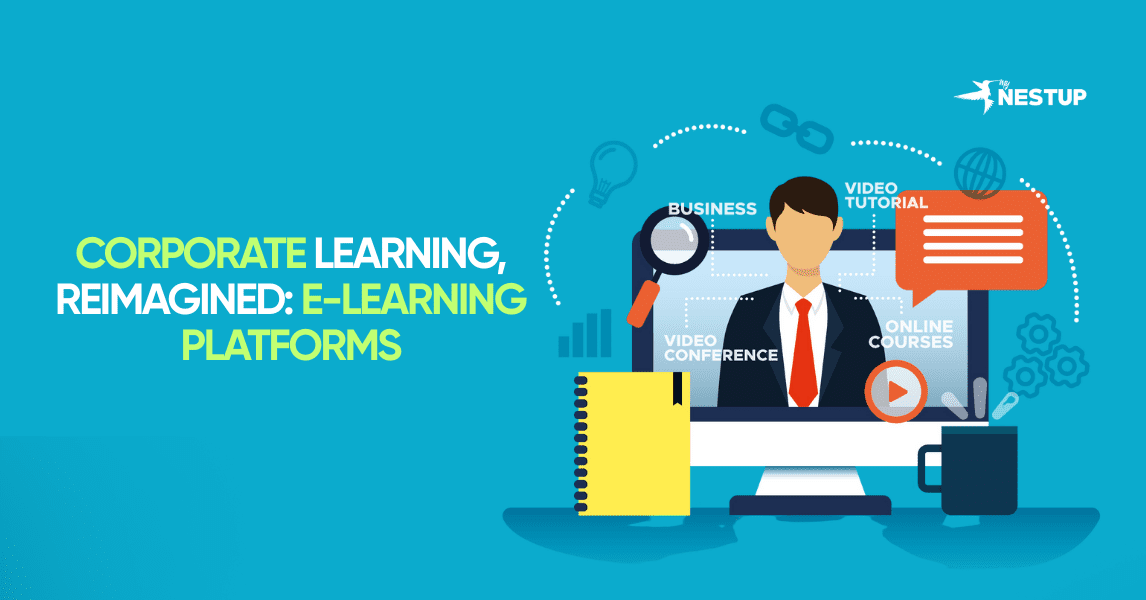

What are E-Learning Platforms (Corporates)?
Corporate e-learning platforms are digital systems designed to manage and deliver employee training within organisations. They serve as centralised hubs where companies can distribute and track learning materials for their workforce. These platforms support various types of training, ranging from onboarding and compliance to leadership and technical skill development. It makes them essential tools for modern learning and development (L&D) strategies. With the rise of remote and hybrid work, e-learning platforms have become even more important for ensuring consistent and accessible training across geographically dispersed teams.
How does E-learning work?
E-learning uses a combination of both static and interactive tools to deliver course material. Static methods are the one-way delivery channels, meaning the information flows from the platform to the student. This involves accessing structured learning websites, viewing pre-recorded streamed videos or screen recordings, and navigating through pages with various links. In contrast, interactive methods are two-way channels designed for student engagement and communication. These include joining discussion forums to talk to classmates, participating in real-time chat sessions, and attending live virtual meetings using video conferencing.
Key Advantages of Corporate E-learning:
- Ready When You Are (On-Demand Availability): E-learning tools are a lifesaver for anyone with a busy or unpredictable schedule. The materials are almost always available on demand. Basically, as long as you can log into the platform, your course content is right there, meeting you on your own time.
- No Need to Travel: Since e-learning takes place entirely online, there’s zero commuting involved. This feature makes it particularly great for cohort learning. That allows groups of people from completely different cities or countries to collaborate and gain skills together seamlessly.
- Excellent Value (Cost Efficiency): Think about a traditional classroom setting: you have to pay for the physical space, utilities, upkeep, and all the printed handouts. When you move the learning online, most of those infrastructure and material costs vanish, making e-learning a far more economical option.
- Set Your Own Speed (Flexibility): Online and web-based training offers fantastic flexibility. Learners are empowered to take in the information at a pace that works for them. This allows for a deeper understanding without feeling rushed or held back.
What Are the Drawbacks of E-Learning?
- Missing the Human Touch: Online courses are great for people who are naturally independent and highly motivated. However, some students thrive on human interaction, and for them, web-based training can fall short. For instance, if a course is entirely self-paced, a student might miss the structure of firm deadlines, making it hard to finish. They might also need quick, immediate answers to questions that an asynchronous system simply can’t provide.
- The Technical Barrier: To participate in virtual classes and complete homework, students often have to rely on their own personal devices and internet connections. This is a significant hurdle because not every learner has access to the necessary, reliable network and the right technology to ensure they can connect and stay connected throughout the course.
- Concerns Over Quality and Trust: On some e-learning platforms, it can be tough to clearly judge the quality or credibility of the course content itself or the instructor leading the class. This lack of transparency is particularly noticeable and concerning when dealing with free or very easily accessible online resources.
Where Corporate E-Learning is Used:
The reach of online learning platforms in the corporate world is massive, covering nearly every aspect of developing employees, especially when people are working remotely.
- Boosting Technical Skills: Companies use these platforms to train staff on essential new technology, such as specialised software, cloud computing, how to analyse data, and crucial subjects like cybersecurity or emerging AI tools.
- Mandatory Rules & Compliance: E-learning is perfect for making sure every single employee, no matter where they are based, completes all required regulatory training. This covers critical topics like data privacy (like GDPR), preventing harassment, and reviewing company policies.
- Honing People Skills (Soft Skills): Beyond technical abilities, platforms deliver vital training on interpersonal skills, including how to communicate effectively while working remotely, leading virtual teams, managing time efficiently, and building emotional intelligence.
- Standardised Welcome (Onboarding): New remote hires get a consistent, standardised introduction to the company. The platform covers everything from product knowledge and necessary tools to understanding the company’s culture.
- Growing Future Leaders: E-learning provides remote workshops and executive coaching programs, allowing companies to develop their future leadership pipeline without the time and cost associated with business travel.
Remote upskilling demand:
The need for remote upskilling has grown rapidly as automation, digitalisation, and hybrid work change how people work around the world. Businesses are increasingly turning to online training programs to help employees build both technical and soft skills from any location. This approach helps close skill gaps in high-demand areas such as artificial intelligence, data analysis, cybersecurity, and digital communication. The trend is driven by the need for greater adaptability, ensuring that workers can keep pace with fast-changing technologies and remain competitive in the modern job market.
For organisations, remote upskilling offers multiple benefits; it strengthens employee performance, boosts engagement, and improves retention. With the help of online learning platforms, microlearning tools, and AI-powered systems, companies can deliver training that is flexible, tailored, and cost-efficient. As remote and hybrid work continue to grow, many employers are embedding continuous online learning into their long-term development strategies. This rising focus on digital learning is also driving new collaborations between companies and e-learning providers, making remote upskilling an essential part of preparing the workforce for the future.
Conclusion:
In conclusion, corporate e-learning platforms are central, digital systems that have become an essential tool for modern organisations, especially in supporting remote and hybrid workforces. They operate by blending static content delivery with interactive engagement tools, and their main strength lies in providing flexible, cost-effective, and on-demand training across crucial areas like technical skills, compliance, and leadership development. While these platforms offer undeniable advantages like saving travel costs and allowing self-paced learning, companies must be mindful of the potential drawbacks, such as the need to mitigate the lack of face-to-face interaction, overcome technological access barriers for all employees, and ensure the high quality and credibility of the content provided.
Reference:
https://www.mckinsey.com/forward/learning-platform
https://stratbeans.com/corporate-elearning