


Conversational AI: Your Automated Customer Service Partner.
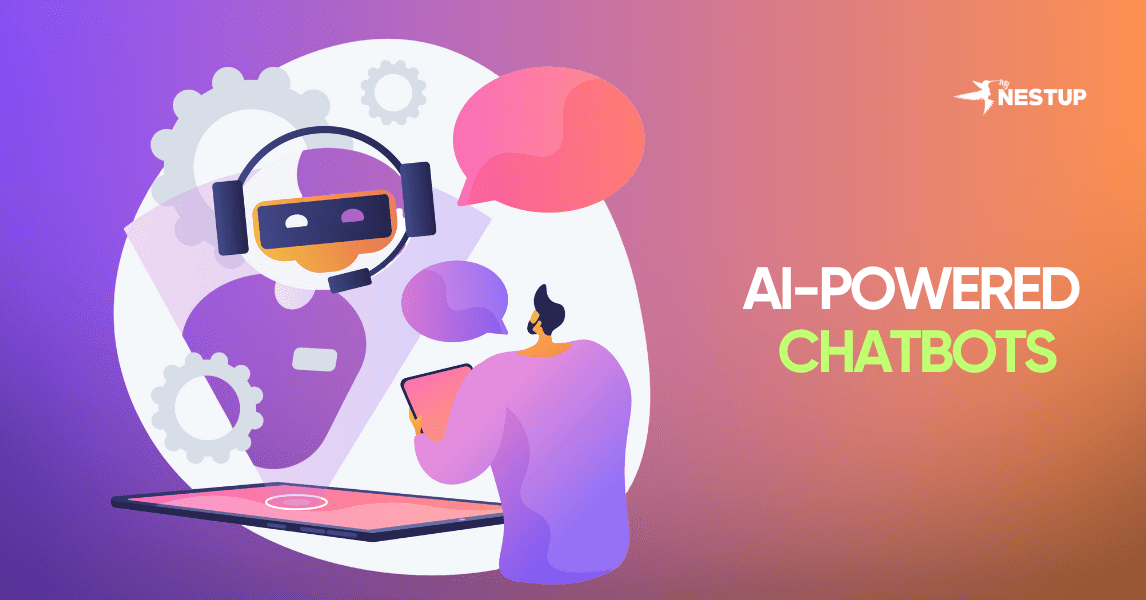
Conversational AI represents an advanced type of artificial intelligence. It is utilized by customer service departments to efficiently understand and interact with people across various communication platforms. This technology employs Natural Language Processing (NLP) to comprehend human language, and Machine Learning (ML) to continuously learn and generate human-like responses. Customer service teams rely on it to significantly enhance their communications around-the-clock assistance to customers. By automating the handling of simple, routine questions and resolving basic issues, AI agents greatly improve the overall customer experience. These conversational AI include tools like sophisticated chatbots and virtual assistants. This efficiency allows human staff to dedicate their time and expertise to more complicated customer inquiries, resulting in faster service and more effective teamwork. This move towards AI-driven self-service is a major industry shift. Forecasts suggest a substantial increase in customers resolving issues autonomously through these personalized AI-powered tools in the coming years.
The Mechanics of Conversational AI in Customer Service:
Conversational AI works by acting as a highly sophisticated translator and problem-solver. The initial step involves converting a customer’s message into a language that a machine can process. This is achieved through Natural Language Processing (NLP), which is essentially the AI’s ability to recognize and understand human language. NLP has two key parts: Natural Language Understanding (NLU), which makes sense of the input, and Natural Language Generation (NLG), which forms a coherent, understandable response. Once the intent is understood, the system formulates a reply by accessing information from a designated knowledge base. A crucial element of this process is Machine Learning (ML), which uses algorithms trained on massive datasets of prior customer interactions. For instance, when a customer types a question into a chat window, the NLP analyzes the request, and the system pulls an appropriate answer. Over time, the ML component continually learns from every new interaction, automatically refining and improving the accuracy and helpfulness of its responses. This ensures the AI consistently evolves to optimize contact center workflows and deliver a higher quality of service.
The Advantages of Using Conversational AI in Customer Service:
Conversational AI offers several powerful benefits that transform how businesses interact with their customers. Here is a simplified breakdown of the key advantages:
Consistent and Fair Service:
Conversational AI platforms ensure that every single customer receives the same high-quality, consistent tone during their interaction, regardless of the complexity of their issue. This feature guarantees a uniform and fair service experience for everyone.
Boosting Agent Performance and Speed:
By automating the handling of high-volume customer inquiries, AI assistants significantly improve the efficiency of human service agents. This allows human staff to focus their expertise on complex or sensitive issues. The overall effect is a faster resolution rate and shorter wait times for customers. This directly leads to an improved Customer Satisfaction Score (CSAT).
Instant, Global Multilingual Support:
Conversational AI provides immediate customer support in many different languages. This capability is like having a global support team available 24/7. It ensures streamlined customer engagement across various channels, including text, SMS, apps, social media, and websites. This allows a business to effectively serve a worldwide customer base.
Easy Implementation:
One of the major benefits is the minimal time and effort needed for setup. The AI software doesn’t require extensive manual training once installed. It primarily needs to be connected to the organization’s existing data and knowledge base to instantly absorb all necessary information.
Natural, Human-Like Dialogue:
The core design goal of conversational AI is to make customer support feel as natural and human-like as possible. Customers should be able to communicate with the system without feeling like they are talking to a robot. This allows a smooth and comfortable interaction that mirrors a conversation with a real support representative.
Seamless Channel Integration:
Conversational AI allows customers to start and continue their interactions with a business across multiple communication channels without losing context. This integration ensures the AI is a unified presence that can even carry its capabilities over into areas like sales and marketing for a cohesive business strategy.
The Different Types of Conversational AI in Customer Service:
Conversational AI isn’t a single tool but a collection of intelligent systems, each suited for different customer service needs. A business chooses its solution based on its goals, often employing a hybrid approach to combine the simplicity of one type with the complexity of another.
- Traditional Chatbots (Rule-Based): These are the most straightforward systems. They operate on a defined set of rules or a flowchart (an “if this, then that” logic). Their functions are limited, making them best for quick tasks like directing a customer to the right department. They also provide a short list of Frequently Asked Questions (FAQs).
- Generative AI Chatbots: These are the modern, more advanced evolution of the chatbot. They use sophisticated language models to understand the true meaning and intent behind open-ended messages, even those with typos or translation issues. Because they can formulate creative and highly relevant human-like responses, they are used for more personalized and complex interactions.
- Interactive Voice Response (IVR) Systems: These are the automated phone menus you encounter when calling a business. Conversational AI enhances these traditional systems by making them smarter. Instead of simply following menu prompts, the AI can listen to your spoken words, identify the reason you called, and immediately begin solving your request
- Voice Assistants: These are AI systems that respond to spoken commands and are embedded in devices like smart speakers (like Alexa) or smartphones (like Siri). In a business context, they offer a self-service way for customers to get information or complete transactions simply by talking to their device.
- AI Agents (or Virtual Assistants): These are the most capable type. They are designed to act autonomously, going beyond just answering questions. They can design their own workflows, use external tools (like checking a CRM system), and solve more complex problems. They will go well beyond a basic FAQ list, essentially acting as a fully empowered employee.
- Nonverbal Translation Tools: This is a newer innovation that uses AI, often with a camera app, to capture and translate sign language. This technology is vital for helping businesses provide comprehensive service to customers who have hearing impairments or other conditions, ensuring streamlined customer engagement.
Real-world Implementations of Voice AI:
Conversational AI is transforming industries that manage high volumes of customer interactions and require 24/7 availability. These are used most notably in Banking and Financial Services, Healthcare, and Telecommunications. In finance, AI assistants manage countless inquiries like checking account balances, processing loan applications, and detecting fraud. The offer instant, personalized support while also automating internal tasks like journal entries for staff efficiency. The healthcare sector uses AI to provide immediate patient support for common health concerns. They help with medication reminders and appointment scheduling, freeing up medical staff for complex care and improving overall patient outcomes. Finally, telecommunications companies deploy AI-powered chatbots to offer real-time troubleshooting. It answers questions about plan details and billing, using the technology for proactive customer engagement with personalized offers and service alerts. This significantly enhances the customer experience.
Conclusion:
Conversational AI is transforming customer service by enabling businesses to interact with people seamlessly and around-the-clock using tools like sophisticated chatbots and virtual assistants. This technology relies on Natural Language Processing (NLP), which includes Natural Language Understanding (NLU) to comprehend input and Natural Language Generation (NLG) to form responses, alongside Machine Learning (ML) to continuously improve accuracy. Key benefits include consistent service, boosting human agent efficiency by handling routine tasks, providing instant, global multilingual support, and offering a natural, human-like dialogue experience. Different forms of this AI exist, ranging from simple Rule-Based Chatbots to advanced Generative AI Chatbots, enhanced Interactive Voice Response (IVR) systems, and highly capable AI Agents that can act autonomously and use external tools. This shift towards AI-driven self-service is being widely implemented in sectors like Banking, Healthcare, and Telecommunications to manage high-volume inquiries, automate tasks, and significantly enhance the overall customer experience and operational efficiency.
References:
https://www.ibm.com/think/topics/conversational-ai
https://www.techtarget.com/searchenterpriseai/definition/conversational-AI