


What is AI in Customer Service?
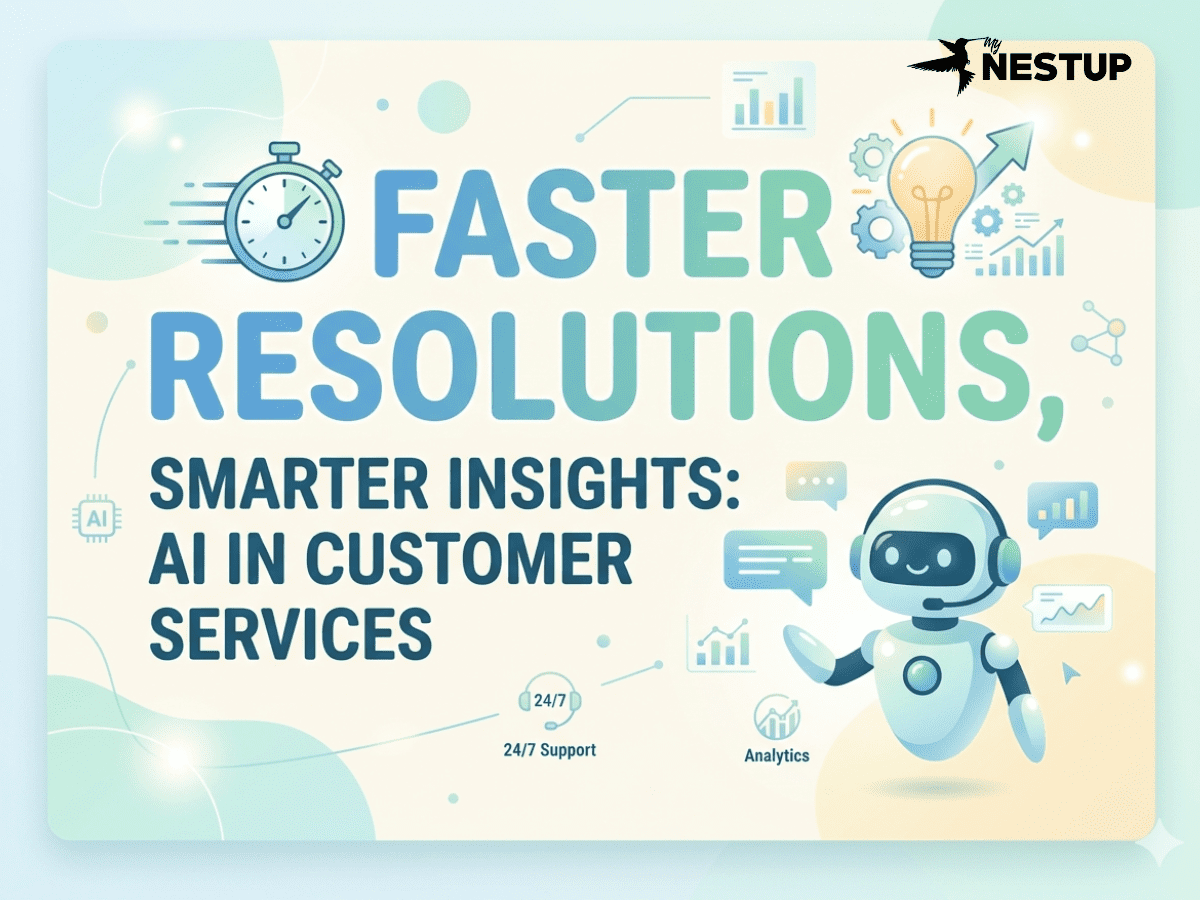
Artificial intelligence (AI) is enhancing customer service by using smart technologies and automation to make support more personalized and less dependent on human effort. Tools like chatbots, virtual agents and intelligent routing systems rely on natural language processing (NLP) and machine learning (ML) to understand customer needs. By working together, these systems deliver smoother, real-time responses. They continuously improve with every interaction.
Across the globe, nearly two-thirds of executives believe generative AI will reshape how organizations design customer experiences, with personalization at the heart of this shift. Instead of just answering questions, generative AI can offer proactive suggestions and tailored recommendations. They even solve problems before they arise.
When integrated with customer relationship management (CRM) platforms, AI tools help companies provide highly personalized support while keeping costs down. But success is not just about efficiency. It is about keeping the human touch. Customers notice when service feels scripted or robotic. This is why many businesses use AI to assist rather than replace human employees. The best outcomes come from blending AI’s speed and data-driven insights with the empathy and judgment that humans bring. Transparency also matters. Letting customers know when AI is involved and being clear about how their data is used, builds trust and ensures the experience feels respectful.
AI in customer service is becoming increasingly sophisticated. Features like real-time sentiment analysis, voice-driven AI and advanced generative models are enabling more intuitive support. These innovations are helping businesses move beyond simply reacting to issues. They are moving toward building long-term loyalty through thoughtful, proactive service.
Why AI Matters in Customer Service?
Customer service today looks very different from the past. In a world where people expect instant, personalized help around the clock, traditional support teams and software often struggle to keep up. The result is slower responses, frustrated customers and lost business opportunities.
AI steps in to bridge these gaps. With smart automation and problem-solving tools, it can handle everyday tasks. These can include answering FAQs, processing requests or directing tickets to the right agent. This gives customers quick, consistent support across multiple platforms and also lightens the load for service teams. For more complex issues, AI provides agents with real-time insights and operational support. It helps them resolve problems faster and effectively. Instead of constantly reacting to demand, teams can shift toward a proactive approach. They can anticipate customer needs and deliver solutions before problems escalate.
When used well, AI transforms customer service from a cost center into a driver of satisfaction, loyalty and even revenue growth.
Examples of AI Use in Customer Service
- Instant responses: Chatbots provide quick answers to common questions, guide users through steps and troubleshoot issues anytime. Built with natural language processing (NLP) and machine learning (ML), they learn from past interactions and improve over time.
- Virtual customer assistants (VCAs): More advanced than chatbots, VCAs use conversational AI to handle complex tasks like placing orders or giving product advice through voice or text.
- Intelligent routing: AI sorts customer inquiries and directs them to the right team. Machine learning and predictive analytics help prioritize urgent cases, reducing wait times and boosting efficiency.
- Predictive support: By spotting unusual activity or upcoming service lapses, AI can proactively assist customers. Like sending renewal reminders or offering help before issues arise.
- Sentiment detection: AI analyzes tone and language to gauge customer emotions, helping teams respond quickly to frustration and manage sensitive conversations with care.
- Personalized self-service: Recommendation engines suggest tailored guides, videos or solutions based on customer searches or browsing behavior.
- Knowledge management: AI organizes support content into searchable knowledge bases and can generate customized help articles or summaries.
- Automated follow-ups: Robotic Process Automation (RPA) sends surveys, updates or follow-up emails automatically. This frees agents from repetitive tasks.
- Quality monitoring and coaching: Real-time analytics flag issues in conversations, enabling managers to coach agents and resolve problems immediately.
- Voice recognition and smarter IVR: AI-driven phone systems understand natural speech, replacing rigid menu options with intuitive, conversational support. This makes phone interactions smoother and more efficient.
Benefits of AI in Customer Service
AI-powered customer service tools can transform the entire support experience. It can help in making teams more efficient while uncovering insights that drive better performance. Here are some of the biggest advantages of weaving AI into a service strategy:
- Deliver faster service at lower cost: Chatbots and virtual assistants can respond instantly to customer requests around the clock. They help in expanding team capacity without adding extra expense.
- Boost agent productivity: Routine queries and repetitive workflows like ticket sorting or routing can be automated with AI. This frees up agents to focus on complex, high-value tasks.
- Provide real-time support for agents: AI can surface relevant customer details and past interactions on the spot. It guides agents during conversations to resolve issues more effectively.
- Scale effortlessly with demand: Automated systems can handle large volumes of cases. This helps reduce wait times and help teams manage traffic spikes without needing additional staff.
- Gain deeper customer insights: Analytics powered by AI reveal behavior patterns and preferences. They enable smarter, data-driven service strategies.
- Give customers the power to help themselves: Interactive chatbots and virtual assistants let people troubleshoot problems on their own. They offer clear guidance in a friendly, conversational style.
- Prevent problems before they arise: With predictive analytics, AI can spot when customers are likely to face an issue and suggest solutions ahead of time.
- Catch and prioritize urgent cases: AI can flag sensitive situations and fast-track them to the right team members for quicker resolution.
- Identify growing concerns early: AI keeps an eye on customer feedback and behavior patterns to detect potential pain points. This allows teams to step in before small issues turn into major obstacles.
- Personalize the customer journey: By analyzing individual data, AI can recommend tailored solutions and experiences that feel unique to each customer.
- Ensure consistent quality across channels: AI can monitor interactions to maintain high service standards, no matter where customers engage.
- Expand accessibility: Voice AI and multilingual tools open up support options for customers who face language barriers, making service more inclusive.
Major Challenges of Implementing AI in Customer Service
AI has the potential to transform customer service, but to unlock its full value, the technology must work smoothly with existing teams and systems. Aligning everything together introduces new challenges for customer experience (CX) leaders. Here are the main factors to consider when integrating AI solutions to ensure a strong return on investment:
1. Existing Fragmented Systems
For AI to deliver accurate and contextual support, it needs real-time access to both data and processes. This becomes difficult when information is scattered across siloed systems or tied to outdated IT infrastructures. Without integration, AI cannot provide the level of precision or efficiency that businesses expect. To fully leverage AI tools, organizations must unify their data and workflows. This often requires costly upgrades and modernization of traditional systems.
2. Data Privacy and Security
AI systems depend on large volumes of customer data to deliver fast, personalized and accurate service. However, this reliance on sensitive information raises serious privacy and security concerns. Any breach can expose businesses to legal risks. This can severely damage customer trust and brand reputation. To mitigate these risks, companies must implement strong security protocols and communicate transparently with customers about how their data is being used and protected.
3. AI Training for Service Teams
Introducing AI into customer service comes with a steep learning curve for employees. Teams need to understand how to use AI tools effectively while maintaining the human touch that defines great customer experiences. Employees may also worry that AI could replace their roles, leading to hesitation or resistance in adopting the technology. These concerns can slow down implementation and reduce the effectiveness of AI solutions. To overcome this, organizations must invest in training and reassure employees about the supportive role of AI. They need to emphasize how it enhances rather than replaces human capabilities.
The future of customer service is not about choosing between people or technology. It is about bringing the two together. When AI and humans work side by side, they can deliver experiences that feel more personal and genuinely empathetic. AI agents will manage complex customer questions with a strong understanding of language and emotion and respond in ways that are both relevant and compassionate. At the same time, predictive AI will help anticipate customer needs before they are even expressed, allowing businesses to offer support and solutions proactively.
Automation will also simplify day-to-day workflows. This will result in cutting down response times and freeing customer service teams to focus on higher-value interactions. Behind the scenes, AI-powered insights will continuously improve customer service strategies, helping organizations deliver faster and more satisfying experiences. All while prioritizing data privacy and responsible, ethical use of AI.
References