

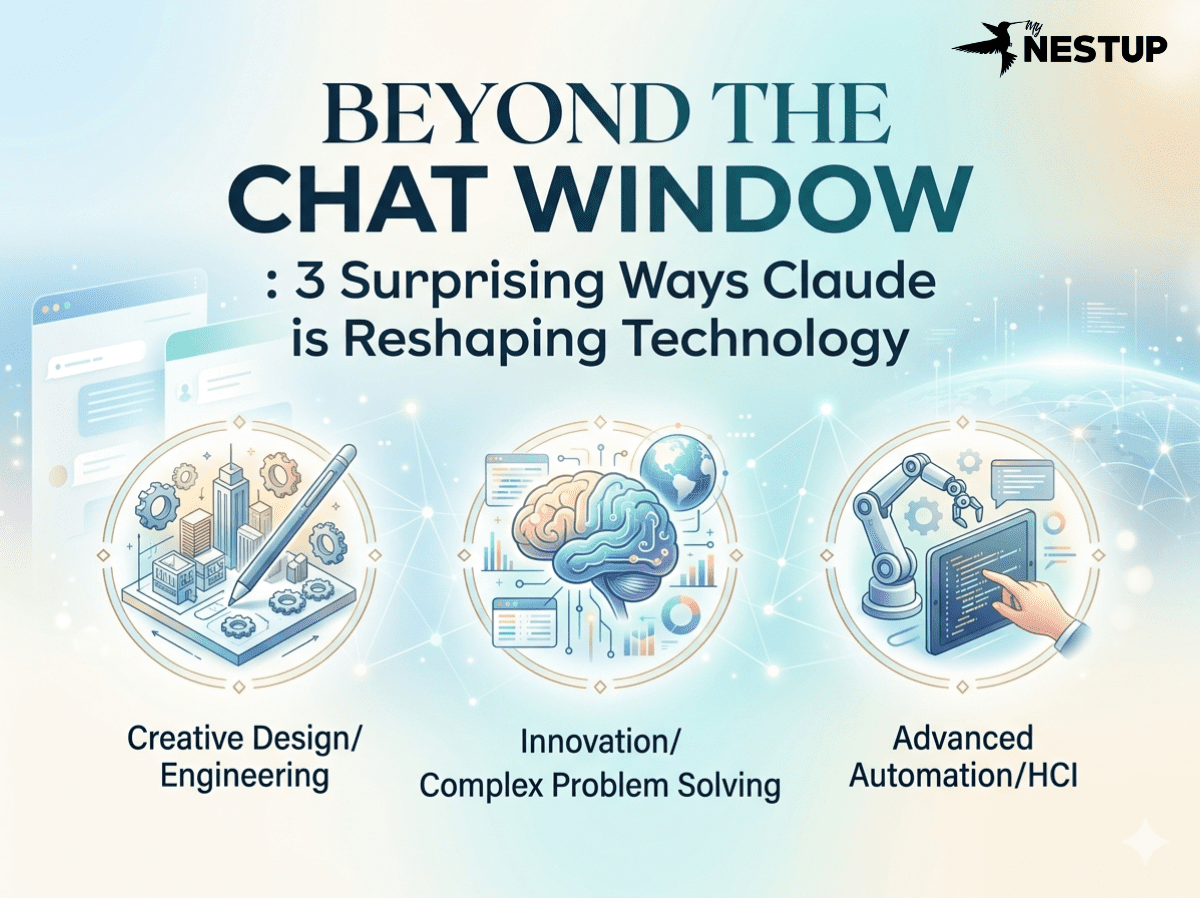

When most people think of AI models like Claude, they picture a chat window—a destination you visit to ask questions, brainstorm ideas, or get help with writing. While this is a powerful application, it only scratches the surface of a much deeper transformation. The real revolution is happening “behind the scenes,” where Claude is being integrated into the core of software, automation, and professional tools.
This article reveals three of the most impactful and surprising ways the Claude API is being used today, moving it from a standalone application to a fundamental component of the digital ecosystem.

——————————————————————————–
1. It’s Not Just a Chatbot—It’s an Engine for Your Entire Software Stack
Developers are not just “talking” to Claude; they are embedding its reasoning capabilities deep into their software architectures, turning it into a foundational engine for their applications. They are increasingly building sophisticated, hybrid systems that strategically leverage different models for different tasks.
This integration happens at multiple layers of the technology stack:
- Backend Services: Using the Messages API, developers can call on Claude for complex backend tasks that go far beyond simple generation, including sophisticated tool use, code execution, and file processing.
- Cloud Platforms: Claude is natively available on major cloud platforms like Amazon Bedrock, Google Vertex AI, and Microsoft Azure. This allows enterprises to deploy it with the built-in security, scalability, and reliability they already trust.
- Agentic Workflows: Enabled by technologies like the Model Context Protocol (MCP), Claude can connect to external tools, APIs, and databases to perform multi-step tasks. This facilitates advanced workflows like retrieval-augmented generation (RAG), where the model pulls from a private knowledge base to provide accurate, cited answers.
- Hybrid Architectures: Engineers are strategically using faster models like Haiku for high-volume, low-latency tasks, while reserving premium models like Opus for complex, deep-reasoning challenges within the same application.
Why This Matters
This shift transforms Claude from a destination you visit into a fundamental utility. Like a database or an authentication service, it’s becoming an intelligent component that makes existing applications smarter and more capable from within.
——————————————————————————–
2. You Can Build With Its Power—Without Writing a Single Line of Code
The power of Claude is no longer limited to those who can write code. A new ecosystem of no-code and low-code platforms is democratizing access, allowing non-developers to integrate its advanced capabilities into their own workflows and creations.
This happens through different types of platforms, from automation hubs like Zapier, Make.com, and n8n to visual app builders that provide drag-and-drop API connectors. These tools enable a wide range of powerful applications, such as:
- Automating the summarization of incoming emails and sending digests to a Slack channel.
- Generating detailed reports automatically whenever a new entry is submitted through a web form.
- Building intelligent customer support chatbots that can query databases or perform actions in other connected apps.
- Creating content tools that generate personalized marketing copy based on user data.
- Rapidly prototyping AI-enhanced apps, such as decision assistants or image description tools.
Why This Matters
This is a game-changer because it allows business users, creators, and entrepreneurs to build sophisticated AI-powered solutions without needing expensive development resources. It radically speeds up innovation by empowering the people closest to a problem to build their own AI-driven solution.
——————————————————————————–
3. It’s Becoming Your Specialized, In-App “Copilot”
The era of the general-purpose assistant is giving way to a new trend: highly specialized “copilots” embedded directly within professional software. While a broader “assistant” might handle conversational, multi-step tasks, a copilot acts as a real-time collaborator, offering intelligent suggestions and automation focused on in-context augmentation within a specific workflow.
This trend is emerging across multiple professional domains:
- For Coders: Claude integrates directly into development environments like VS Code, JetBrains, and terminals. It assists with code generation, refactoring, and even complex multi-file edits with checkpoints.
- For Domain-Specific Work: In fields like law, finance, and healthcare, Claude is powering expert copilots. A tool like Harvey, for instance, assists legal professionals with in-depth analysis and recommendations, acting as a specialized digital associate.
- For Productivity Work: Assistants embedded in platforms like Slack or Microsoft 365 leverage Claude to help with everyday tasks like conducting research, summarizing documents, or drafting communications directly within the user’s primary workspace.
Why This Matters
The future of AI in the workplace isn’t just about a single, all-knowing assistant. It’s about a suite of specialized copilots that augment human expertise directly where the work happens. Claude’s core strengths—its strong reasoning, safety features, and robust tool integration—make it the ideal foundation for this new class of trustworthy, high-impact copilots, embedding an intelligent partner into the tools professionals use every day.
——————————————————————————–
Conclusion: The Quiet Integration of AI
As these examples show, Claude is rapidly evolving beyond a simple chatbot. It is becoming a core architectural component in software, a powerful tool accessible to everyone through no-code platforms, and a collection of specialized copilots that augment our most complex work.
This quiet, deep integration is the next phase of the AI revolution. As AI moves from a visible destination to an invisible, integrated utility, how will it change not just what we can create, but how we think about our work?