


What is Industry 4.0?
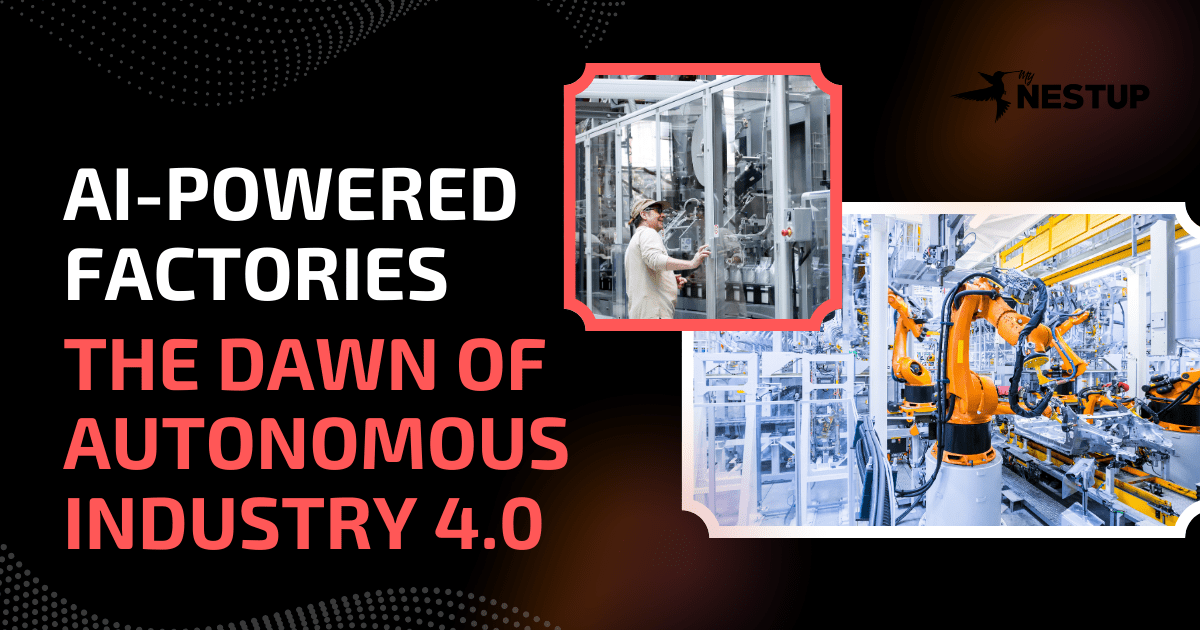
Industry 4.0 refers to the shift toward smarter, digitally connected manufacturing. It brings together advanced technologies such as the industrial Internet of Things (IIoT), artificial intelligence, Big Data analytics, robotics and automation. When these tools work together, factories can operate more intelligently. They help making it possible to boost productivity and improve efficiency. They also help adapt quickly and make better decisions across both production and supply chain activities.
Any clear definition of Industry 4.0 also ties back to its roots in the “Fourth Industrial Revolution.” Since the 1800s, the world has gone through three major industrial transformations. Each one reshaping how products were made and how people worked. They helped in not just improving processes but reinventing them. Today, we are experiencing the fourth of these transformations, commonly known as Industry 4.0.
The role of automation in Industry 4.0
For automation to deliver real value in Industry 4.0, it needs to be integrated across the entire organization rather than used in isolated pockets. When every part of a company is connected, information can move freely between systems. This allows processes to work together smoothly.
In this new industrial era, the benefits of automation go far beyond simply saving time or cutting costs. The real advantage lies in greater flexibility and major improvements in production quality. Automated systems drastically reduce human error. Tools like Digital Twins let companies simulate and monitor processes in real time. In areas where human error might reach 10%, an automated platform can bring that down to nearly zero. Sometimes as low as 0.00001%.
Key Technologies
- Big Data and AI analytics
In an Industry 4.0 environment, companies gather massive amounts of data from many different places. This includes information coming directly from machines and IoT-enabled devices inside the business. Data also comes from outside the factory. Things like customer feedback, market trends that influence product design or even weather updates that help manage logistics. AI and machine learning tools analyze this data instantly. They turn it into insights that support smarter decisions and automated processes across manufacturing and the entire supply chain.
- Horizontal and vertical integration
A key pillar of Industry 4.0 is the way processes are connected both horizontally and vertically. Horizontal integration links activities across production lines, multiple facilities and supply chain so everything operates as one coordinated system. Vertical integration connects all levels of the business. From frontline operations to management, ensuring information moves smoothly between departments. This alignment ties areas like R&D, quality control, marketing and sales directly to production. This helps remove barriers between teams and improve overall workflow.
- Cloud computing
Cloud technology is often described as the backbone of Industry 4.0. It provides the platform needed for advanced tools such as AI, machine learning and IoT systems. Most of the data used to power modern manufacturing is stored in the cloud. The cyber-physical systems at the heart of Industry 4.0 rely on it to communicate and make real-time decisions. Without cloud computing, the speed and innovation seen in digital manufacturing would not be possible.
- Augmented reality (AR)
AR overlays digital information onto the real world. Using smart glasses or mobile devices, workers can see real-time IoT data and 3D models of parts. They can see repair steps, training material drawn directly over physical equipment. AR has enormous potential in maintenance, quality checks, technician training and on-site safety by giving people the information they need right when they need it.
- Industrial Internet of Things (IIoT)
The Industrial IoT is so essential to Industry 4.0 that the two concepts often go hand in hand. Machines, tools, robots and products are fitted with sensors or RFID tags to share real-time details about their performance. This helps companies adjust designs quickly and prevent breakdowns. It also helps track inventory and respond to customer demands more effectively.
- Additive manufacturing / 3D printing
3D printing started out as a way to quickly prototype new designs, but its uses have expanded dramatically. Today, it supports everything from personalized products to decentralized manufacturing. Instead of storing large inventories, companies can keep digital design files and print items when needed. This helps cutting storage costs and reducing reliance on distant factories. Modern printers can work with metals, advanced polymers, ceramics and even emerging biomaterials.
- Autonomous robots
Industry 4.0 introduces a new generation of robots capable of working independently with minimal supervision. These machines range from drones that scan inventory to mobile robots used for picking and material handling. With the help of sensors, machine vision, AI and sophisticated software, autonomous robots can tackle delicate or complex tasks. They can respond intelligently to their surroundings.
- Digital Twins
A digital twin is a virtual replica of a real machine, system or process built using live sensor data. This technology helps companies understand how equipment is performing and predict failures. For example, operators can pinpoint which component is causing an issue. They can simulate different scenarios to improve reliability and reduce downtime.
- Cybersecurity
As factories become more connected and data-driven, strong cybersecurity becomes essential. Approaches like Zero Trust security, blockchain and AI-driven threat detection help companies identify and stop cyber risks before they cause harm. These measures protect sensitive data. It helps keep production running smoothly across increasingly interconnected networks.
Advantages of automation in Industry 4.0
- Cost efficiency: Automation lowers labor costs by taking over routine tasks. This allows employees to focus on work that requires creativity or specialized judgment. Technologies such as VR and AR also make training faster and more effective.
- Competitive edge: Standardized, automated workflows ensure consistent, accurate results and allow machines to work around the clock. This improves productivity. It increases output and reduces downtime.
- Scalability and flexibility: Training people to handle new tasks takes time, but automated systems and robots can be reprogrammed quickly. This makes it easier to adjust production lines and respond to changes without long delays.
- Faster processes: Automation shortens the time needed to process data. These systems can store and manage huge volumes of information generated during production.
- Higher safety levels: Machines can take on dangerous tasks that pose risks to workers. Companies can also implement advanced safety and cybersecurity measures to protect equipment and staff.
- Better control and insights: Automated processes generate detailed data that can reveal trends and highlight inefficiencies. They support better decision-making. With stronger data quality and centralized systems, companies can optimize operations and even bring outsourced tasks back in-house.
Automation challenges in Industry 4.0
- High investment needs: Moving to an automated setup often requires significant financial investment. Many companies must update their entire infrastructure. They need to carefully evaluate which technologies will offer the best long-term return.
- Strategic planning: Implementing automation is not just about buying machines. It requires a cultural shift and thoughtful planning. It needs time to build a strategy that ensures the technology is used effectively.
- Impact on workers: As smart systems take over more tasks, many traditional roles may disappear. This makes continuous training essential so workers can develop digital skills that fit the new industrial landscape.
While many organizations are still figuring out how to approach Industry 4.0, the next stage (Industry 5.0) is already emerging. This new phase brings humans and collaborative robots (“cobots”) together. It focuses on personalization, customer-centric services and closer cooperation between people and machines. Industry 5.0 aims to blend human strengths with technological capabilities. To support this shift, education and training systems will need to evolve so people can thrive in a more intelligent, tech-driven society.
References: