


What is AI-powered cybersecurity defense?
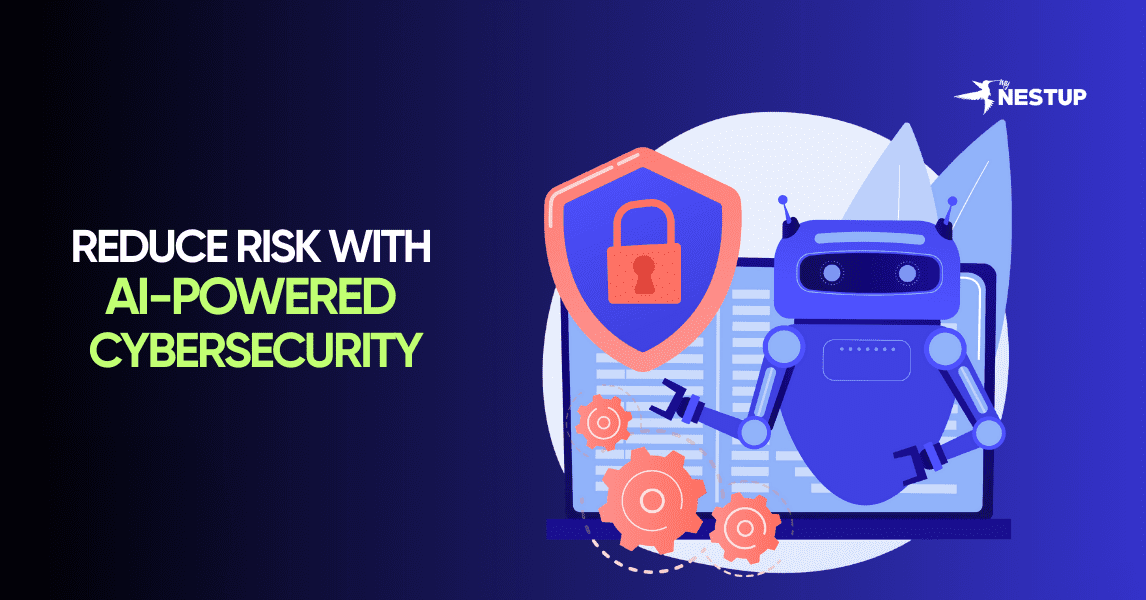
Artificial intelligence is dramatically reshaping cybersecurity. This technology, especially machine learning, offers a huge upgrade to digital defense. It allows security systems to analyze massive quantities of data very quickly. This real-time processing capability lets systems learn patterns on their own. Instead of just looking for known threats, AI figures out what is “normal” behavior for users and networks. When activity deviates from this learned baseline, AI instantly flags it as an anomaly. This capability is vital for catching new, unique attacks that older, signature-based tools would completely miss. AI also empowers a significant amount of automation. It handles low-level tasks like prioritizing thousands of daily security alerts. This speed frees up human security experts. They can then focus their time on complex investigations and strategic risk reduction. In short, AI moves security from a reactive mindset to a proactive, adaptive defense.
How AI Enhances Cybersecurity:
AI significantly boosts cybersecurity defenses across several key areas:
- Real-time Threat Detection and Anomaly Identification: AI algorithms continuously analyze massive volumes of data to establish a baseline of “normal” behavior. It can then quickly and accurately detect subtle anomalies or deviations from this baseline that might indicate a potential or ongoing attack, even a zero-day threat.
- Automated and Rapid Incident Response: Once a threat is detected, AI-driven systems can automatically trigger immediate countermeasures without human intervention. This rapid response reduces the time window for attackers to cause damage.
- Predictive Analytics and Proactive Defense: Machine Learning models analyze historical attack data and current threat intelligence to identify emerging patterns and forecast potential future attacks. This allows organizations to strengthen defenses and patch vulnerabilities before they are exploited proactively.
- Phishing and Social Engineering Prevention: AI, often utilizing Natural Language Processing (NLP), can analyze the content, tone, and context of emails to identify signs of phishing, email spoofing, and other sophisticated social engineering tactics.
- Vulnerability Management and Prioritization: AI can scan and analyze systems to identify potential security weaknesses and configurations. Crucially, it helps prioritize these vulnerabilities based on their exploitability and potential impact on critical assets, ensuring security teams focus on the highest-risk issues first.
- Automating Routine Security Tasks: AI automates repetitive and time-consuming tasks like log analysis, vulnerability scanning, and alert triage. This frees up human security analysts (called “SecOps” teams) to focus on more complex investigations and strategic initiatives.
Threats to AI-powered cybersecurity:
The most direct threat involves attackers using AI to target AI systems, creating a digital “arms race.” One technique is Adversarial Evasion Attacks. Attackers slightly manipulate data, often with changes humans cannot see, to fool a trained AI model. For example, a small, invisible change can make an AI-powered anti-malware tool classify a malicious file as safe, allowing it to bypass defenses. Another technique is Data Poisoning Attacks. Attackers inject corrupted data into the AI’s training set. The model learns incorrectly from this bad data. This can cause the AI to mistake malicious activity for normal behavior or target legitimate users and files. Model Theft/Extraction is a threat. Attackers repeatedly query an AI model deployed via an API. This lets them reconstruct a near-perfect copy of the original model. This process exposes the organization’s intellectual property. It also allows the attacker to test their evasion tactics against a perfect replica offline.
Barriers for AI-powered cybersecurity:
A major functional barrier to AI adoption in critical defense systems is trust and transparency. This issue centers on the Lack of Explainability, also called the “Black Box” problem. Many advanced AI models are highly complex, making it hard for humans to understand how decisions are reached, such as why a user was flagged as a threat. This lack of transparency damages confidence. It also makes auditing or legally justifying an automated action, like blocking a transaction, nearly impossible. This leads to the Accountability Gap. If an autonomous AI system makes a mistake, such as failing to detect a breach, it is unclear who is legally responsible. There are often missing clear lines of accountability among the developer, the deployer, and the organization.
Ethical and Socio-Legal Concerns:
AI-driven security raises serious ethical red flags due to its reliance on analyzing user behavior and network activity. A core issue is the Privacy vs. Security Trade-Off. AI security requires continuous, deep monitoring of activity to find anomalies. This often involves collecting and analyzing sensitive personal data, such as email contacts or file access times. More surveillance for security risks is eroding employee and user privacy. Another concern is Bias and Fairness. If the AI’s training data holds existing biases, the AI will learn and perpetuate these biases. This leads to unfair or discriminatory security outcomes. There is the risk of Misuse by Bad Actors. Generative AI significantly lowers the barrier to entry for cybercrime. Attackers can now use it to generate hyper-realistic deepfake audio or video for sophisticated impersonation scams. It also automates the creation of highly personalized, flawless phishing emails at a massive scale. Bad actors can quickly generate new, adaptive malicious code without needing deep programming expertise.
Technical and Implementation Limitations:
There are practical hurdles to deploying effective AI-powered defenses. A primary limitation is Data Dependency. AI models’ performance depends entirely on their training data. They require massive quantities of clean, diverse, and relevant security data. Organizations with insufficient or poorly managed data logs will struggle to implement effective AI. Another hurdle involves High Costs and Expertise. The initial cost for AI tools, the necessary computational infrastructure like GPUs, and the ongoing need for specialized AI-security engineers are often prohibitively expensive. This excludes many smaller organizations. Finally, there is the problem of False Positives. If an AI model is overly aggressive, it may classify legitimate activity as a threat. This leads to a flood of unnecessary alerts that overwhelm human analysts. This also disrupts critical business operations.
SOC (Security Operations Center) automation:
AI-powered automation is crucial for streamlining security workflows, which significantly improves response times and operational efficiency in the SOC. For Incident Triage and Response, AI can take immediate action. It automatically conducts initial alert investigations, gathers necessary context, and executes predefined containment steps within seconds. These actions might include isolating an infected endpoint, blocking a malicious IP address, or disabling a compromised user account. AI also enables efficient Workflow Orchestration. This is primarily done through Security Orchestration, Automation, and Response (SOAR) platforms. AI coordinates actions across various security tools, ensuring consistent and rapid application of security policies across the entire environment. This automation leads to substantial Resource Optimization. By taking over repetitive and time-consuming daily tasks, AI frees up human security personnel. They can then focus their time and expertise on complex investigations and strategic, high-value initiatives like proactive threat hunting. Integrating AI and machine learning (ML) into the Security Operations Center (SOC) dramatically boosts efficiency and effectiveness in several ways:
- AI excels at Vast Data Analysis. It can instantly process and connect huge amounts of information from different sources at a speed no human analyst can match. This capability is essential for managing modern network complexity.
- AI helps significantly Reduce Alert Fatigue. By filtering out minor events and grouping related alerts, it cuts through the ‘noise’ to provide clear, high-priority incidents. This ensures human analysts can dedicate their attention to solving the most complex and strategic threats.
- AI offers Predictive Intelligence. By studying past data and current global trends, AI models can forecast probable attack routes. This moves security efforts away from simply reacting to incidents and toward a much more proactive defense strategy.
Anomaly Detection:
A fundamental way AI is used in cybersecurity is through Anomaly Detection. This method starts by establishing a “baseline” of what is considered normal activity across an organization’s network and systems.
- Fundamental Application: Anomaly detection is a core use of AI in cybersecurity.
- Baseline Establishment: It begins by defining a “baseline” of normal activity across an organization’s network and systems.
- Behavioral Analysis: AI flags deviations from this established normal behavior instead of only relying on signatures of known threats.
- Identifying New Threats: This method is crucial for catching novel or “zero-day” threats that traditional systems would miss.
- Common Use Cases: Anomalies detected include:
- Unusual login attempts (e.g., from a new location at an odd hour).
- Abnormal data transfer volumes.
- Unauthorized privilege escalation attempts.
- Continuous Improvement: Machine learning models constantly refine the baseline as the environment changes, which improves accuracy and reduces false positives over time.
Conclusion:
AI has completely changed modern cybersecurity defense. It moved protection past simple signature matching to an intelligent, proactive approach. This transformation is driven by two key functions: SOC Automation and Anomaly Detection. Anomaly detection provides an intelligent foundation. It establishes a baseline of normal network activity. By instantly flagging any change, AI detects new or “zero-day” threats that human analysts would miss. SOC Automation uses this new intelligence for faster defense. It utilizes platforms like SOAR to automate incident response and containment. This frees up human experts from repetitive tasks. Analysts can then focus their time on complex investigations and proactive threat hunting. This integration creates a synergistic loop. Anomaly Detection finds the stealthiest threats. SOC Automation ensures a quick, consistent, and scalable response. This AI-powered defense is now necessary for managing massive data volumes and countering the adaptive threats of the digital world.