


AI-powered video editing?
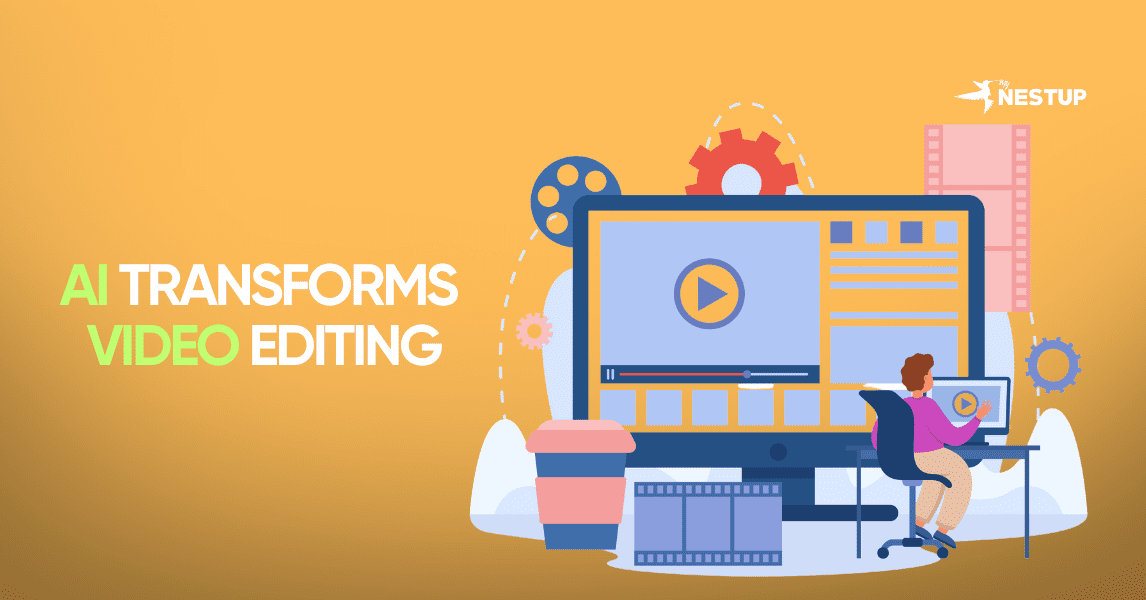
Artificial Intelligence (AI) is rapidly transforming the landscape of video editing, shifting it from a purely manual, time-consuming craft to a streamlined, augmented creative process. AI-powered tools leverage machine learning to automate repetitive and complex tasks, dramatically speeding up post-production workflows for professionals and casual creators alike. This technology is embedded in major software like Adobe Premiere Pro and DaVinci Resolve, as well as in dedicated online platforms, making high-quality editing accessible to a much broader audience. By handling the ‘drudgery,’ AI allows editors to dedicate more time to the creative vision and storytelling aspects of their projects.
Core Strength of AI-powered editing:
The core strength of AI in this field lies in its ability to execute powerful, automated features with a single click. For example, Text-Based Editing automatically transcribes video dialogue, letting editors cut and rearrange clips simply by editing the corresponding text document. A massive time-saver for interview or speech-heavy content. Similarly, features like Auto Reframe intelligently track the main subject in a horizontal video and adjust the framing to perfectly suit vertical formats, eliminating hours of manual keyframe work. AI also excels in technical tasks, such as noise reduction for audio and Auto Color for basic color correction, ensuring visual and auditory consistency across a production.
Advanced AI Editing Techniques:
While automation is a major benefit, AI also acts as a powerful creative assistant. Advanced features like Morph Cut can seamlessly blend jump cuts in interviews, making awkward pauses vanish while maintaining a smooth visual flow that appears as a continuous take. For sound, AI can automatically duck music when a speaker is talking and raise it when they stop, achieving professional audio mixing instantly. Generative AI tools are emerging that can create original content, such as AI B-roll based on a script’s context or generative fill to seamlessly remove unwanted objects from a shot. This empowers creators to experiment with advanced techniques that were previously inaccessible due to cost or complexity.
Key AI-Powered Editing Capabilities:
- Transcription and Subtitling: Automatic generation of captions and speaker identification.
- Scene Detection: Instantly identifying cuts and transitions to assemble a rough cut.
- Auto Reframe: Automatically adjusting aspect ratios for different platforms while keeping the subject in focus.
- Color Match: Instantly matching the color grading between different camera clips for visual consistency.
- Noise and Silence Removal: Automatically cleaning up background audio and cutting out filler words.
The integration of AI into video editing is redefining content production standards by offering unprecedented speed and scalability. Businesses can now produce personalized video ads tailored for specific audience segments, and content creators can quickly repurpose long-form videos into numerous short clips for social media platforms. This efficiency significantly lowers the cost and time barrier to entry, enabling faster turnaround times for everything from corporate videos to feature film post-production. Although the technology is constantly evolving, the current AI tools clearly act as powerful augmentations, collaborating with human editors to achieve faster, higher-quality results.
Popular AI-powered video editing tools:
AI-powered video editing is rapidly transforming content creation, making complex tasks accessible to everyone from professional filmmakers to social media influencers. This new generation of Generative AI tools can understand simple text commands and turn them into stunning video clips, drastically cutting down the time and effort traditionally required for production. The key players in this space, like Runway, Pika, and Adobe, each offer unique strengths, shifting the focus from manual editing to creative direction. The result is a democratized process where the quality of the final video is limited less by technical skill and more by the creator’s imagination. Listed below are some of the famous tools;
Runway:
Runway is a pioneer in the AI creative space, positioning itself as an end-to-end creative suite built on proprietary, production-grade generative models. It is designed for professional filmmakers and studios who need high levels of control and consistent results for narrative projects. Generative models have advanced quickly, with Gen-3 Alpha and Gen-4 leading the way. Gen-3 Alpha produces cleaner visuals, smoother motion, and better timing. It also supports camera controls and keyframing, and it can create 10-second clips in a short time. Gen-4 focuses on keeping identity and style consistent. With just one reference image, it can maintain the same characters, locations, and objects across many scenes and lighting setups. This makes it ideal for long stories and detailed projects. These models offer strong creative control. You can adjust camera moves like panning, zooming, and rotation. You can also fine-tune depth of field, lighting, and motion blur, giving the feel of professional film tools. They support video-to-video and image-to-video generation, so you can restyle old footage or turn a single image into a moving scene with realistic depth. Most outputs render at 1280×768, but a 4K upscale option is available when you need a clean final look.
Pika:
Pika is known as an agile tool for creating short-form content, especially for social media. It has become popular because it is fast, easy to use, and lowers the barrier for video creation. Its latest model, Pika 2.5, focuses on better physics, more realistic visuals, and stronger alignment with the user’s prompt. The platform is built for speed, making it easy to test ideas and refine them quickly. Its interface is simple and works through a clean web-based setup, so users don’t need much technical skill. Features like “Pikadditions” and “Pikaswaps” let creators change specific parts of a video with ease, giving more room for experimentation. Pika is designed for social media, producing short clips that usually run 10 to 20 seconds and are ready for platforms such as Instagram Reels, YouTube Shorts, and TikTok. One of its biggest advantages is that it offers basic video creation tools for free, which makes it accessible to a wide range of users. Because of this, it is a great option for short-form creators, marketers, bloggers, and anyone who needs quick, engaging, and creative content for social platforms.
Adobe:
Adobe takes a different approach to AI by building it directly into its professional tools instead of creating a separate AI-only generator. Its AI features, powered by Sensei and the Firefly Video Model, are integrated into Adobe Premiere Pro to support editors and streamline their workflow. The idea is simple: the AI works as a creative partner, helping with time-consuming tasks rather than replacing the editor. Premiere Pro now includes text-based editing, which transcribes dialogue automatically so editors can cut footage by editing the text itself. It can also detect filler words and remove them with a click. The Enhance Speech feature cleans up background noise and sharpens dialogue, making voices clear without extra effort. Generative Extend uses the Firefly Video Model to stretch clips and audio smoothly, even in 4K, making transitions easier to handle. Object masking is also simpler, letting editors track and mask items across all frames without heavy manual work. The Remix tool adjusts music tracks to match the exact length of a video, saving time in audio editing.
Conclusion:
AI is completely changing video editing. It moves the focus from hard manual tasks to creative storytelling. Tools like Adobe use AI to simplify professional software. Platforms like Runway and Pika offer powerful, specialized generative video creation. AI features automate transcription, reframing, and color matching. This makes high-quality video production faster and more accessible. Content creators can now quickly make and repurpose video for any platform. AI acts as a key collaborator, lowering costs and boosting efficiency across the entire industry.
References:
https://artlist.io/blog/ai-boosts-video-editing-how-will-it-help-me