What are Renewable Microgrids?
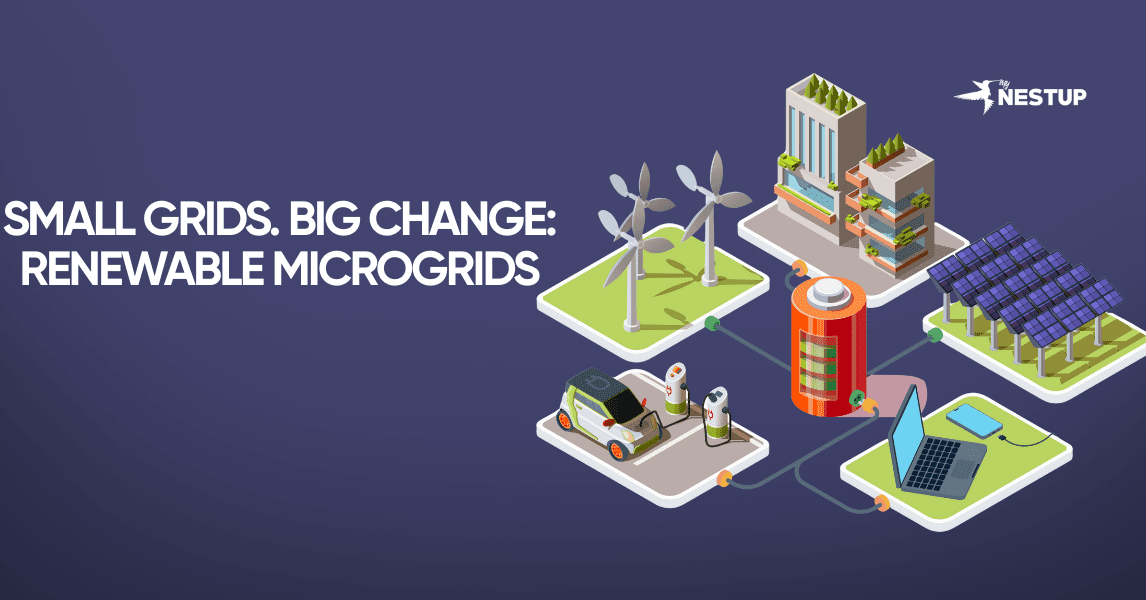
A renewable microgrid is essentially a small, local energy system that uses power primarily from clean sources like solar and wind. Unlike the large, centralised power grid that spans long distances, a microgrid generates, distributes, and controls electricity for a specific, defined area, such as a university campus, a hospital, or a remote community. What makes it unique is its ability to operate in two modes: connected to the main grid to exchange power, or completely disconnected, a state known as “islanding.” This capability ensures that the local area maintains power supply even if a storm or other event causes an outage on the main, larger grid, providing crucial energy independence and resilience.
Key elements for Renewable Microgrids:
The operation of a renewable microgrid relies on several key, interconnected elements. At its heart are the Distributed Energy Resources (DERs), which are the power sources like solar photovoltaic (PV) arrays and wind turbines. Because these renewable sources can be intermittent (the sun doesn’t always shine, and the wind doesn’t always blow), microgrids also incorporate an Energy Storage System (ESS), typically large battery banks, to store excess energy and provide power when generation is low. An Intelligent Control System acts as the brain, managing the flow of power, balancing supply with local demand, and deciding whether to connect to or separate from the main utility grid, optimising for reliability, efficiency, and cost.
Benefits of Renewable Microgrids:
Integrating renewable energy microgrids offers a multitude of benefits that address modern energy challenges. They significantly enhance energy resilience, ensuring continuous power for critical loads like hospitals and emergency services during main grid failures. By utilising clean energy sources like solar and wind, they help to lower an area’s carbon footprint and move toward sustainability goals, reducing reliance on fossil fuels. Finally, by generating power closer to where it’s consumed (distributed generation), they minimise energy losses that occur over long-distance transmission lines, contributing to overall system efficiency and potential cost savings.
- Improved Energy Reliability and Resilience: Provides backup power during widespread grid outages.
- Reduced Carbon Emissions: Uses clean, renewable energy sources, decreasing reliance on fossil fuels.
- Lowered Transmission Losses: Generates electricity locally, minimising energy waste from long-distance transport.
- Enhanced Energy Security: Offers greater local control over the power supply, reducing vulnerability to external threats or failures.
The Hurdles: Why Renewable Microgrids Aren’t Always Easy:
While renewable microgrids offer fantastic benefits for powering remote areas and strengthening local electricity supply, they face several very real, practical obstacles. These challenges generally break down into financial pain points, tricky technical demands, and complex social issues.
The Financial Squeeze:
- The Initial Price Tag is Massive: Getting started is often the biggest headache. Putting up all the solar panels, wind turbines, and the vital battery storage systems, plus building the local wires, requires a huge amount of money upfront. For poor, isolated communities, this colossal initial cost is often the project killer.
- Batteries are a Double Whammy: Batteries are necessary because the sun doesn’t always shine, and the wind doesn’t always blow. However, they are incredibly expensive to buy in the first place, and they don’t last forever. When it’s time to replace them years down the road, it’s another massive expense that makes the long-term running costs high.
- Making a Profit is Tough: In rural areas, there aren’t many people, and those who are there don’t use much electricity yet. This means the microgrid operator isn’t bringing in a lot of revenue. For a private company to invest, the numbers often don’t add up, making it hard to prove the system will ever pay for itself.
The Technical Tightrope:
- The Power is Fickle and Unreliable: The core challenge of renewable energy is its on-and-off nature. It’s difficult to run a reliable electric system when your fuel source (the sun or wind) keeps changing instantly. Keeping the power steady, at the right voltage, and preventing the system from crashing requires extremely sophisticated electronics and control systems.
- It’s Too Complicated to Run: These are not simple systems. They involve numerous components that must talk to each other perfectly, especially when switching from getting power from the main utility line (if one exists) to running completely on its own. Managing this requires advanced engineering and protection mechanisms that must be precisely tuned.
- No Local Experts: Who’s going to fix the complex control panel or troubleshoot the inverter when it breaks? Remote villages often lack the trained technicians needed to run and maintain such advanced systems. This reliance on outside help means long delays and frequent outages when something goes wrong.
Social and Regulatory Roadblocks:
- The Rules Are Often Missing: Many governments haven’t created clear rules for how microgrids should be built, who owns them, or how they can sell their power. This lack of clear policy and regulation creates uncertainty, scaring away investors who need a stable framework.
- The Community Needs to Buy In: If locals don’t understand why the system costs what it costs, or how they are supposed to maintain it, they might not be fully supportive. A lack of community understanding and engagement can lead to misuse or neglect of the equipment.
- Fairness and Access: There’s a risk that the benefits of the microgrid might not be equally shared. If the electricity is too expensive, only the wealthier parts of the community can afford to connect, leaving others behind and exacerbating existing social divisions.
Rural electrification & resilience:
Rural electrification is more than just installing power lines; it’s a critical driver of socio-economic development and a key component in building community resilience. In the past, lack of access to electricity in remote and sparsely populated areas has been a major impediment to economic progress, limiting opportunities in health, education, and income generation. The United Nations recognizes access to modern energy services as essential for achieving Sustainable Development Goals (SDGs), including those related to poverty eradication and quality education. By providing reliable and affordable power, electrification transforms the daily lives of rural populations, allowing for extended hours of work and study, and replacing costly, polluting traditional fuels like kerosene.
Benefits of Rural Electrification:
The economic benefits of rural electrification are significant and measurable. Access to electricity encourages the creation of local enterprises, supports the mechanization of agriculture and crafts, and overall makes rural areas more attractive for investment and talent. For example, studies have shown that gaining access to electricity, especially a reliable supply, is associated with a substantial increase in household income. In India, for example, rural communities gained over US$21 million from increased economic activity following recent electricity additions in 2014. Socially, electrification dramatically improves living conditions by providing reliable power for homes, schools, and essential services like medical facilities, which can then refrigerate vital vaccines and blood.
Electrification directly enhances the resilience of rural communities, particularly against environmental and economic shocks. When electricity is integrated with modern infrastructure, it supports critical services like communication, water, and sanitation, which are essential during emergencies. The shift towards distributed renewable energy (DRE) systems, such as microgrids powered by solar or wind, is proving to be a game-changer for resilience. These local systems allow sections of the grid to operate independently during major disruptions, ensuring that essential services like hospitals and emergency centers remain powered, even if the main grid fails. This move to local, clean energy also reduces dependence on volatile, imported fossil fuels, creating greater energy security.
Key Aspects of Rural Electrification and Resilience:
- Economic Growth: Access to reliable electricity enables businesses to operate for longer hours, increasing productivity and creating jobs.
- Health Improvements: Electricity powers essential medical equipment and refrigeration for vaccines and medicines.
- Education Boost: Reliable lighting allows students to study beyond daylight hours, leading to better educational outcomes.
- Energy Security: Distributed renewable energy (DRE) and microgrids reduce reliance on centralized, vulnerable power systems.
- Productive Use Promotion: Encouraging the use of electricity for commercial and agricultural activities increases the financial sustainability of electrification projects.
Conclusion:
Renewable microgrids are powerful tools for achieving energy independence and boosting resilience, especially in remote communities. They offer clear benefits, from cutting carbon emissions and improving local reliability to sparking economic activity through rural electrification. Their widespread adoption is currently held back by high initial costs, the technical complexity of managing intermittent power, and regulatory hurdles. To unlock their full potential, stakeholders must focus on driving down the cost of energy storage, investing in local technical training, and creating clear, supportive government policies. Overcoming these challenges is essential to ensure that the benefits of clean, reliable electricity can reach everyone, everywhere.
References: