What is Drone Technology?
A drone is basically an aircraft that flies without a pilot on board. It is also called a UAV (unmanned aerial vehicle) or an unmanned aircraft system. To put it simply, It a flying machine that can either be controlled from afar or programmed to fly on its own using built-in software and GPS.
Drones were originally tied to military use. They first served as practice targets for anti-aircraft training. They were tools for gathering intelligence and later as platforms for weapons. In the military, they are useful for missions that are too risky for human pilots.
Today, regular civilians also use drones for lots of different tasks and hobbies, such as:
Search and rescue
Surveillance
Traffic monitoring
Tracking weather
Fighting fires
Personal recreation
Photography
Videography
Farming and crop management Delivery services
What is Drone Delivery?
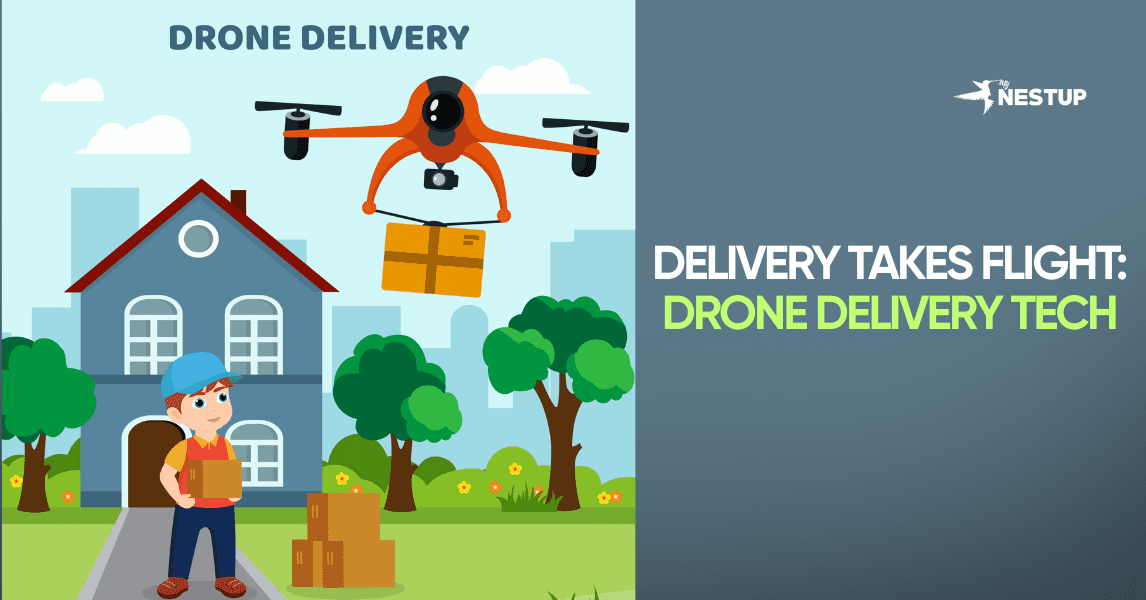
Drone delivery refers to transporting packages through the air using unmanned aerial vehicles. When a parcel is ready to be sent, the sender schedules a drone. The drone then arrives to pick it up and flies it straight to the intended recipient. Sometimes the sender attaches the package directly to the drone, while in other setups, the item is dropped off at a designated station. Here, a drone collects it automatically without needing anyone on-site.
This approach has the potential to enhance how we handle last-minute deliveries and business-to-consumer shipments. It helps in making the process faster and more efficient. This approach has the potential to enhance how we handle last-minute deliveries and business-to-consumer shipments. It helps in making the process faster and more efficient.
How Drone Delivery Works?
Drone delivery is still mostly in the testing phase, especially for delivering items directly to consumers. Here is how it typically works:
When a customer places an order or schedules a pickup, the system automatically assigns a drone to retrieve the package from the designated location. After collecting it, the drone lifts off and heads toward the delivery address.
Once it reaches the destination, the drone checks the surroundings to ensure the drop zone is clear and safe. It then lowers the package to the ground using a tether, placing it in the approved delivery spot. In some setups, a person has to attach the parcel to the drone before it takes off. The actual delivery process does not require any human involvement.
Even though the aircraft fly on their own, trained drone operators monitor everything from start to finish.
Pros and Cons of Delivery Drones
Like any freight method, using drones for deliveries comes with its own advantages and drawbacks.
Pros
- Much faster delivery: Drones can drastically cut delivery times. Especially for remote areas or urgent shipments. For example, a mining site in a rural region that needs a replacement part could receive it far more quickly by drone than by road. The same applies to medical situations. If a hospital urgently needs equipment or supplies, a drone could fly it over and drop it directly on the roof, where many hospitals already have landing areas.
- Better customer experience: Consumers increasingly want instant or same-day deliveries. Whether they are ordering groceries, coffee, clothes or shoes. Drone delivery would give businesses a reliable way to offer these ultra-quick turnaround times.
- Environmentally beneficial: Drone deliveries can help reduce the number of cars on the road, by replacing many courier trips. Fewer vehicles mean lower emissions, making drones an eco-friendlier transport option.
- Lower costs: Because drones connect directly with freight management systems, they can follow the quickest and most efficient routes. Combined with lower operating costs which is mainly due to reduced human involvement, drone delivery could often be far cheaper than sending items by van or truck.
Cons
- Limited weight capacity: Drones are small aircraft and their flight paths are tightly regulated. For now, they can only handle light parcels, usually under 5 kg.
- Possible impact on jobs: As drones reduce the need for traditional delivery vehicles, they may also reduce the demand for drivers. Like many new technologies, the shift could affect employment in the freight sector, at least in the short term.
- Location restrictions: At present, only certain areas are approved for drone deliveries. The industry will likely remain highly regulated, and it may take time before drones are allowed to operate widely in dense urban regions.
- Range limitations: Drones rely on battery power, so they can only travel a certain distance before needing to recharge. This restricts the types of deliveries they can handle and limits long-distance use.
Drone delivery is not common in a lot of countries yet. However, reports suggest that major companies like Amazon and Walmart may expand their drone operations in coming years. How quickly this becomes reality depends largely on aviation regulators around the world and how they decide to manage drone traffic in shared airspace.
Most testing so far has happened in controlled environments. Scaling up raises big questions about safety, rules and oversight. The technology might already be capable, but the policies needed to support it will take time to catch up.
References:
https://freightpeople.com.au/resources/drone-delivery-what-it-is-and-how-it-works