


What Exactly Is the Metaverse?
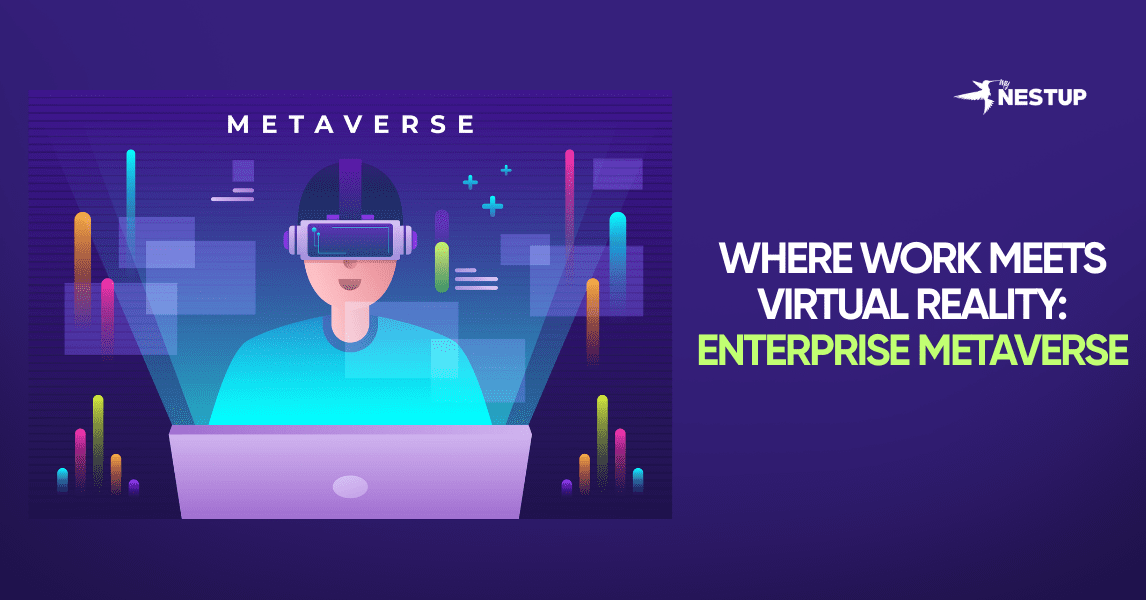
To get a clearer picture of the Metaverse, imagine putting on a pair of smart glasses that instantly transforms your room into a fully interactive digital workspace. You are still physically at home, but the environment you see and interact with feels almost real. As Metaverse technology evolves, these virtual spaces will become even more lifelike and immersive.
At its core, the Metaverse is a digital world where physical and virtual environments blend together. In simple terms, it is a three-dimensional, web-based ecosystem built using technologies like Augmented Reality (AR) and Virtual Reality (VR).
Inside this shared virtual universe, users can meet, collaborate, play, shop, attend events or carry out almost any activity made available in the digital space. It functions like an interconnected world filled with virtual objects, avatars, digital collectibles like NFTs and much more.
Key Technologies:
The real drivers of the metaverse are the technologies powering it. Below are the key innovations shaping its development:
• Blockchain
Blockchain provides the openness and transparency the metaverse needs. It enables features like secure ownership, governance, value transfer, digital collectibles and interoperability.
• AR and VR
Augmented Reality (AR) and Virtual Reality (VR) are core engines behind immersive 3D experiences. VR offers fully virtual environments, while AR blends digital elements with the real world. Together, they act as gateways into the metaverse. VR enables shared virtual spaces like meetings or virtual stores. AR enhances immersion by adding sensory interactions, making users feel more present. Their combined growth is driving major investment in advanced hardware.
• Artificial Intelligence
AI powers intelligent and realistic metaverse experiences. It excels at processing large amounts of data quickly. AI will be key to building interactive and dynamic virtual worlds.
• 3D Reconstruction & IoT
3D reconstruction helps create realistic, physics-driven environments that mirror real-world spaces. IoT connects real-world devices to the metaverse, enabling data from the physical world to influence virtual spaces. Together, they help build a digital environment that closely reflects the world we live in.
Recent advancements suggest that the Metaverse will continue to expand by integrating the Internet of Things (IoT), Artificial Intelligence (AI), and even holographic avatars. These technologies are already changing industries but the bigger question is: what opportunities does the Metaverse open up for businesses?
What Does the Metaverse Mean for Businesses?
The Metaverse has the potential to mirror the real world through cutting-edge technologies like AR and VR. As the next evolution of the internet and social platforms, it opens the door to entirely new opportunities for businesses across the globe.
Here is what this could look like in practice:
• Reinvented advertising: The Metaverse enables brands to create immersive, 3D storytelling experiences that take digital marketing far beyond traditional ads.
• Smooth participation in virtual events: Its interoperable design allows companies to host or join events, conferences and exhibitions in fully digital environments. With no travel required.
• Global customer interaction: In ecommerce, businesses can connect with audiences worldwide without worrying about physical or geographical limits. This offers interactive and engaging virtual shopping experiences.
• Digital wallets and smooth transactions: the Metaverse allows enterprises to facilitate secure, frictionless transaction. With the built-in support for digital payments.
Overall, the Metaverse gives businesses a powerful new space to engage customers. They help build experiences and expand their reach in ways that were not previously possible.
The Metaverse offers businesses a wide range of advantages. Its impact will vary depending on each company’s goals and customer needs. Different organizations will adopt Metaverse technologies in ways that best align with their business models. According to a survey conducted in March 2022, more than 17% of global IT companies have already invested in Metaverse-related initiatives. Other sectors (including education, finance, healthcare, and marketing) are also moving toward Metaverse adoption, with participation rates between 9% and 12%. These figures highlight how quickly industries are recognizing the potential of the Metaverse and preparing to integrate it into their digital transformation strategies.
Top Metaverse Benefits for Businesses
The Metaverse unlocks countless possibilities for companies across industries. It has introduced a parallel digital world that blends smoothly with real-life experiences. Something that felt impossible just a decade ago. Because of this, it is important for modern businesses to understand both the benefits and limitations before diving in.
Here are some of the most impactful advantages:
1. Higher user engagement
The Metaverse offers immersive experiences that can captivate online audiences like never before. Brands that embrace Metaverse environments can attract more engaged users. They can do this by offering everything from virtual products and interactive games to AR/VR showrooms. These experiences give customers new reasons to interact with your brand.
2. Opportunities for virtual events
In the Metaverse, events feel far more vivid than watching a traditional livestream. Businesses can host virtual concerts, product launches, workshops and community meetups where users feel as though they are actually present.
3. Virtual product showcasing and sales
Ecommerce companies are already using the Metaverse to enhance the shopping experience. Users can try on clothing and test out eyewear. They can place virtual furniture in their homes and explore products in a 3D environment before buying. Businesses can set up virtual storefronts to attract a broader global audience and increase product visibility.
4. Innovative advertising and storytelling
The Metaverse introduces a new era of experiential marketing. Instead of simply telling a brand story, companies can let users live it. Customers become active participants making choices, exploring environments and interacting with products. This helps in creating deeper emotional connections and stronger brand recall.
5. Simple and smooth transactions
The Metaverse goes hand in hand with digital currencies. With cryptocurrency and virtual wallets built directly into its environment, users can make purchases quickly without linking traditional bank accounts. Payments become frictionless, fast and easy. They become just a few taps away.
Why Metaverse Technology Still Matters for Businesses
Even now when the excitement around a fully immersive virtual world has cooled, the Metaverse is far from irrelevant. Its key building blocks are advancing quickly. Thanks to major improvements in VR, AR, graphics and AI. New technologies like eye-tracking, which captures and analyzes where users look, are also making virtual experiences feel more natural and interactive.
One of the strongest growth areas is the industrial metaverse. Businesses are embracing VR for employee training and using AR to display helpful digital information on top of real objects. This enables workers to complete tasks faster and with fewer errors.
E-commerce is another sector seeing strong momentum. Shoppers want virtual products and immersive experiences that connect back to the real world. A McKinsey report from mid-2023 estimated that metaverse-enabled commerce (spanning categories like home, food, fitness, and apparel) could contribute as much as $5 trillion in value by 2030. Statista projects the metaverse market to be worth $74.4 billion in 2024, expanding at a 38% yearly growth rate to reach more than $500 billion by 2030. Potentially attracting over 2.6 billion users.
A Metaverse Guide for Enterprises
The metaverse is quickly becoming a valuable tool for businesses, especially for training, collaboration, and product development.
Companies now use virtual offices and meeting rooms where employees join through 3D avatars, regardless of location. Platforms like Microsoft Mesh and Meta Horizon Workrooms offer immersive spaces. They could be for brainstorming and team discussions or casual interactions. It helps in making remote meetings feel more engaging than standard video calls. According to ABI Research, these virtual environments allow teams to use avatars, virtual whiteboards and 3D models. These help recreate the social and collaborative aspects of office life.
Another major use is training and simulation. Industries such as manufacturing, healthcare, and aviation rely on metaverse-based simulations. They help to let employees practice complex or high-risk tasks. These include running machinery or performing medical procedures all in a safe virtual environment. This reduces errors and enhances learning. This also ensures consistent training across global teams. Studies show that VR trainees feel significantly more confident compared to those trained through traditional methods.
The metaverse also supports product development and customer engagement. Designers can create and test virtual prototypes through digital twins before building physical versions. It helps saving time and cost. Businesses are also using virtual showrooms and trade fairs to let customers explore products in 3D.
Overall, the metaverse helps companies improve collaboration and create efficient training. It helps create new, interactive ways to connect with both employees and customers.
References:
https://www.techtarget.com/whatis/feature/The-metaverse-explained-Everything-you-need-to-know