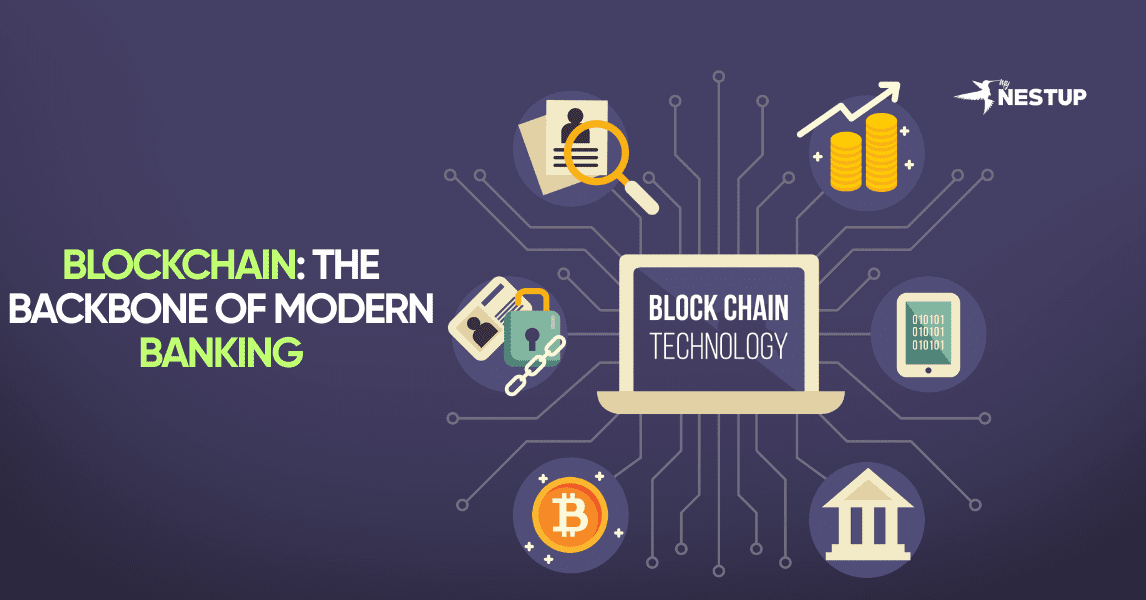
Blockchain in Banking:
In today’s rapidly evolving digital world, blockchain has become a major talking point across many industries. The financial sector is leading the way. Known for its built-in security features like immutability, transparency, trust and reliable consensus, blockchain is changing how financial institutions operate. It is no surprise that banks are steadily moving away from conventional systems and adopting blockchain-based models. This is to improve security, boost efficiency and drive innovation.
As a decentralized and tamper-proof ledger system, blockchain gives banks the ability to cut transaction costs. It helps strengthen security, simplify compliance and settle transactions almost instantly. Leading financial institutions (including JPMorgan Chase and Goldman Sachs) are already building blockchain-based solutions for cross-border payments, KYC verification and trade finance.
Blockchain is a digital ledger that stores transactions across a distributed network of computers. Unlike traditional databases, records on a blockchain cannot be changed or erased once they are verified and added to the chain. This creates a transparent, secure system that is highly resistant to fraud or unauthorized manipulation
Why is blockchain in banking essential?
The banking sector has long played a central role in economic activity. From lending and trading to settling transactions and processing payments. Despite its long-standing legacy, the industry is struggling to adapt to the fast-changing digital landscape.
While banks are indeed moving forward, they are not progressing quickly enough. Even with modern technologies available, many institutions still rely heavily on manual paperwork. This is leading to delays and security vulnerabilities.
To strengthen their defenses against rising cyber threats, banks need more resilient systems. For banks tracking credit histories, managing risks and reducing bad debts are growing priorities. This calls for smarter, reliable tools to meet regulatory demands. Adding to the pressure is the rapid rise of FinTech companies. They are tech-driven and better suited to keep up with digital innovation.
This has led to a need for a balance between legacy practices and modern transformation. This is where blockchain comes into play. Both permission-less and permissioned blockchain models offer banks a way to upgrade their systems. They help to enhance transparency and reinforce trust. That too without losing sight of the core principles that define their role in the financial world.
Blockchain brings a wide range of advantages to the banking sector, but it also introduces its own set of hurdles. To use the technology effectively, banks need to understand both sides of the equation.
Key Benefits
• Transparency and traceability:
Blockchain records are clear and traceable. They are easy to audit, helping banks meet regulatory requirements. This level of visibility is especially valuable for anti-money laundering (AML) efforts. Since it allows institutions to track transactions back to their source.
• Reduced transaction costs:
By removing intermediaries and automating verification processes, blockchain significantly cuts operational expenses. Traditional banking often involves several parties validating each transaction. This increases costs and slows things down. With blockchain’s peer-to-peer model, banks can lower fees. Particularly in high-volume areas like international payments.
• Faster settlements:
Conventional banking transactions, especially cross-border transfers, may take several days to clear. Blockchain enables near-instant processing. This drastically improves settlement times and enhancing efficiency in global banking.
• Smart contracts: Blockchain supports smart contracts. These are self-executing agreements with terms embedded in code. These can automate functions such as loan approvals, insurance claims, and regulatory reporting. This helps in reducing manual work and minimizing errors.
Key Challenges
Despite its promise, integrating blockchain into banking systems comes with potential obstacles:
• Private key security:
Access to blockchain accounts relies on private keys. Losing a private key means losing access to the associated assets. This poses a major security concern. Proper key management is essential but often difficult to implement at scale.
• Network vulnerabilities:
Although blockchain is generally secure, it is not immune to threats. One example is the “51% attack.” In this an entity controlling the majority of a network’s computing power could manipulate transactions. This risk is more pronounced in smaller or less distributed networks.
• High implementation costs:
Deploying blockchain requires substantial investment. Investment in technology, infrastructure and skilled professionals is a need. For many banks, especially smaller ones, these upfront costs can be prohibitive.
• Regulatory and legal ambiguity:
Different regions have different rules surrounding blockchain use. This lack of uniformity creates uncertainty. It makes it challenging for banks to adopt blockchain solutions consistently across borders.
• Scalability issues:
Some blockchain networks struggle with high transaction volumes. It causes slower processing times. This limitation can affect performance in environments like banking, where speed and scalability are crucial.
While cryptocurrencies were the first to push blockchain into the mainstream, many experts argue that the technology’s real power lies in reshaping core banking operations. Whether it is cutting the cost and time involved in cross-border payments or using smart contracts to automate complex workflows, blockchain offers practical solutions to long-standing inefficiencies in the financial system.
Still, widespread adoption will not happen overnight. Banks must address several hurdles. These may include regulatory demands, scalability limitations and the challenge of integrating blockchain with legacy infrastructure. For this reason, most institutions are choosing a hybrid model. This is leveraging blockchain’s strengths while maintaining the stability and experience of traditional banking systems, rather than replacing them altogether.