


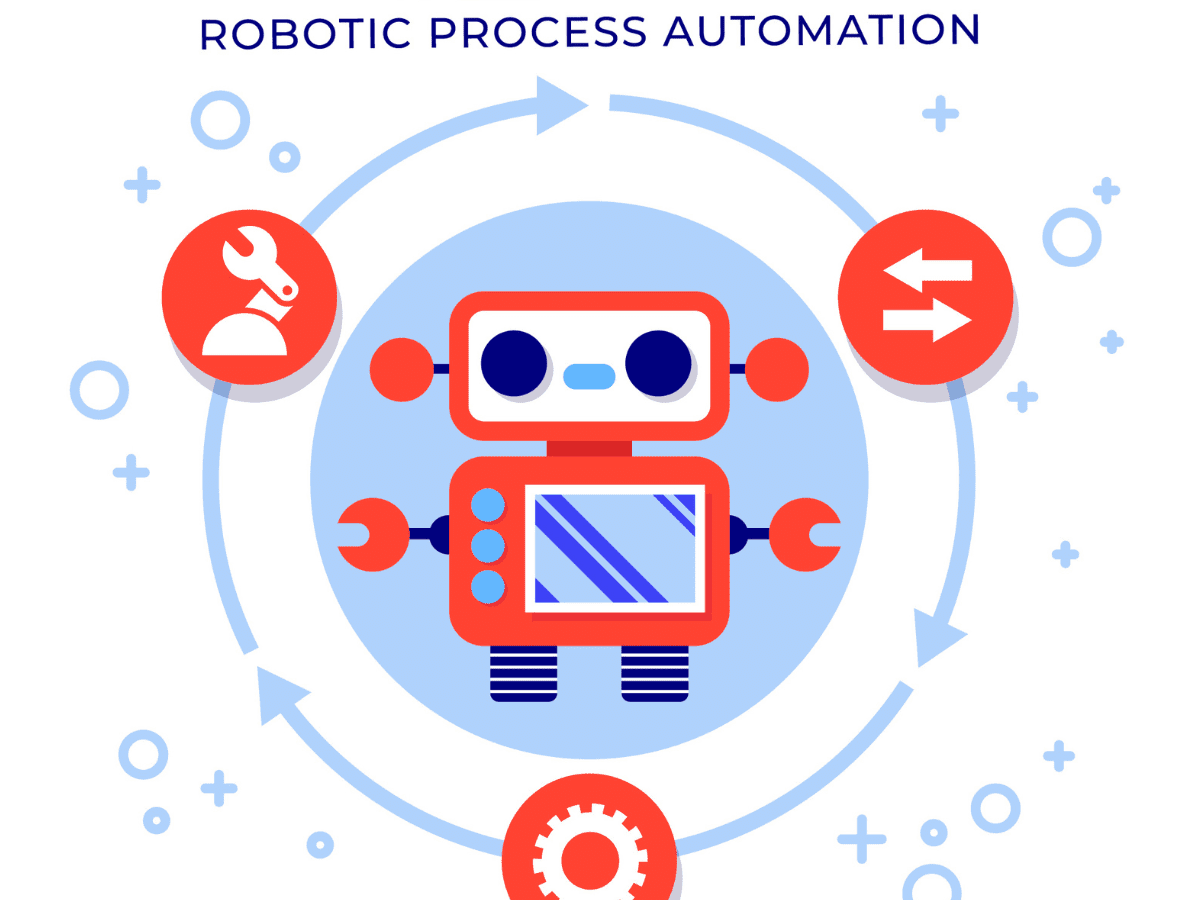

What Is Robotic Process Automation (RPA)?
Robotic process automation, or RPA, is a technology that imitates the way humans use software to handle repetitive, high-volume tasks. It works by creating software bots that can log into applications, enter and move data, make calculations, complete routine tasks, and transfer information between systems. Just like a human would.
RPA is widely used in industries such as banking, IT, HR, and healthcare. When bots take over repetitive processes, the work gets done faster, more accurately and efficiently. This is why RPA has become so popular, it reduces operational costs and smoothens processes. Another major advantage is that business teams can deploy RPA without needing help from IT or making big changes to existing systems.
These software bots are capable of reading screens, navigating systems, typing, identifying and extracting data. Along with performing many other computer-based actions. They follow scripts that mimic human actions which allows them to complete repetitive tasks consistently.
When RPA is combined with artificial intelligence (AI) and machine learning, it becomes even more powerful. For example, it can read text using optical character recognition (OCR), pull information like names or invoice details using natural language processing (NLP) in addition to image interpretation such as estimating damage from an insurance claim photo.
As RPA adoption grows, more organizations are integrating it into their broader IT ecosystems. While RPA can significantly speed up tasks, bots can break if an app interface or workflow changes. Modern RPA tools address this challenge with AI, machine vision, and NLP making the bots more resilient. Newer platforms also offer centralized governance and management features, making it easier to scale RPA across the entire organization
How Does RPA Work?
RPA basically works by doing what a human would do on a computer, just faster and without getting tired. Instead of relying on complex coding or APIs, these bots follow the same clicks and on-screen actions that people use every day. That is one big reason RPA has become so popular. The simplest bots are created by recording how a person uses an app. If something goes wrong, you can simply watch the bot replay those steps and spot what needs adjusting. These basic recordings often become the foundation for more advanced bots that can handle changes in screen size or workflows.
Some RPA platforms even use machine vision to recognize icons and screen elements so the bot can adapt on the fly. Many tools also take those early recordings and turn them into hybrid bots. These start by copying an existing process and then automatically build a backend workflow around it. It is so you get the ease of RPA with the scalability of true workflow automation.
In older enterprise systems, RPA sometimes has to interact through the front end because backend access is not available. In other cases, organizations use process mining or task mining tools to map out how work actually happens. Process mining can analyze logs from systems like ERP or CRM to generate a visual map of common processes. While task mining watches how users work across different apps using machine vision. Most major RPA vendors are building these capabilities into their platforms. RPA tools also come with orchestration and admin features for configuration and security. Bots can run with human involvement (attended) or completely on their own according to a schedule (unattended).
And when you connect RPA with AI (things like OCR, machine vision, natural language processing, or decision engines) you get what is known as intelligent process automation. Some vendors package these AI features into industry-specific “cognitive automation” modules to make it easier to follow best practices.
Benefits:
RPA offers a wide range of advantages, especially for organizations moving toward digital transformation. Some of the biggest benefits include:
• It helps deliver better customer service by speeding up responses and reducing delays.
• It makes it easier to stay compliant with regulations because bots follow the rules consistently.
• Processes run much faster since bots can work around the clock without slowing down.
• Efficiency goes up as workflows become digital and easier to track or audit.
• Accuracy improves because bots handle repetitive tasks that humans often make mistakes on.
• Costs drop when time-consuming manual work is automated.
• Employees can focus on higher-value or more complex work instead of routine tasks.
• Low-code tools make it simple to build or customize RPA automations.
• And since RPA works on the presentation layer of applications, it does not interfere with deeper system operations.
Challenges:
Even though RPA offers a lot of value, it does come with some challenges that can slow down adoption:
• Scalability: RPA bots are easy to build but harder to manage at a large scale. Many companies struggle with governance. This makes it difficult to expand automation across the organization.
• Limited capabilities: Despite the name, RPA often automates tasks, not full processes. Stitching several tasks together usually needs extra work. Experts even talk about the “rule of five”. This is when bots tend to break when they handle more than five decisions, interact with more than five apps or perform over 500 clicks.
• Security concerns: Bots sometimes need access to sensitive data. If a bot is compromised, it creates an additional security risk for the organization.
• Low resiliency: RPA can be fragile. If an application updates or its interface changes unexpectedly, bots can fail.
• Quality assurance challenges: RPA introduces new QA requirements. Teams need to regularly test and monitor bots to make sure they still work as intended.
• Privacy risks: Since bots often handle personal or sensitive data, companies must ensure they comply with privacy regulations like GDPR. Something as simple as a bot transferring data to another country without encryption could be a violation. Many vendors now aim for ISO 27701 certification to strengthen data protection.
• Efficiency limitations: Bots navigate applications one step at a time, just like a human, which is not always the fastest approach. In some cases, using APIs or building automation directly into the application can be more efficient.
Examples and Uses Across Industries:
Here are some real-world examples of how different industries use RPA:
• Finance: Financial institutions automate tasks like account reconciliation, invoice processing, payments, account openings and closures, audit requests and even insurance claim processing.
• Supply chain management: Companies rely on RPA for data entry, procurement workflows, predictive maintenance, order processing, after-sales service tasks, shipment tracking and inventory monitoring.
• Telecommunications: Telecom providers use RPA to set up new services and billing systems and to pull data from multiple platforms when diagnosing outages or predicting technical issues.
• Banking: Banks use RPA for customer onboarding, account closure processes, credit card operations, fraud detection and general customer support.
• IT operations: IT teams use RPA for data collection, compliance tasks, automated network management, data transformation and employee onboarding or offboarding.
• Human resources (HR): HR departments automate recruiting, onboarding, offboarding, training workflows, employee data updates, expense processing and timesheet submissions.
• Insurance: Insurers rely on RPA for claims processing, compliance checks, fraud detection, customer service and managing or canceling policies.
• Healthcare: Hospitals and clinics use RPA for scheduling appointments, managing accounts, handling claims and billing, ensuring compliance and maintaining electronic records.
• Customer service: RPA supports contact centers by verifying e-signatures, uploading scanned documents and checking information for quick approvals or rejections.
• Accounting: Organizations use RPA for general and operational accounting tasks, transactional reporting and budgeting.

The Future of RPA:
RPA is still growing quickly and that momentum does not seem to be slowing down. More organizations are adopting RPA to improve efficiency and reduce costs. These are major reasons why the market is expected to keep expanding.
A big part of this growth comes from combining RPA with AI and machine learning. When these technologies are built into RPA tools, bots can learn from data and get better over time. This also allows them to take on more complex tasks, making automation useful across a wider range of business processes.
Several other trends are also shaping the future of RPA, including:
• A growing move toward cloud-based RPA
• Increasing interest in RPA delivered as a service
• The rise of no-code development for building automations
• More use of process mining and task mining to uncover new automation opportunities
References:
https://www.ibm.com/think/topics/rpa
https://www.sap.com/mena/products/technology-platform/process-automation/what-is-rpa.html