




What is Social Commerce/Live Selling?
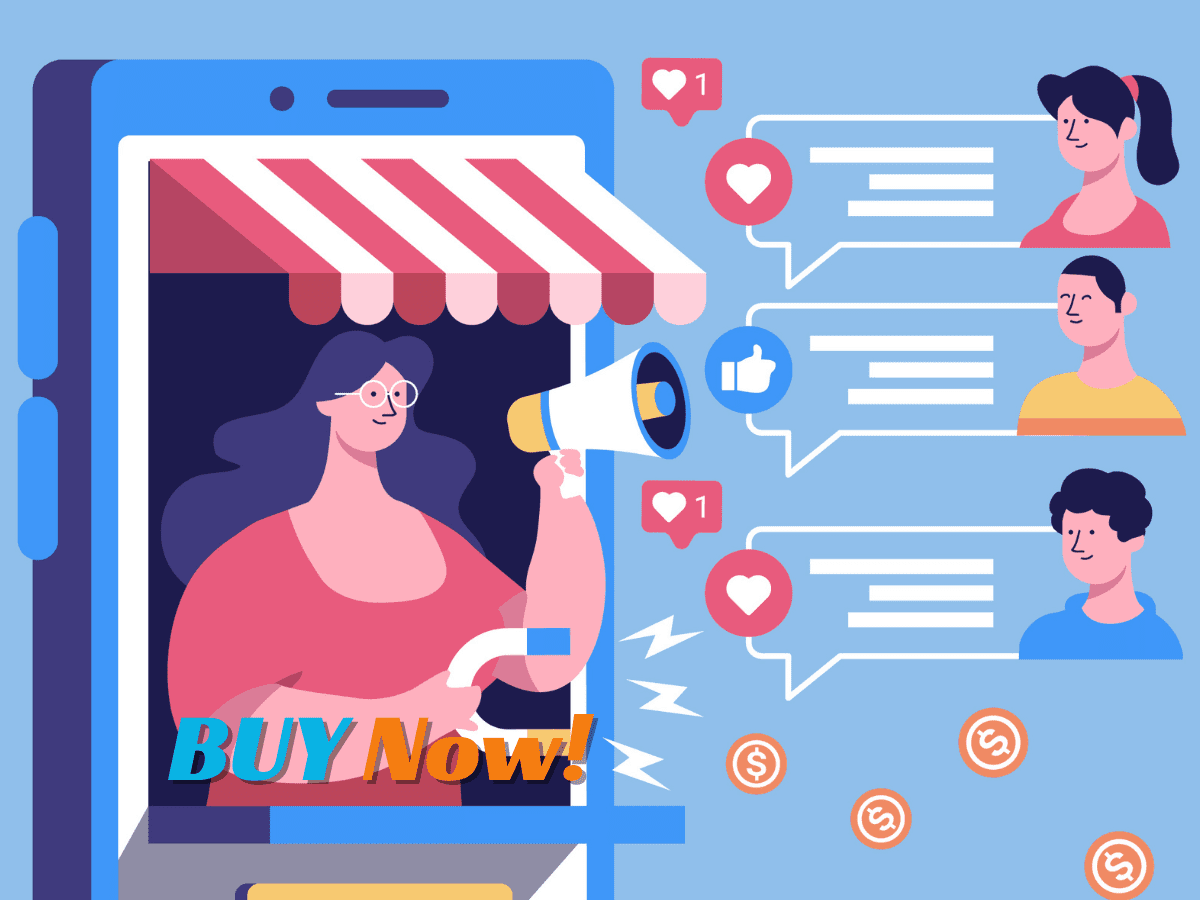
Social commerce is essentially the seamless merging of shopping and social networking. Instead of just using platforms like Instagram or Facebook to advertise products, these sites are leveraged to create a highly specialised and targeted in-app shopping experience. This means that when you’re scrolling and see something you like, you can browse details about the company. You can also explore the product and complete the entire purchase, including checkout, without ever leaving the social media app. This convenience is why it’s booming at such a pace. It skips the clunky, time-consuming process of visiting a separate website and creating an account, which used to cause customers to lose interest. By letting buyers go straight to checkout from within the platform, social commerce has become one of the most exciting new trends in online marketing. It is making buying incredibly convenient and engaging.

Social Commerce vs. Traditional e-Commerce:
The main difference is the location of the transaction. E-commerce is the broad term for making purchases online, which typically involves leaving your social app and going to a brand’s specific website or branded app. Customers can browse, add to cart, and check out to shop. Social commerce, however, is a subset of e-commerce where the entire shopping journey, from discovering the product to making the purchase, is integrated directly into social networking platforms like Instagram or TikTok. While a traditional online merchant might use their social media to drive traffic to their external website, social commerce allows brands to complete the sale natively within the social media app itself. This is distinct from social selling, which is less about the instant transaction and more about using social media to build relationships and trust.
How does Social Commerce/Live Selling work?
Social commerce works by essentially turning a social media feed into a direct, personalised shopping aisle. Since the pandemic rapidly sped up online shopping, platforms like Facebook and Instagram have been building in native features. These features allow businesses to set up a digital storefront right on their page. A brand’s goal is to have an engaging presence so customers naturally find their products. These are often supplemented by paid, highly targeted ads that draw in specific audiences based on their interests. When a customer sees a tagged t-shirt on Instagram, they can tap the price tag and immediately shop for it in an in-app mini-store. The customer can then choose to purchase it instantly using the platform’s native checkout feature, or they might be taken to the brand’s website to complete the purchase. The platform uses your past activity to recommend items, turning casual browsing into an impulse buy without interrupting your scrolling. This is how social commerce drives sales.
Benefits of Social Commerce:
Live selling and social commerce connect with people instantly, making buying effortless. This approach drives sales while also helping brands form a genuine community. By simply using the social media platforms consumers are already scrolling through, brands eliminate the annoying friction that often slows down shopping on traditional e-commerce sites. Listed below are some of the benefits of social commerce;
- Innovation via a New Purchase Channel: Social commerce introduces a native in-app checkout experience, like ‘Buy’ buttons on Instagram or shoppable videos on TikTok. This is innovative because it bypasses the traditional step of leaving the social media app to visit an external e-commerce site, effectively making the social platform a direct point of sale. This taps into the massive and engaged audience already active on these platforms.
- Create a Solid Link with Customers: The link is solidified through real-time and authentic interactions. Social commerce leverages tools like live shopping events and direct messaging. This allows customers to ask questions and receive instant answers. It also provides personalised responses from the brand or an influencer. This fosters a sense of community and trust, moving the relationship beyond a transactional one.
- Target Your Audience with Precision: Social platforms possess deep user data that traditional e-commerce channels often lack. With social commerce features, brands can utilise these powerful advertising algorithms to target users who are not just likely to be interested, but are already in a shopping mindset. This drives higher conversion rates.
- Boost the Collection of Feedback Thanks to Social Commerce: Feedback collection is streamlined because the platform is inherently conversational. Customers can easily leave comments, reviews, or participate in polls/Q&As about a product immediately after purchasing it. This provides high-volume and qualitative feedback that is easy to analyse.
- Respond to the Users of the New Generations: Younger generations (Gen Z and Millennials) view social media not just as entertainment, but as a primary source for product discovery. Social commerce meets these users where they are and delivers a shopping experience that aligns with their preference for speed and mobile-first transactions.
- Guarantee Less Friction and More Autonomy: Less Friction is achieved by eliminating barriers like creating a new account or manually entering payment/shipping details. More Autonomy is granted as users can independently research and purchase products on their own timeline. Sometimes they buy directly from a piece of content, without needing to navigate complex menus.
- Benefit from Constant Growth Thanks to Social Commerce: Social commerce provides a scalable growth engine by continually exposing products to the platforms’ expanding user base and their dynamic discovery algorithms. As users share, save, and tag products, the process generates viral reach that supplements paid advertising. This leads to sustained and cost-effective increases in both brand awareness and sales volume.
Conclusion:
The dramatic rise of social commerce strongly suggests that the future of online retail hinges on frictionless convenience and engagement. Consumers are clearly prioritizing a retail experience that respects their time by eliminating outdated hurdles like external site navigation and account creation. The success of this model confirms a critical insight: converting casual interest into a completed sale is directly proportional to how simple and instantaneous the purchasing process is. Therefore, any brand aiming for sustained growth in the digital marketplace must recognize that integrating a native, in-app checkout experience is no longer a luxury but a fundamental necessity for meeting modern buyer expectations and capitalizing on impulsive purchasing behavior.
References:
https://blog.smart-tribune.com/en/social-commerce
https://athoscommerce.com/blog/social-commerce-for-ecommerce
https://www.polaris-max.com/en/articles/21/the-rise-of-social-commerce